EcoFlow vs Tesla Powerwall: Home Backup Compared

When it comes to keeping your home powered through an outage, EcoFlow and the Tesla Powerwall represent two fundamentally different paths to the same goal. Tesla’s Powerwall is a permanently installed, professionally wired whole-home battery designed to integrate with solar and take over automatically the instant the grid goes down. EcoFlow, best known for its portable power stations, has expanded into serious home backup territory with modular systems like the DELTA Pro series that can scale from a portable unit into a semi-permanent whole-home setup. This comparison breaks down capacity, output power, installation, cost, flexibility, and long-term value to help you decide which approach fits your home and budget.
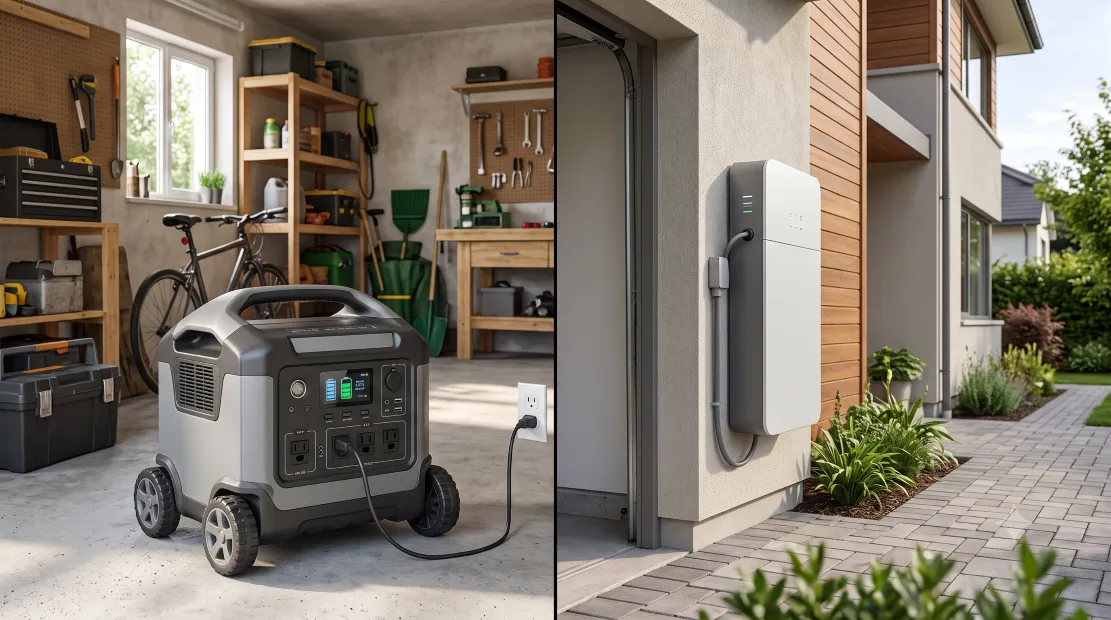
Two different philosophies for home backup: modular flexibility versus permanent installation.
⚡ Quick Answer
- Choose Tesla Powerwall if you want a permanent, professionally installed whole-home backup system with seamless automatic switchover and deep solar integration.
- Choose EcoFlow if you want flexibility — a system you can start small with, expand over time, take with you when you move, and set up largely without professional installation.
- Powerwall requires professional installation and a larger upfront commitment; EcoFlow’s modular approach spreads cost over time and needs little to no electrical work for basic setups.
- For seamless whole-home coverage, Powerwall leads. For renters, movers, and budget-staged buyers, EcoFlow is often the more practical fit.
Two Different Philosophies of Home Backup
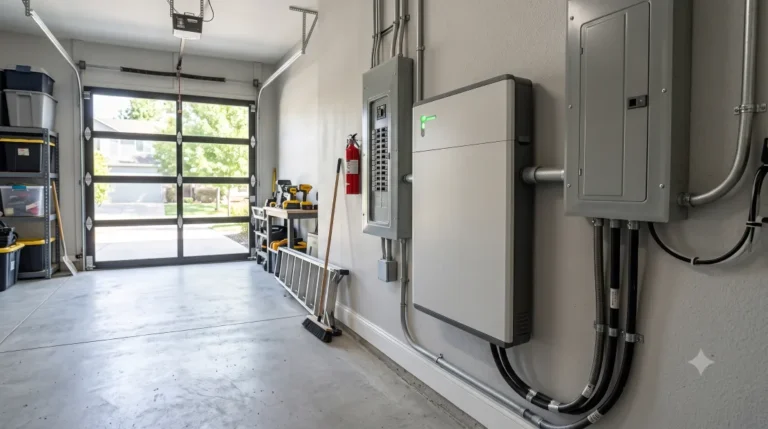
Understanding the core design difference makes the rest of the comparison much clearer. The Tesla Powerwall 3 is a fixed installation: it mounts permanently to a wall, wires directly into your home’s electrical panel, and includes an integrated solar inverter. Once installed, it works invisibly in the background — storing solar energy, shifting consumption away from expensive peak-rate hours, and switching the whole home to battery power automatically within a fraction of a second when the grid fails.
EcoFlow approaches the problem from the portable side. Its flagship DELTA Pro units are large power stations on wheels that can operate completely standalone — plug in appliances directly, no installation needed — or scale up into a more permanent arrangement using expansion batteries and an optional transfer switch integration that lets the system feed selected home circuits during an outage. The result is a spectrum of setups, from “emergency power strip on wheels” to “semi-permanent partial-home backup,” depending on how much hardware you add.
Capacity and Output Power
| Spec Category | Tesla Powerwall 3 | EcoFlow DELTA Pro series |
|---|---|---|
| Base usable capacity | 13.5 kWh per unit | 3.6 – 4 kWh per unit |
| Expandability | Multiple Powerwalls stack on one system | Expansion batteries per unit, multiple units combinable |
| Continuous output | Up to 11.5 kW | Up to 3.6 – 7.2 kW depending on configuration |
| Whole-home automatic backup | Yes, built-in | Partial-home via transfer switch; not fully automatic in basic setups |
| Portability | None (fixed installation) | Wheeled, movable, usable off-site |
| Solar input | Integrated inverter, up to 20 kW | Portable/rooftop panel input, capacity varies by model |
On raw numbers, a single Powerwall holds roughly three times the energy of a single EcoFlow DELTA Pro base unit and delivers substantially higher continuous output — enough to run most homes’ full circuit load, including high-draw appliances, without breaking a sweat. EcoFlow closes the capacity gap through stacking: expansion batteries and dual-unit configurations can build total capacity into a comparable range, though reaching Powerwall-level output and capacity through EcoFlow hardware involves multiple units and accessories rather than one integrated box.

The Powerwall installs permanently and works automatically in the background.
Installation: Professional vs DIY
This is one of the sharpest practical differences between the two systems. A Powerwall requires professional installation by a certified installer — electrical permits, panel integration, inspection, and typically a few weeks of lead time from purchase to commissioning. That installation is part of what you’re paying for: once complete, the system requires essentially zero interaction to do its job, and the automatic grid-failure switchover happens fast enough that most electronics never notice.
EcoFlow’s base setup requires no installation at all — unbox, charge, plug appliances in. Even its more integrated home backup configuration, using a transfer switch to feed selected circuits, involves a much smaller electrical job than a Powerwall installation, and the core battery hardware remains movable afterward. For renters, homeowners who expect to move within a few years, or anyone who wants backup power without touching their electrical panel, this flexibility is EcoFlow’s single biggest advantage.
Everyday Use, Not Just Emergencies
A Powerwall earns part of its keep even when the grid is stable: paired with solar, it stores excess daytime generation for evening use, and on time-of-use rate plans it can charge when electricity is cheap and discharge during expensive peak hours. Over years of daily cycling, these savings form a meaningful part of the Powerwall’s financial case, particularly in regions with large peak/off-peak price gaps.
EcoFlow units can perform a version of this arbitrage for whatever is plugged into them, and they add a dimension the Powerwall simply doesn’t have: the same battery that backs up your refrigerator during a blackout can power a campsite, a tailgate, a remote job site, or a food stall on the weekend. For households that value that dual-use capability, EcoFlow’s hardware works harder across more of life than a wall-mounted unit ever can.
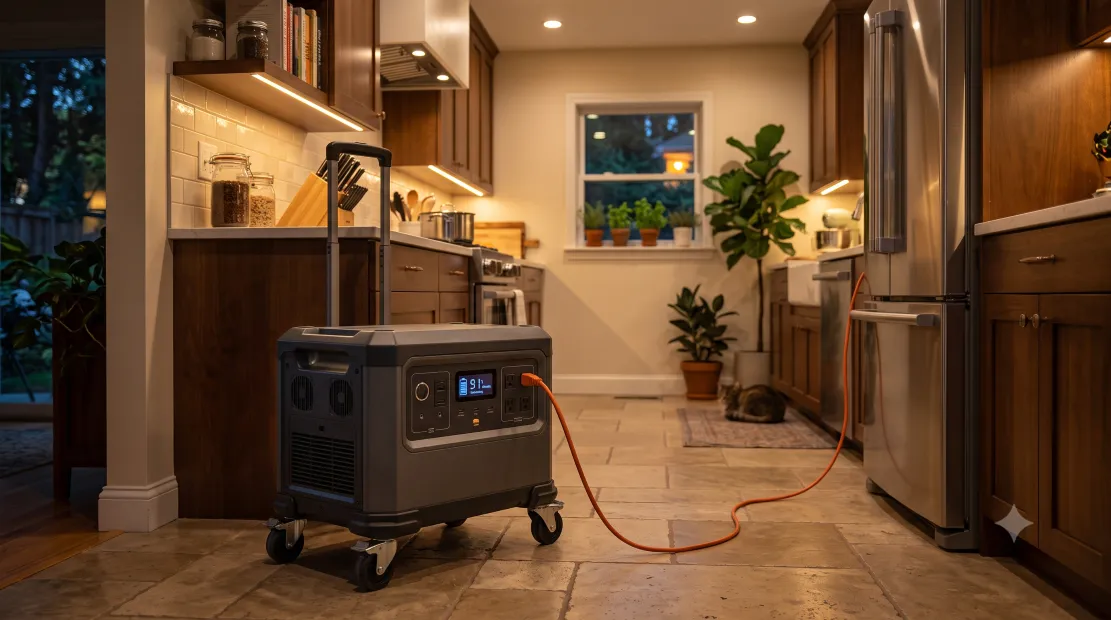
EcoFlow’s wheeled units move between home backup duty and outdoor use.
Cost Comparison
Total installed cost for a single Powerwall 3 typically lands in the $12,000–$16,000 range before incentives, with panel upgrades pushing some installations higher. Federal tax credits, where applicable, can reduce that meaningfully, and the system’s daily solar-shifting savings continue to offset cost over its 10-year warranty life.
EcoFlow’s entry point is dramatically lower: a single DELTA Pro–class unit typically costs a fraction of a Powerwall’s installed price, and the system grows in increments — add an expansion battery this year, a second unit next year, a transfer switch when the budget allows. The tradeoff is that fully matching a Powerwall’s capacity and output through EcoFlow hardware, once all units, batteries, and accessories are tallied, can approach similar total spending while still not replicating the seamless automatic whole-home switchover of a professionally integrated system.
| Cost Factor | Tesla Powerwall 3 | EcoFlow (DELTA Pro class) |
|---|---|---|
| Entry cost | $12,000 – $16,000 installed | $2,500 – $4,000 for base unit |
| Path to full-home coverage | Included at install (1-2+ units) | Multiple units + expansion batteries + transfer switch |
| Installation cost | Included in ranges above | $0 for standalone; modest for transfer switch |
| Incentive eligibility | Often eligible (installed storage) | Varies; portable units often don’t qualify |
| Warranty | 10 years | Typically 3 – 5 years |
Battery Chemistry and Lifespan
Both companies build their current systems on LiFePO4 (lithium iron phosphate) chemistry, prized for its long cycle life and thermal stability. The practical difference shows up in warranty coverage: Tesla backs the Powerwall with a 10-year warranty suited to its role as permanent home infrastructure, while EcoFlow’s warranties typically run 3-5 years depending on model and registration — solid for consumer electronics, but a shorter guaranteed horizon for a system you might be counting on as long-term home backup. EcoFlow’s rated cycle life on current LiFePO4 models is high enough that well-maintained units should comfortably outlast their warranty period, but the paper commitment differs meaningfully between the two brands.
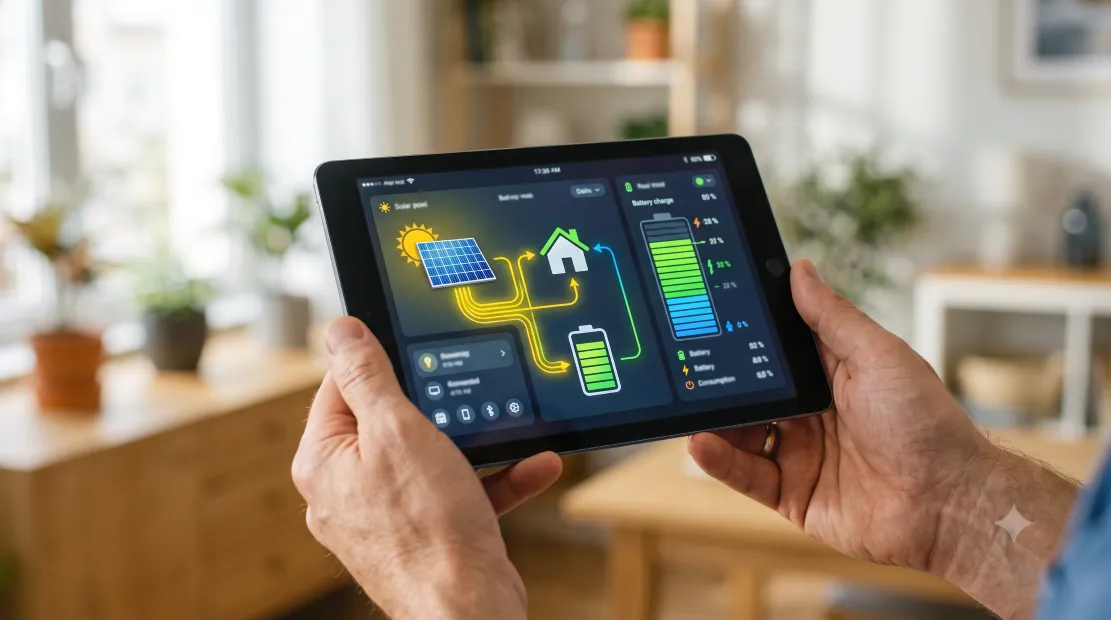
Both ecosystems offer detailed app monitoring of charge levels, input, and output.
App Experience and Monitoring
Tesla’s app presents the Powerwall alongside any Tesla solar and vehicles on the account, with clean visualizations of energy flow between solar, battery, home, and grid, plus storm-watch features that automatically top the battery up ahead of severe weather warnings in supported regions. It’s polished, minimal, and designed for a system you rarely need to think about.
EcoFlow’s app reflects its hardware’s hands-on nature: per-outlet control, charging speed adjustment, input source management, and firmware updates across each unit and expansion battery. It offers more granular control than Tesla’s app, at the cost of more complexity — appropriate, given that EcoFlow owners interact with their hardware far more often than Powerwall owners do.
Noise, Placement, and Living With Each System
Day-to-day livability differences are easy to overlook in a spec comparison. The Powerwall operates almost silently on a garage, basement, or exterior wall, out of sight and out of mind — most owners forget it exists until an outage reminds them. EcoFlow units, by contrast, live wherever you put them: a garage corner, a utility closet, or rolled into the living room during a blackout. Their cooling fans are audible under heavy load or fast charging, comparable to a desktop computer working hard, which matters if the unit ends up near a bedroom or home office during extended use.
Placement flexibility cuts the other way, too. An EcoFlow unit can sit right next to the appliances it powers, avoiding any rewiring, and can be wheeled to wherever power is needed most — including outside the house entirely. The Powerwall’s fixed position is a one-time decision made at installation, chosen for electrical practicality rather than convenience during any specific outage.

Reliable backup power turns a neighborhood blackout into a minor inconvenience.
Which One Should You Buy?
Choose the Tesla Powerwall if you own your home, want backup that works automatically without any action during an outage, have or plan to add rooftop solar, and can absorb the larger upfront installed cost — ideally with incentive programs softening the price. It is the more complete, more permanent, and more hands-off solution, and its 10-year warranty matches its role as long-term home infrastructure.
Choose EcoFlow if you rent, plan to move, want to start small and scale over time, or value hardware that serves double duty for camping, work sites, and travel. It delivers genuinely useful home backup at a fraction of the entry cost, with the understanding that reaching whole-home, fully automatic coverage isn’t really its game — flexible, movable, incremental backup is.
Plenty of households ultimately land on a hybrid logic: a permanently installed battery like the Powerwall for the home itself where budget allows, or an EcoFlow system as the pragmatic first step that still meaningfully shortens the list of things a blackout can disrupt.
Frequently Asked Questions
Can EcoFlow power a whole house like a Powerwall?
In larger multi-unit configurations with expansion batteries and a transfer switch, EcoFlow systems can back up a substantial portion of a home’s circuits, but they don’t replicate the Powerwall’s seamless, fully automatic whole-home switchover, and high-draw appliances like central air conditioning generally remain out of reach for most EcoFlow setups.
Does the Tesla Powerwall work without solar panels?
Yes. A Powerwall can charge from the grid and provide backup power and time-of-use rate savings without solar, though the financial case is generally strongest when paired with solar panels that charge the battery for free during the day.
Which system is better for renters?
EcoFlow, clearly. Its units require no installation, no landlord approval for basic use, and move with you — while a Powerwall is a permanent installation that stays with the property.
How fast does each system switch over during an outage?
A Powerwall switches the home to battery power automatically in a fraction of a second, fast enough that most electronics stay running. EcoFlow devices plugged in directly continue seamlessly; setups feeding home circuits depend on the transfer switch arrangement and may require manual switching in basic configurations.
Do both systems qualify for tax credits?
Permanently installed battery systems like the Powerwall are often eligible for federal or state incentives where such programs exist, while portable power stations frequently don’t qualify. Eligibility rules change over time, so verify current program requirements for your location before factoring incentives into the price comparison.
ADeeL A.M
ADeeL A.M is a home energy and clean solar power writer with a deep passion for the electrified home. He spends his days researching solar panels, battery backup systems, EV chargers, portable power stations, and smart energy solutions — comparing specs, efficiency ratings, and real-world performance to bring readers the newest, most reliable, and best-value options on the market.
View all articles by ADeeL A.M →