How Much Does a Home Battery Backup Cost?
Home battery backup pricing spans an enormous range — from a few hundred dollars for a portable power station to well over $20,000 for a professionally installed, whole-home battery system. That range isn’t arbitrary; it reflects genuinely different products solving different problems, from keeping a phone charged during a short outage to running an entire house automatically for days. This guide breaks down real costs across every tier, the specific factors that push a quote up or down, and how to figure out which category of backup actually matches your budget and your real outage risk.

Home battery backup cost varies enormously depending on which category of system you need.
⚡ Quick Answer
- Portable power stations: $300 – $3,000+ depending on capacity, no installation required.
- Single permanently installed home battery: $12,000 – $18,000 installed, before incentives.
- Multi-unit whole-home backup system: $20,000 – $35,000+ depending on home size and load requirements.
- Biggest cost driver for installed systems: whether a panel upgrade is needed and how many units your home requires for full coverage.
The Three Main Categories of Home Battery Backup
Before comparing prices, it helps to separate home battery backup into three genuinely different categories, since lumping them together is where most of the confusion about “how much does it cost” comes from. Portable power stations are standalone units you plug devices into directly, requiring no installation and offering the lowest cost of entry. Permanently installed home batteries, like a single Tesla Powerwall or similar unit, wire directly into your electrical panel and require professional installation, offering automatic backup for at least part of your home’s circuits. Whole-home battery systems scale that same permanent installation approach up with multiple units to cover a home’s entire electrical load, including higher-draw appliances, during an extended outage. Understanding which category you actually need before requesting quotes saves time and prevents comparing fundamentally different products as if they were interchangeable options.
Portable Power Stations: The Low-Cost Entry Point
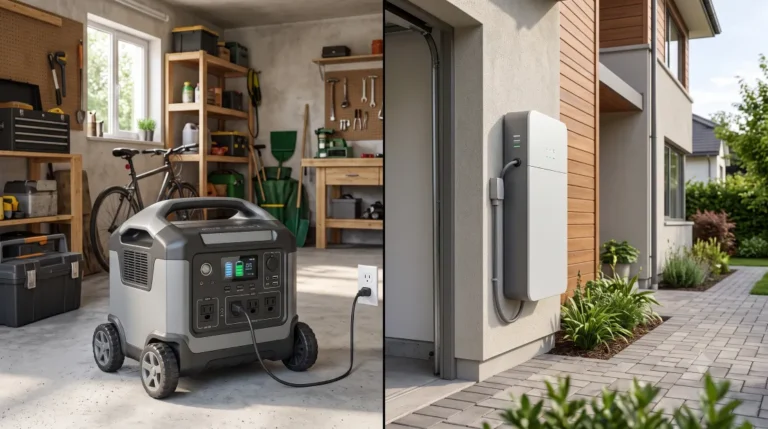
Portable power stations range from around $300 for compact units with a few hundred watt-hours of capacity, up to $3,000 or more for larger units approaching whole-home-adjacent capacity with expansion batteries. These require no installation, no electrician, and no permits — you simply plug them in to charge and plug devices into them when needed. The tradeoff is capacity and output: even large portable units generally can’t power high-draw appliances like central air conditioning or an electric oven, and most are designed for essential devices, medical equipment, and short-duration outages rather than multi-day whole-home coverage.
| Category | Typical Cost | Installation Required | Best For |
|---|---|---|---|
| Small portable power station | $300 – $800 | No | Phones, laptops, short outages |
| Large portable power station | $1,500 – $3,000+ | No | Mini-fridge, CPAP, multi-day essentials |
| Single installed home battery | $12,000 – $18,000 | Yes, professional | Partial to whole-home backup, solar pairing |
| Multi-unit whole-home system | $20,000 – $35,000+ | Yes, professional | Full home coverage including high-draw appliances |
Permanently Installed Battery Costs in Detail
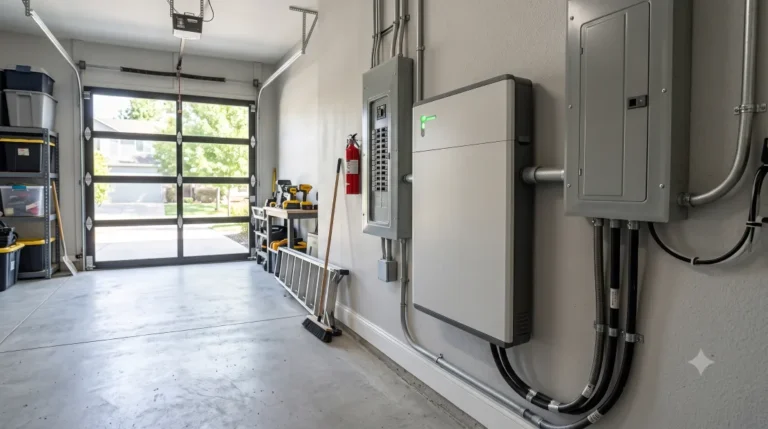
For a single permanently installed home battery — the Tesla Powerwall 3 being the most widely recognized example — total installed cost typically runs $12,000 to $18,000 before any incentives. This includes the battery hardware itself (often $9,000-$11,000 for a single unit), professional installation labor, permits and inspection, and any electrical panel work required. A single unit generally provides meaningful backup for essential circuits and, in smaller or more energy-efficient homes, sometimes whole-home coverage, though larger homes with higher electrical loads typically need additional units to cover everything.
Permanently installed batteries mount to a wall and wire directly into the home’s electrical panel.
What Drives Installation Cost Up or Down
For any permanently installed system, a handful of factors explain most of the variation between a $12,000 quote and an $18,000 quote for what looks like the same hardware. Whether your electrical panel has sufficient existing capacity, or needs an upgrade, is usually the single biggest swing factor — a panel upgrade alone can add $1,500 to $3,500. The distance and complexity of wiring between your panel and the battery’s mounting location matters too, as does whether the installation is indoor or requires weatherproof outdoor-rated components. Local labor rates, which vary significantly by region, layer on top of all of this, meaning the same job can cost meaningfully more in a high-cost metro area than in a lower-cost region.
How Many Units Do You Actually Need?
This is the question that most dramatically affects total cost for permanently installed systems, and it comes down to your home’s total electrical load versus a single unit’s output capacity. A single battery generally covers essential circuits comfortably — refrigerator, lighting, WiFi, well pump — for smaller and mid-sized homes. Larger homes, or any home wanting to run higher-draw appliances like central air conditioning or an electric range during an outage, typically need two or more units working together to avoid exceeding a single unit’s power output limits. Each additional unit adds substantial cost, but often at a lower incremental rate than the first unit, since permitting, panel work, and some labor overhead are shared across the whole system rather than duplicated for each battery.
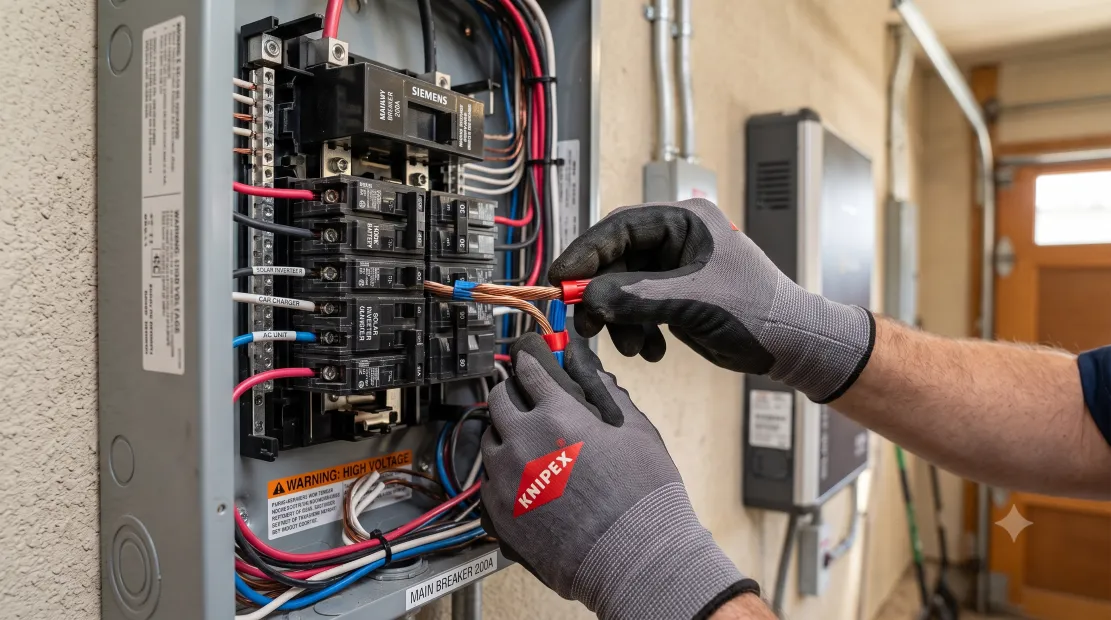
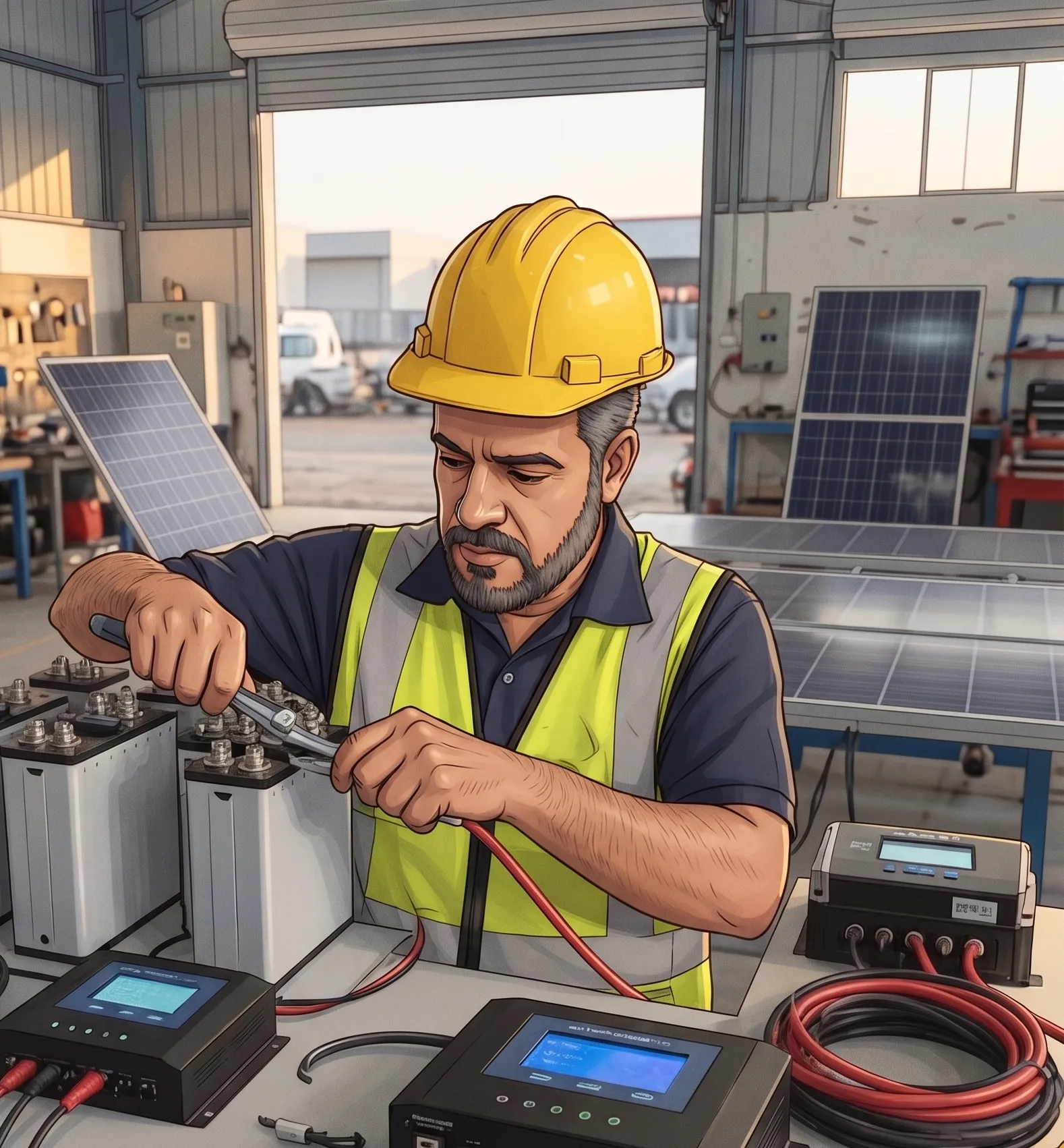
Professional installation cost scales with the number of units needed for your home’s electrical load.
Solar Pairing: Added Cost, Added Value
Pairing a home battery with solar panels adds meaningful upfront cost — often another $15,000 to $25,000 or more for a full solar array, depending on system size — but it changes what the battery can do for you day-to-day. Without solar, a battery mostly sits ready for the next outage, occasionally cycling for time-of-use rate savings by charging from the grid during cheap hours. With solar, the battery captures free daytime solar generation for evening use, meaningfully reducing monthly electric bills in addition to providing backup power, which is where much of the long-term financial case for battery backup actually comes from.
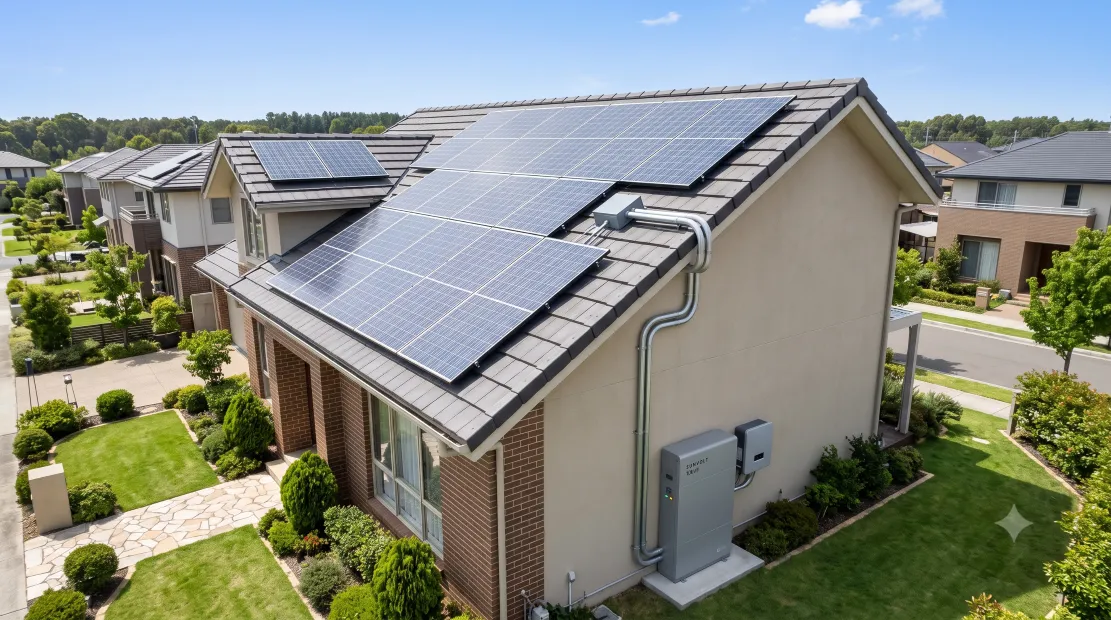
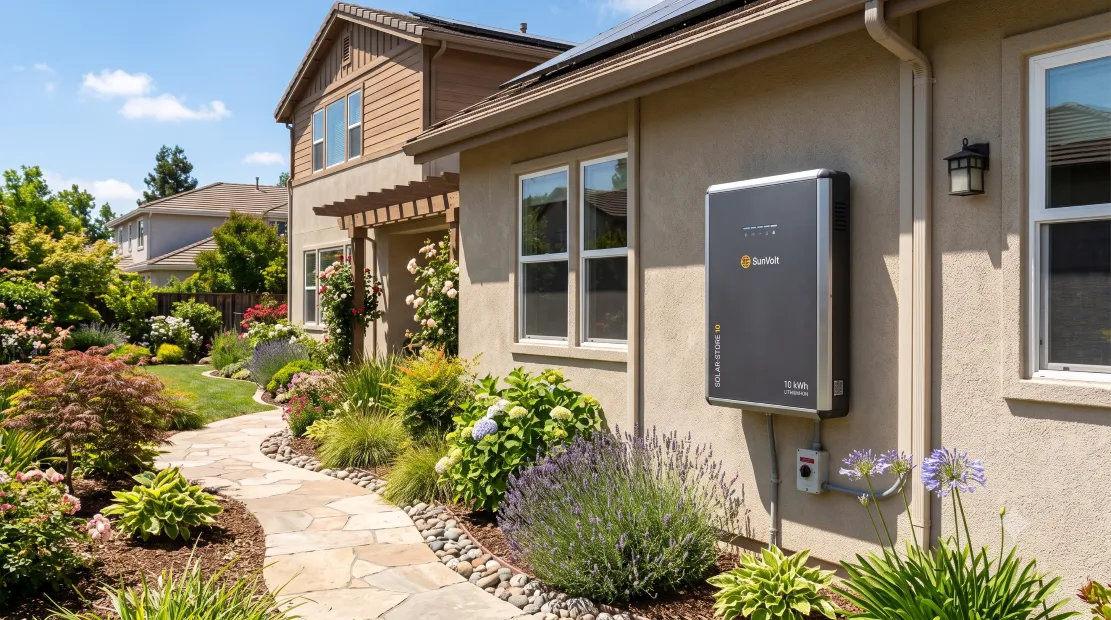
Pairing battery backup with solar adds cost but also adds meaningful everyday savings, not just emergency backup.
Incentives and Rebates
Federal tax credits have historically covered a significant percentage of installed cost for qualifying permanently installed battery systems, and many states, utilities, and municipalities layer additional rebates on top, particularly in regions prone to grid instability or extreme weather. Portable power stations generally don’t qualify for these incentive programs, which is worth factoring into a true cost comparison between categories — the effective, after-incentive cost gap between a large portable unit and a small installed system can be smaller than the sticker prices alone suggest. Because these programs change over time and vary by location, checking current eligibility before finalizing a budget is the only reliable way to know what applies to your specific situation.
Financing Options
Given the significant upfront cost of permanently installed systems, most homeowners finance rather than pay cash — through a loan bundled with solar installation, a home equity line of credit, or financing offered directly through the installer. Monthly payments are sometimes structured to be roughly offset by electricity bill savings when paired with solar and time-of-use rates, though it’s worth scrutinizing that assumption carefully rather than accepting it at face value, since savings and payment schedules don’t always align perfectly month to month. Portable power stations, by contrast, are generally simple enough purchases that most buyers pay cash outright rather than financing, given their comparatively modest price tags.
Home Battery vs Generator: A Cost Comparison
A natural comparison point is a traditional backup generator, which has a genuinely different cost structure. A whole-home standby generator often costs somewhat less upfront than a comparable multi-unit battery system, but carries ongoing fuel costs, annual maintenance, and generally a shorter overall lifespan than a battery system’s typical 10-year warranty. Batteries have no fuel cost, minimal maintenance, and operate silently, but carry a higher upfront cost and, without solar, a finite runtime limited by their stored capacity rather than a generator’s continuous fuel supply. Increasingly, homeowners in areas with both frequent short outages and strong solar potential lean toward battery systems, while those in areas with rare but very long multi-day outages sometimes still prefer a generator’s unlimited runtime as long as fuel remains available.

The right backup investment depends on your outage frequency, duration, and budget.
Maintenance and Long-Term Ownership Costs
Beyond the upfront installation, ongoing costs differ meaningfully between categories. Portable power stations require essentially no maintenance beyond occasional cleaning and periodic charging to keep the battery healthy when not in regular use. Permanently installed systems require even less hands-on attention, since most monitoring happens automatically through an app, though it’s reasonable to budget for the possibility of one component replacement — such as an inverter — over a system’s multi-decade lifespan. Neither category carries the recurring fuel and oil-change costs associated with a traditional gas generator, which is one of the recurring arguments in battery backup’s favor for households weighing long-term total cost of ownership rather than just the upfront number.
Which Option Fits Your Budget and Needs?
If your outage risk is occasional and short, and your main concern is keeping phones charged, running a fan, or powering medical equipment for a night, a portable power station in the $500-$1,500 range delivers real peace of mind without a major financial commitment. If you experience frequent outages, want automatic whole-home or near-whole-home coverage, and can budget for a five-figure investment, a permanently installed battery system — ideally paired with solar for daily savings alongside backup — delivers the most complete solution, with incentives often meaningfully reducing the effective cost. For most households somewhere in between, starting with a capable portable unit and reassessing whether a permanent installation makes sense after experiencing a few real outages is a reasonable, low-risk way to figure out how much backup capacity you actually need before committing to the bigger investment.
Frequently Asked Questions
What is the cheapest way to get home battery backup?
A portable power station is by far the lowest-cost entry point, starting around $300 for compact units, with no installation or electrician required. It won’t provide whole-home coverage, but it can reliably power essential devices during a short outage.
How much does a whole-home battery backup system cost installed?
A single permanently installed unit typically runs $12,000 to $18,000 installed. Homes needing multiple units for full whole-home coverage, including high-draw appliances, often see total costs of $20,000 to $35,000 or more depending on home size and electrical load.
Do I need solar panels to install a home battery?
No, a permanently installed battery can provide backup power and some rate-arbitrage savings without solar, though the financial case is generally stronger when paired with solar for free daytime charging and greater daily bill savings.
Are there tax credits for home battery backup systems?
Many permanently installed battery systems qualify for federal and sometimes state or utility incentives that can meaningfully reduce effective cost. Portable power stations generally don’t qualify for these programs. Always confirm current eligibility for your specific location before budgeting.
Is a battery backup cheaper than a generator in the long run?
It depends on usage patterns. Generators often cost less upfront but carry ongoing fuel and maintenance costs over time, while batteries cost more upfront but have minimal ongoing costs and, when paired with solar, generate daily savings in addition to backup power. Frequent short outages tend to favor batteries; rare but very long outages sometimes favor a generator’s unlimited runtime.
ADeeL A.M
ADeeL A.M is a home energy and clean solar power writer with a deep passion for the electrified home. He spends his days researching solar panels, battery backup systems, EV chargers, portable power stations, and smart energy solutions — comparing specs, efficiency ratings, and real-world performance to bring readers the newest, most reliable, and best-value options on the market.
View all articles by ADeeL A.M →