Is a Home Battery Worth It Without Solar?
Most home battery marketing assumes you’re pairing the battery with solar panels, and for good reason — that combination usually delivers the strongest financial return. But a lot of homeowners want backup power without taking on a full solar installation, and it’s a fair question whether a battery makes sense on its own. The answer depends on how you plan to use it: purely as emergency backup, or as a tool for shifting electricity consumption to cheaper hours. This guide breaks down both angles with real numbers so you can decide if a solar-free battery is worth the investment for your home.
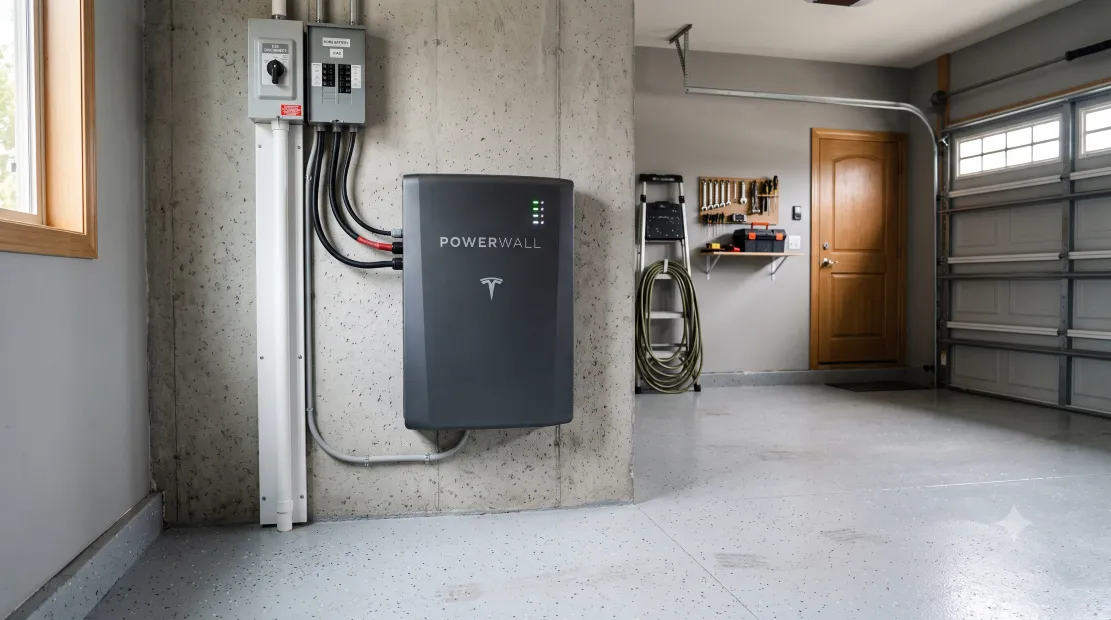
A home battery can work entirely independent of solar panels, charging from the grid instead.
⚡ Quick Answer
- For backup power alone: yes, a battery is worth it if you experience frequent outages or have critical needs like medical equipment — the value is resilience, not bill savings.
- For bill savings alone: only worth it if your utility offers a meaningful gap between off-peak and peak time-of-use rates.
- Payback period: without solar, expect a longer payback than a solar-paired system — often 12+ years, sometimes never fully recouping cost through savings alone.
- Best mindset: think of a solar-free battery primarily as an insurance policy against outages, with any bill savings as a secondary bonus rather than the main justification.
How a Battery Works Without Solar
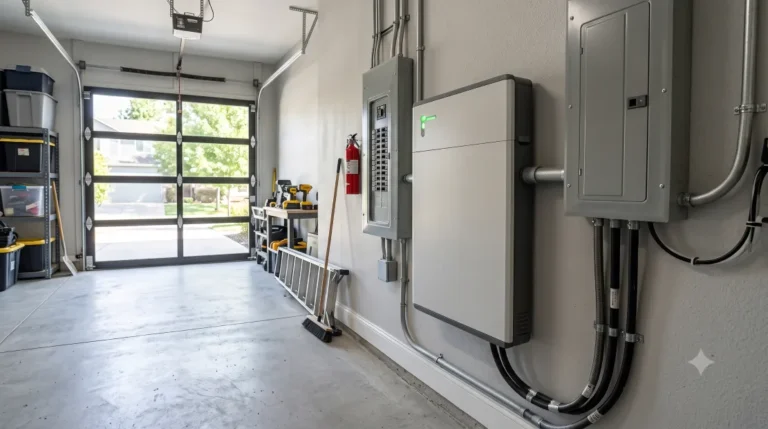
A home battery doesn’t require solar panels to function — it can charge directly from the grid instead of from rooftop solar generation. In this configuration, the battery charges up during whatever hours you set (typically overnight or during off-peak periods if your utility offers time-of-use rates), then either provides backup power during an outage or discharges during peak hours to reduce reliance on more expensive grid electricity. The hardware and installation process are essentially identical whether or not solar is part of the system — the difference is entirely in where the battery’s energy comes from and what problem it’s primarily solving for you.
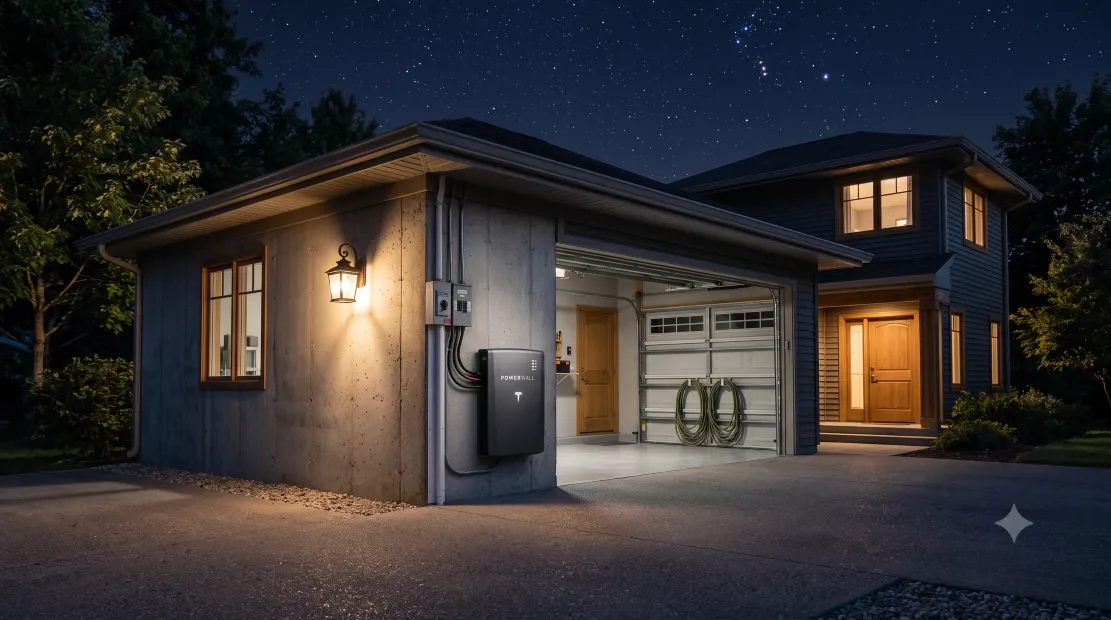
Without solar, a battery simply charges from the grid on a schedule you control.
The Two Separate Value Propositions
It’s worth separating a solar-free battery’s value into two genuinely distinct benefits, because conflating them leads to unrealistic expectations. The first is backup resilience: keeping your lights, refrigerator, and essential devices running during a grid outage, which has real value regardless of whether it saves you money on your monthly bill. The second is time-of-use rate arbitrage: charging the battery when electricity is cheap and using that stored power instead of grid electricity during expensive peak hours, which is a genuine financial benefit but only if your utility’s rate structure makes it worthwhile. Most solar-free purchases end up justified by one of these two propositions rather than both equally, so it helps to be honest upfront about which one is actually driving your decision.
Backup Value: What It’s Actually Worth
If your primary goal is resilience against outages, a battery’s value doesn’t show up on your electric bill — it shows up in the outages you sail through without disruption. For households that have experienced a costly or dangerous outage — spoiled groceries, a flooded basement from a failed sump pump, a medical device losing power — the value of guaranteed backup can easily justify the cost even without any bill savings at all. This is fundamentally an insurance-style purchase: you’re paying for protection against a bad outcome, not expecting the purchase itself to generate a positive financial return. Framing the decision this way from the start avoids the disappointment that comes from judging a backup-focused purchase purely against a savings-focused yardstick it was never meant to meet.

For many households, backup resilience alone justifies the cost, independent of any bill savings.
Time-of-Use Savings: Does the Math Work?
Without solar, the financial case for a battery rests almost entirely on time-of-use rate arbitrage — charging during cheap off-peak hours and discharging during expensive peak hours instead of drawing from the grid. Whether this makes financial sense depends heavily on the size of the gap between your utility’s off-peak and peak rates. A large gap, common in some regions with aggressive time-of-use pricing, can produce meaningful daily savings. A small gap, common in regions with flatter rate structures, produces savings too modest to meaningfully offset a battery’s cost within a reasonable timeframe. Pulling your actual utility rate schedule before assuming either scenario applies to you is the only way to know which situation you’re really in.
| Scenario | Bill Savings Potential | Realistic Payback (No Solar) |
|---|---|---|
| Large peak/off-peak rate gap | Meaningful | 10 – 14 years |
| Moderate rate gap | Modest | 14 – 20 years |
| Flat or minimal rate gap | Minimal | Often never fully recouped through savings alone |
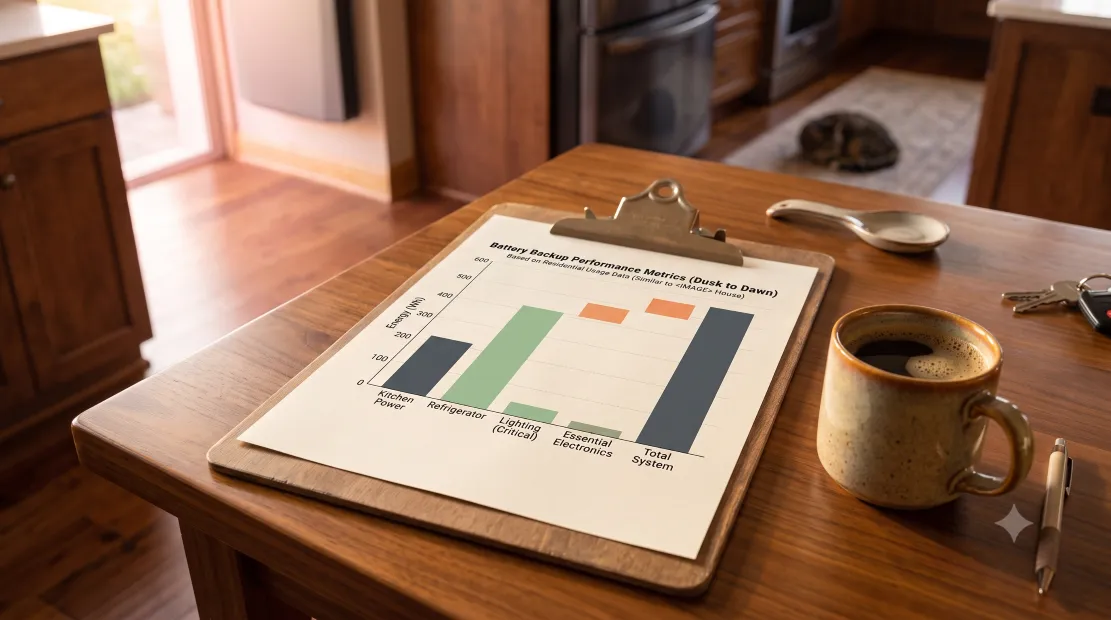
The size of your utility’s peak-to-off-peak rate gap largely determines the financial case.
Sizing a Solar-Free Battery Correctly
Without solar recharging the battery during the day, sizing decisions matter more, since the battery is working with a fixed stored charge until its next scheduled grid recharge rather than continuously topping up from free daytime generation. For backup-focused households, this means calculating your essential circuit load carefully and choosing a capacity that comfortably covers your expected outage duration, rather than assuming the battery will simply recharge itself mid-outage the way a solar-paired system often can during daylight hours. For arbitrage-focused households, sizing should match your actual peak-hour usage rather than buying more capacity than you’ll realistically shift to off-peak charging.
Comparing Payback Periods: With vs Without Solar
The honest comparison point is that adding solar to the same battery system meaningfully shortens payback in most cases, because solar provides free daytime charging instead of the battery needing to buy cheap grid electricity at all. A solar-paired system’s payback is typically driven by a combination of solar bill offset plus battery arbitrage; a solar-free system relies on arbitrage alone, which is a smaller savings pool to draw from. This doesn’t make a solar-free battery a bad choice — it just means the financial payback period is longer, and the decision leans more heavily on the value of backup resilience to justify the cost within a reasonable timeframe.
Alternatives Worth Comparing
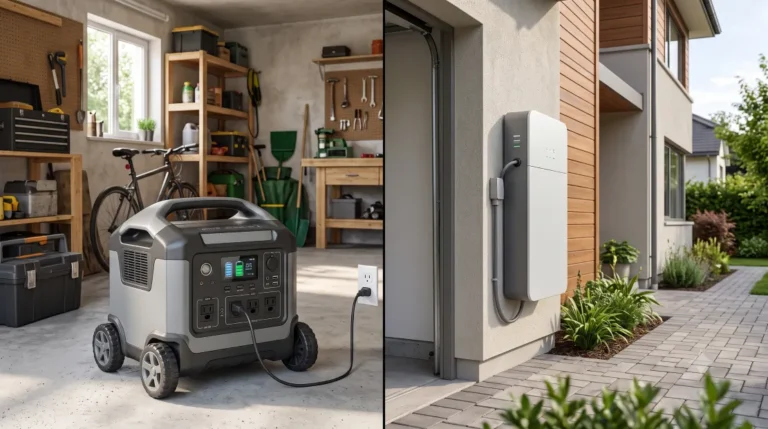
Before committing to a permanently installed battery without solar, it’s worth comparing it honestly against two alternatives that solve the backup problem differently. A traditional backup generator costs less upfront for whole-home coverage but carries ongoing fuel and maintenance costs, plus noise and emissions a battery doesn’t have — a reasonable choice for households in areas with rare but very long multi-day outages where a battery’s finite stored capacity would eventually run out anyway without solar to recharge it. A portable power station costs dramatically less upfront and requires no installation, though it covers only essential devices rather than whole-home or even substantial partial-home circuits, making it a better fit for households with modest backup needs and a much smaller budget. Weighing all three options against your actual outage history and budget, rather than defaulting to whichever option is most heavily marketed, tends to produce the most satisfying long-term choice.

Comparing a solar-free battery honestly against generators and portable units clarifies the right fit.
When a Solar-Free Battery Makes the Most Sense
The strongest case for a battery without solar exists for households with frequent grid outages, a meaningful time-of-use rate gap, critical power needs like medical equipment or a home-based business that can’t tolerate downtime, and enough budget to treat the purchase partly as insurance rather than expecting it to fully pay for itself through savings alone. Households planning to add solar later can also reasonably install battery-ready infrastructure now and add panels down the road, capturing the backup benefit immediately while deferring the larger solar investment.
When It’s Probably Not Worth It
If your area rarely loses power, your utility offers a flat or minimal time-of-use rate structure, and your primary motivation is bill savings rather than backup resilience, a solar-free battery is a harder purchase to justify financially — the payback period can stretch well beyond the system’s warranty period in the least favorable scenarios. In this situation, either a smaller portable power station for occasional backup needs, or waiting until you’re ready to pair the battery with solar for a stronger combined financial case, are both more sensible paths than installing a standalone battery purely on the hope that time-of-use savings will justify the cost on their own.
Maintenance and Long-Term Costs Either Way
Whether or not solar is part of the system, a permanently installed battery requires minimal ongoing maintenance — no fuel to store, no oil changes, and monitoring that happens automatically through an app tracking charge cycles and system health. Over a typical 10-year warranty period, it’s reasonable to budget for gradual capacity degradation, which is normal for lithium battery chemistry and generally accounted for in the warranty’s performance guarantees regardless of whether the battery charges from solar or the grid. This is one area where the solar-free configuration doesn’t create any meaningful cost disadvantage compared to a solar-paired system — the battery hardware itself behaves the same way either way.
The Bottom Line
A home battery without solar is genuinely worth it for households that value guaranteed backup power and are comfortable treating the purchase primarily as resilience insurance rather than a bill-reduction investment. It’s a harder financial sell for households chasing savings alone, where the payback math depends heavily on a utility rate structure that may or may not favor arbitrage enough to make a real difference. Running your own numbers — your actual outage history, your utility’s real time-of-use rates, and how much you value guaranteed backup — gives a far more honest answer than a generic sales pitch built around solar-paired savings that may not apply to your standalone purchase.
Frequently Asked Questions
Can a home battery charge from the grid instead of solar?
Yes, a home battery can charge directly from the grid without any solar panels, typically scheduled during off-peak hours if your utility offers time-of-use rates, and still provide backup power during an outage the same way a solar-paired system would.
Will a battery without solar actually lower my electric bill?
It can, but only meaningfully if your utility has a significant gap between off-peak and peak time-of-use rates. In regions with flat electricity pricing, a solar-free battery provides little to no bill savings, and its main value becomes backup resilience instead.
Is it better to wait and add solar later instead of buying a battery now?
It depends on your priorities. If backup power is an urgent need, installing battery-ready infrastructure now and adding solar later is a reasonable path that gets you resilience immediately while deferring the larger solar investment.
How much shorter is the payback period with solar compared to without?
Solar pairing typically shortens payback meaningfully because it provides free daytime charging instead of relying solely on grid-rate arbitrage. Solar-free systems generally see payback periods in the 12+ year range, sometimes longer, depending heavily on your specific utility rate structure.
Is a generator a better choice than a solar-free battery?
It depends on your outage pattern and priorities. Generators often cost less upfront and handle very long outages via refuelable fuel supply, while batteries have no ongoing fuel cost, run silently, and switch on automatically, but are limited by their stored capacity without solar to recharge them during an extended outage.
ADeeL A.M
ADeeL A.M is a home energy and clean solar power writer with a deep passion for the electrified home. He spends his days researching solar panels, battery backup systems, EV chargers, portable power stations, and smart energy solutions — comparing specs, efficiency ratings, and real-world performance to bring readers the newest, most reliable, and best-value options on the market.
View all articles by ADeeL A.M →