Heat Pump vs Furnace: Cost and Savings Compared

Choosing between a heat pump and a furnace is one of the biggest home energy decisions most households will make, and the right answer depends heavily on your climate, your local electricity and gas prices, and how long you plan to stay in your home. Heat pumps have surged in popularity thanks to major efficiency gains and expanded incentive programs, while furnaces remain the tried-and-true choice in many cold-climate regions. This guide compares upfront cost, installation complexity, monthly operating costs, efficiency ratings, and long-term savings so you can make the right call for your specific home.
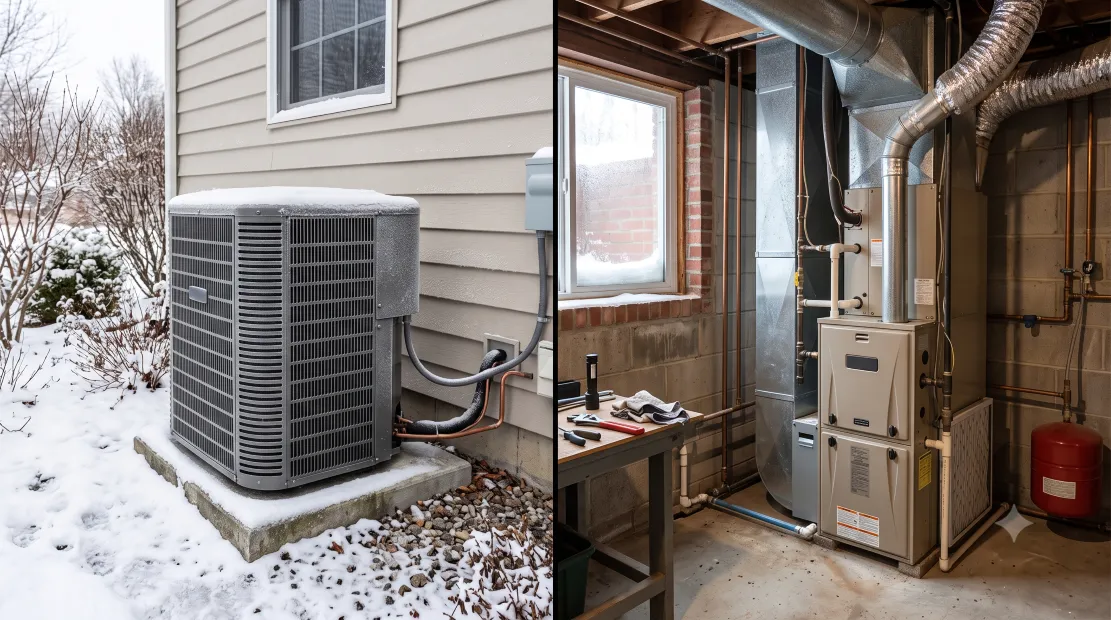
Heat pumps and furnaces take very different approaches to keeping a home warm.
⚡ Quick Answer
- Heat pumps generally cost more upfront but are dramatically more efficient, often producing 2-4 units of heat for every unit of electricity consumed.
- Furnaces cost less upfront and perform reliably in extreme cold, but efficiency tops out around 95-98% since they can never produce more heat energy than the fuel they burn.
- Best fit for heat pumps: moderate climates, homes with existing electrical capacity, and households eligible for efficiency rebates.
- Best fit for furnaces: very cold climates, homes with existing gas infrastructure, and lower upfront budgets.
How Each System Actually Works
A furnace generates heat by burning fuel — typically natural gas, though propane and oil furnaces still exist in some regions — and distributes that heat through ductwork using a blower fan. Its efficiency is measured by AFUE (Annual Fuel Utilization Efficiency), which tells you what percentage of the fuel’s energy actually becomes usable heat rather than being lost up the flue. Modern high-efficiency furnaces typically reach 95-98% AFUE.
A heat pump works completely differently: rather than generating heat by burning fuel, it moves existing heat from one place to another using a refrigerant cycle, similar to how a refrigerator moves heat out of its interior. In heating mode, it extracts heat from the outdoor air — even in cold temperatures, there is still usable thermal energy present — and transfers it indoors. Because it’s moving heat rather than creating it through combustion, a heat pump can produce significantly more heat energy than the electrical energy it consumes, which is measured as its Coefficient of Performance (COP), often in the 2.5-4.0 range for modern cold-climate models.
Upfront Equipment and Installation Cost
| Cost Factor | Furnace | Heat Pump |
|---|---|---|
| Equipment cost | $2,500 – $6,000 | $4,500 – $9,000 |
| Installed cost (typical) | $4,000 – $9,000 | $8,000 – $16,000 |
| Existing infrastructure needed | Gas line, ductwork | Electrical capacity, ductwork or ductless option |
| Typical lifespan | 15 – 20 years | 15 – 20 years |
| Federal/state incentives | Limited, occasional efficiency rebates | Often substantial, varies by program and income |
Furnaces generally cost less upfront, particularly in homes that already have gas service and existing ductwork compatible with a furnace swap. Heat pumps typically cost more to install, especially in homes without adequate electrical panel capacity, since a panel upgrade may be required to support the additional electrical load. However, heat pump incentive programs — including federal tax credits and state or utility rebates — can significantly narrow or even eliminate this upfront cost gap in many regions, particularly for households that also qualify for income-based rebate tiers.
Operating Costs and Monthly Savings
This is where the comparison gets genuinely dependent on your local utility rates. Because a heat pump can produce multiple units of heat per unit of electricity consumed, its operating cost per unit of heat delivered is often lower than a gas furnace in regions with moderate electricity prices — even though electricity is generally more expensive per unit of energy than natural gas. In regions with very cheap natural gas and comparatively expensive electricity, however, a high-efficiency furnace can sometimes still edge out a heat pump on raw monthly operating cost, particularly during the coldest weeks of winter when a heat pump’s efficiency naturally declines.
Cooling season tells a different story: a heat pump does double duty as an air conditioner in summer, meaning households replacing an aging furnace-and-AC combo with a single heat pump system are also eliminating the operating and maintenance cost of a separate air conditioning unit — a factor that’s easy to overlook when comparing heating costs in isolation.
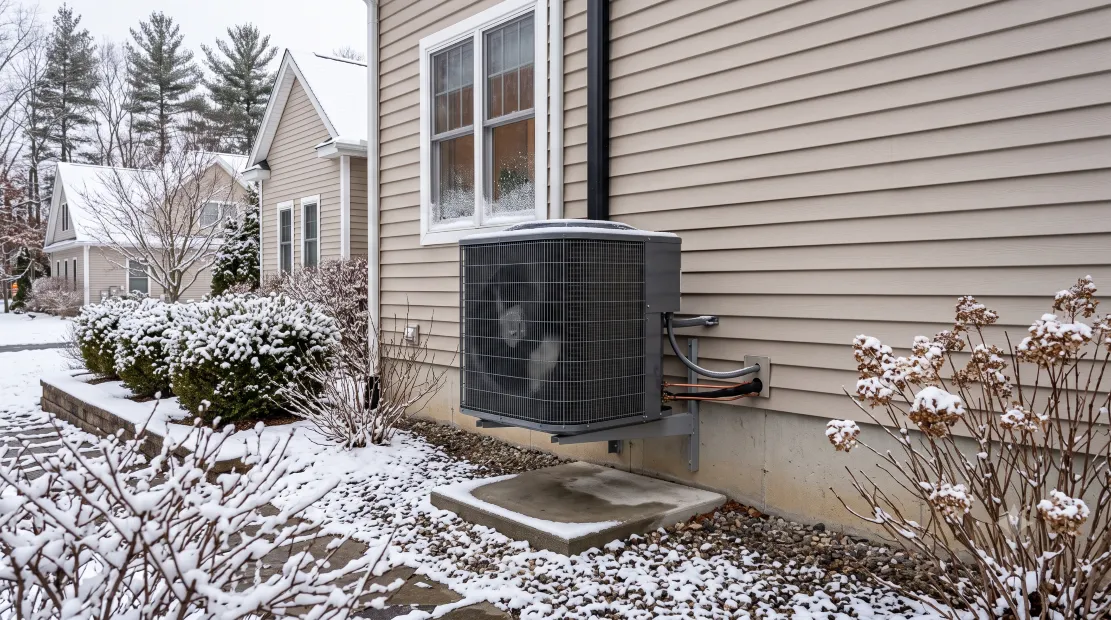
Modern cold-climate heat pumps are designed to extract heat from outdoor air even in freezing temperatures.
Performance in Cold Climates
This has historically been the furnace’s biggest advantage, and while newer cold-climate heat pump models have narrowed the gap considerably, it hasn’t fully disappeared. Furnaces produce a consistent, powerful heat output regardless of outdoor temperature, since they aren’t dependent on extracting heat from cold outdoor air. Heat pumps, even modern cold-climate-rated models, do see efficiency decline as outdoor temperatures drop well below freezing, though today’s best cold-climate units maintain meaningful heating capacity down to very low temperatures that would have stalled older heat pump generations entirely.
Many homeowners in the coldest climates opt for a hybrid or “dual fuel” system — a heat pump paired with a backup furnace that automatically takes over during the coldest stretches of winter, capturing the heat pump’s efficiency advantage during milder weather while relying on the furnace’s raw power output when temperatures drop to extremes.
Furnace and Ductwork Considerations
Most homes already have ductwork designed around a furnace’s airflow characteristics, and in many cases that same ductwork can be reused for a ducted heat pump system without major modification. Homes without existing ductwork — common in older houses with radiators or baseboard heat — often turn to ductless mini-split heat pumps instead, which eliminate the need for ductwork entirely by mounting individual indoor units in each room or zone, though this comes with its own installation cost considerations and a different aesthetic in living spaces.
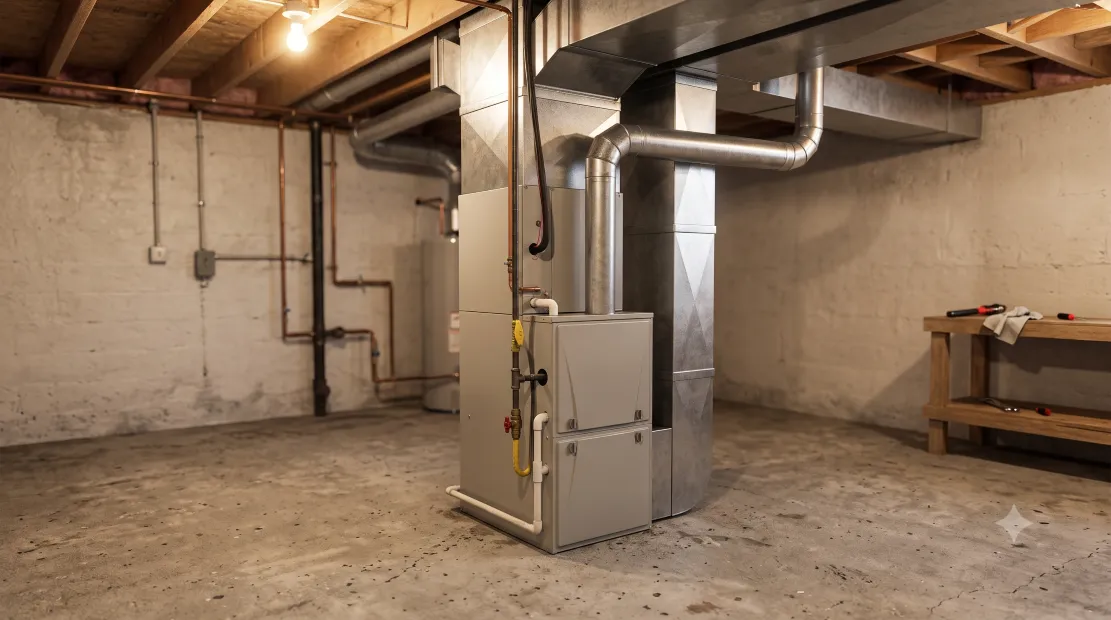
A gas furnace connected to home ductwork in a basement mechanical room.
Maintenance and Lifespan
Both systems require annual professional maintenance to run efficiently and safely — furnaces need combustion component inspection, filter changes, and heat exchanger checks, while heat pumps need refrigerant level checks, coil cleaning, and electrical component inspection. Because a heat pump also handles cooling duty, it effectively runs year-round rather than seasonally, which some technicians note can mean marginally more wear over time compared to a furnace that only operates during heating season — though both systems, properly maintained, commonly reach 15-20 years of service life.
Furnaces carry a small but serious additional consideration: as combustion appliances, they require proper venting and a functioning carbon monoxide detector nearby, since a malfunctioning furnace can pose a carbon monoxide risk. Heat pumps, having no combustion process, don’t carry this particular risk.
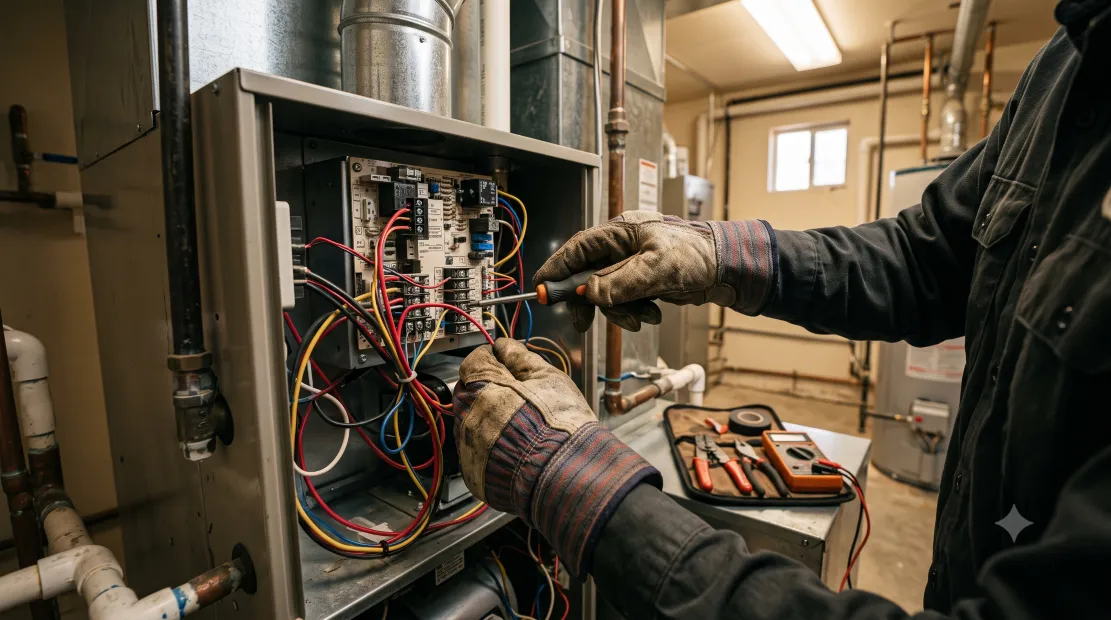
Professional installation and annual maintenance matter for the long-term performance of either system.
Environmental Considerations
Heat pumps generally produce lower direct carbon emissions than gas furnaces, particularly as electrical grids incorporate more renewable energy over time — meaning a heat pump’s environmental footprint tends to improve automatically as the grid gets cleaner, something a gas furnace can never do since it always burns fossil fuel directly. This is a significant part of why many state and federal incentive programs specifically target heat pump adoption as part of broader emissions-reduction goals. Some homeowners also factor in indoor air quality: because heat pumps involve no on-site combustion, there’s no flue gas or combustion byproduct to manage inside the home, which some households view as an added benefit beyond the emissions calculation alone.
Proper Sizing Matters More Than the Brand
Whichever system you choose, correct sizing has a bigger impact on comfort and efficiency than which brand or model you pick. An oversized furnace or heat pump cycles on and off too frequently, wasting energy and creating uneven temperatures throughout the home, while an undersized unit struggles to keep up on the coldest days regardless of how efficient it is on paper. A proper installer should perform a load calculation based on your home’s square footage, insulation levels, window efficiency, and local climate data — not simply replace your old unit with a same-sized model out of convenience.
This is particularly important for heat pumps, where sizing errors can more noticeably affect cold-weather performance and the balance point at which a hybrid system should switch over to backup heat.
Noise Levels and Resale Value
Heat pump outdoor units run more continuously than a furnace’s occasional combustion cycles, since they also handle cooling duty through the warmer months. Modern heat pump compressors have gotten considerably quieter over recent product generations, but it’s still worth considering outdoor unit placement relative to bedroom windows or outdoor living spaces during installation planning. Furnaces, being indoors, are generally less of a factor in outdoor noise complaints, though ductwork can occasionally carry some operational sound throughout the house.
From a resale perspective, heat pumps have increasingly become a selling point in many markets, particularly among buyers focused on energy efficiency and lower long-term utility costs. In regions with strong incentive programs and rising awareness of heat pump technology, a recently installed heat pump can be a meaningful value-add during a home sale, though this varies by local market and buyer expectations.
Which One Should You Choose?
If you live in a moderate climate, have adequate electrical capacity (or are willing to invest in a panel upgrade), and can take advantage of current incentive programs, a heat pump is generally the stronger long-term choice — lower operating costs in most regions, dual heating-and-cooling functionality, and a smaller environmental footprint that improves further as the grid decarbonizes over time.
If you live in an extremely cold climate, already have reliable and inexpensive gas service, or need the lowest possible upfront cost, a modern high-efficiency furnace remains a solid, dependable choice — and pairing one with a heat pump in a hybrid dual-fuel setup can capture much of the efficiency benefit while keeping the furnace’s cold-weather reliability as backup.

A smart thermostat helps optimize efficiency regardless of which heating system you choose.
Frequently Asked Questions
Is a heat pump cheaper to run than a furnace?
In most moderate climates with reasonably priced electricity, yes — a heat pump typically produces more heat per unit of energy consumed than a furnace, resulting in lower operating costs. In regions with very cheap natural gas and expensive electricity, or during extreme cold snaps, the gap can narrow or occasionally reverse.
Can a heat pump fully replace a furnace in a cold climate?
Modern cold-climate-rated heat pumps can handle most winter conditions in many cold regions, but many homeowners in the coldest climates still choose a hybrid dual-fuel system that pairs a heat pump with a backup furnace for the most extreme temperature days.
Do I need to upgrade my electrical panel to install a heat pump?
It depends on your home’s existing panel capacity and the specific heat pump system size. Many homes have sufficient capacity already, but older homes or those adding a heat pump alongside other electrical upgrades sometimes require a panel upgrade — your installer can assess this during a site visit.
How long does a heat pump or furnace typically last?
Both systems commonly last 15 to 20 years with proper annual maintenance, though actual lifespan varies based on usage intensity, climate, and how consistently maintenance is performed.
Are there tax credits available for installing a heat pump?
Many regions offer federal, state, or utility-level incentives for heat pump installation, sometimes covering a significant portion of the total cost, particularly for income-qualifying households. Availability and amounts change over time, so it’s worth checking current programs for your specific location before purchasing.
ADeeL A.M
ADeeL A.M is a home energy and clean solar power writer with a deep passion for the electrified home. He spends his days researching solar panels, battery backup systems, EV chargers, portable power stations, and smart energy solutions — comparing specs, efficiency ratings, and real-world performance to bring readers the newest, most reliable, and best-value options on the market.
View all articles by ADeeL A.M →