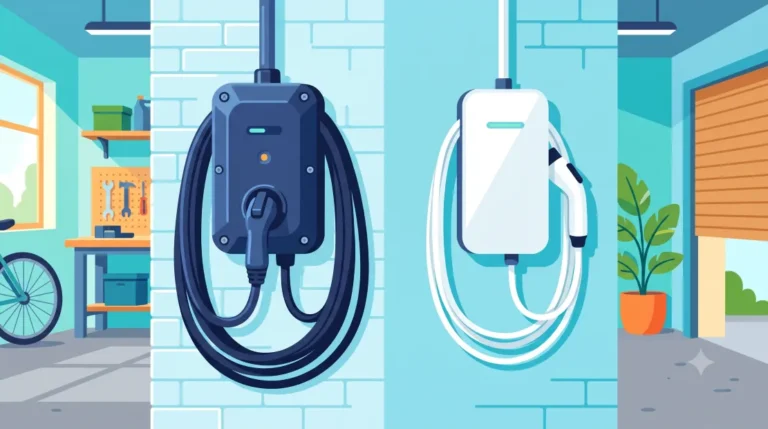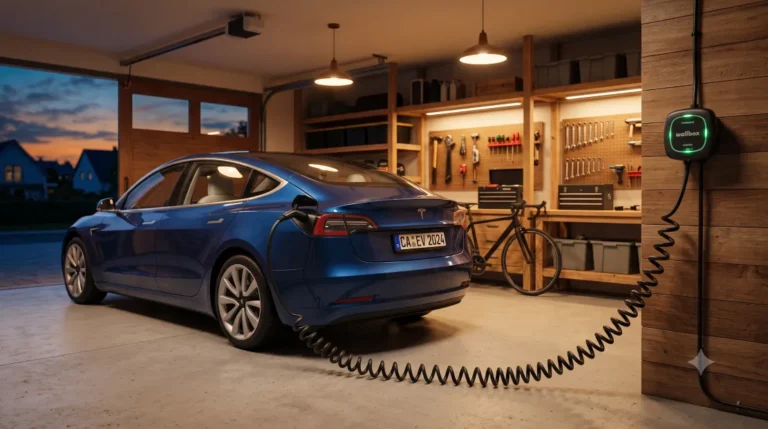
How Much Does It Cost to Install a Home EV Charger?
If you’re switching to an electric vehicle, one of the first practical questions is what it actually costs to get a Level 2 charger installed at home. The honest answer is: it depends heavily on your electrical panel, how far the charger sits from that panel, and local labor rates — which is why quotes for what looks like the same job can range from a few hundred dollars to several thousand. This guide breaks down every line item in a typical installation, the factors that push cost up or down, real regional cost ranges, and where incentives and rebates can meaningfully reduce your final bill.
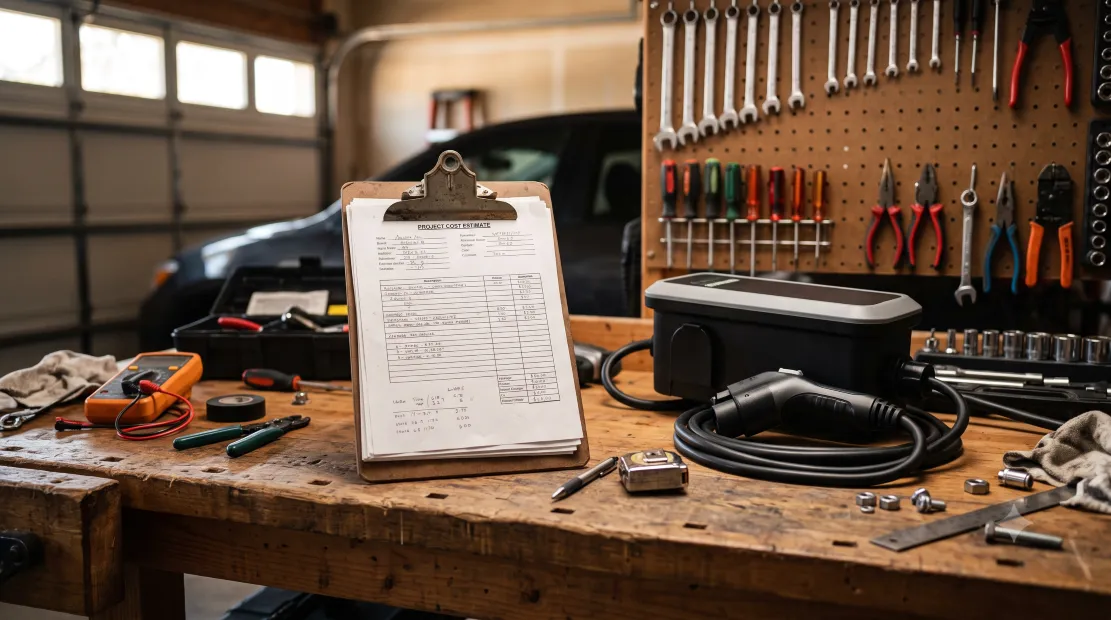
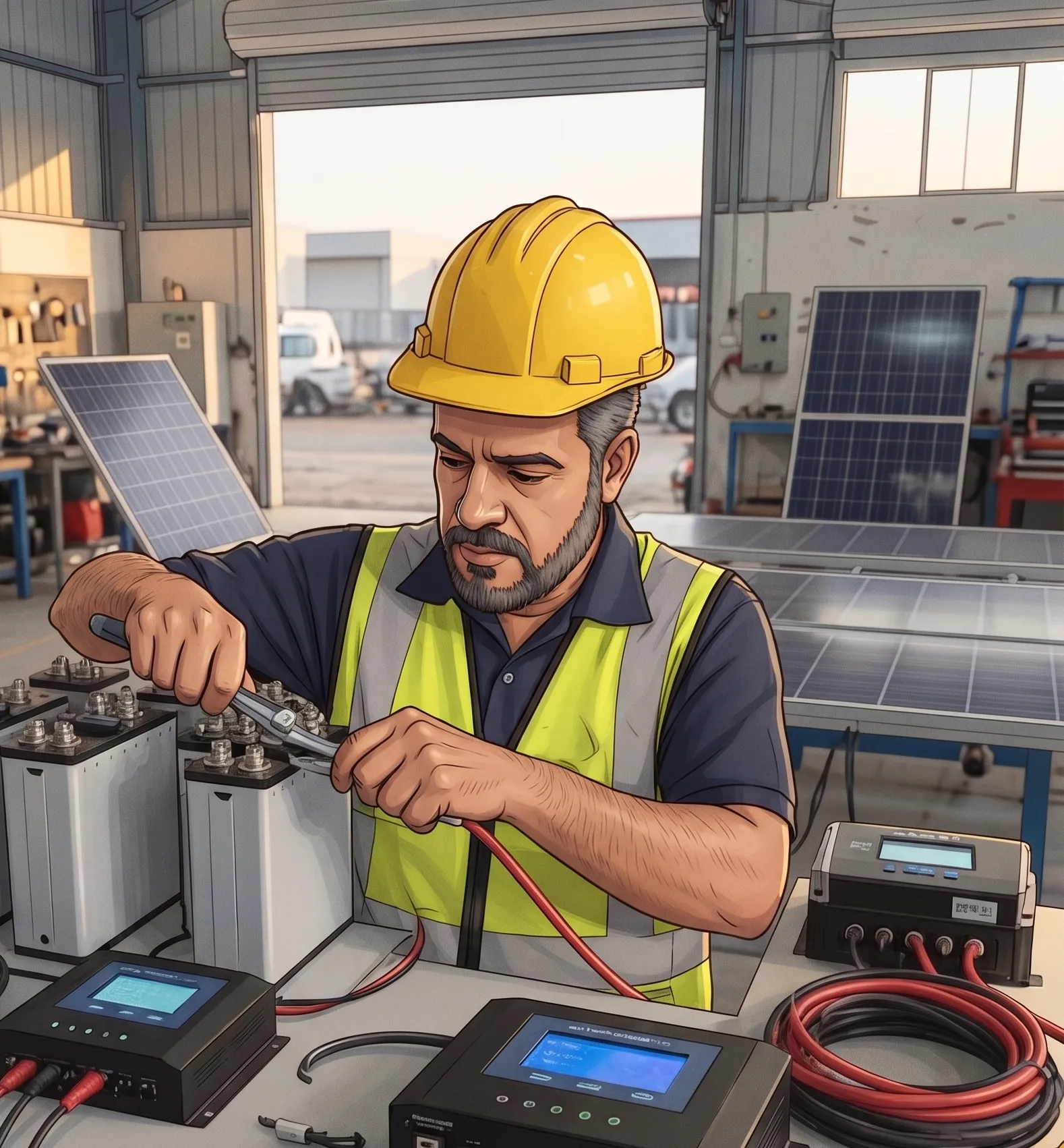
Total installation cost depends on far more than just the charger itself.
⚡ Quick Answer
- Typical total installed cost: $800 to $2,500 for most homes with adequate existing electrical capacity.
- With a panel upgrade required: costs can rise to $2,500–$5,000 or more.
- Biggest cost driver: distance between your electrical panel and the charger location, not the charger hardware itself.
- Incentives: federal, state, and utility rebates can significantly offset installation cost in many regions — always check before budgeting.
What’s Actually Included in “Installation Cost”
When people ask what it costs to install a home charger, they’re usually bundling together several separate costs that are worth breaking apart. There’s the charger hardware itself, the electrician’s labor to run wiring and mount the unit, any permit and inspection fees required by your municipality, and — for a meaningful share of homes — the cost of upgrading an electrical panel that doesn’t have enough spare capacity for a new 240V circuit. Understanding these as separate line items makes it much easier to spot where your specific quote is higher or lower than average, and where you might have room to negotiate or shop around.
Charger Hardware Cost
A Level 2 home charger typically costs between $350 and $700 for a solid mid-range unit, with premium models featuring faster charging speeds, smart app connectivity, and sleeker designs running up to $900 or more. Basic non-smart Level 2 chargers can be found for less, though most homeowners find the app-connected features — scheduling, energy monitoring, remote start — worth the modest price difference. Hardware cost is generally the most predictable and least variable part of the total bill; it’s the labor and electrical work around it that swings the final number.
| Cost Component | Typical Range | Notes |
|---|---|---|
| Charger hardware | $350 – $900 | Smart, app-connected models cost more |
| Standard labor (simple job) | $300 – $800 | Panel has capacity, short wire run |
| Complex labor (longer run) | $800 – $1,800 | Charger far from panel, trenching or conduit needed |
| Panel upgrade (if needed) | $1,500 – $3,500 | Common in homes with older or full panels |
| Permits and inspection | $50 – $300 | Varies significantly by municipality |
Labor and Wiring: The Real Cost Driver
For most homes, labor is where the bulk of the money goes, and the single biggest factor is distance: how far the charger’s mounting location sits from your electrical panel. A charger mounted in a garage directly adjacent to the panel might need only a few feet of wiring and a couple of hours of labor. A charger mounted on a driveway pad 50 feet from the panel, requiring trenching under a walkway or exterior wall penetrations, can add many hours of skilled labor and materials cost, sometimes doubling or tripling the total bill compared to a short, simple run.
Whether the installation is indoor or outdoor also affects labor: outdoor installations generally require weatherproof conduit and a weather-rated enclosure for the charger itself, adding modest additional material and labor cost compared to a garage installation using standard indoor-rated components.
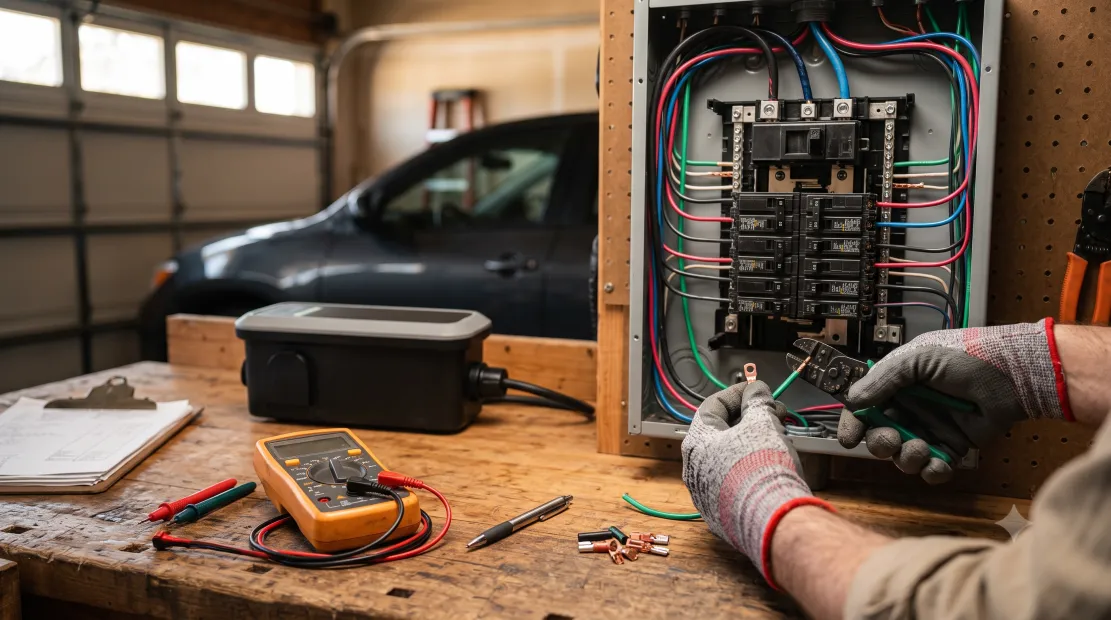
Most of the installation cost comes from labor and wiring, not the charger itself.
When a Panel Upgrade Is Needed
Your home’s electrical panel has a maximum total capacity, and every circuit — lights, HVAC, kitchen appliances, and now an EV charger — draws from that shared total. Older homes, particularly those with 100-amp panels rather than the 200-amp panels common in newer construction, often don’t have enough spare capacity to add a 40-50 amp EV charger circuit without exceeding safe limits. In that situation, an electrician will typically recommend either a panel upgrade to increase total capacity, or a smaller, specialized device called a load management system that can share available capacity dynamically between the charger and other high-draw circuits without a full panel replacement.
A full panel upgrade is the more expensive path, typically running $1,500 to $3,500 depending on the specific panel size and any utility coordination required, but it also future-proofs the home for other electrical additions down the road, not just the charger.
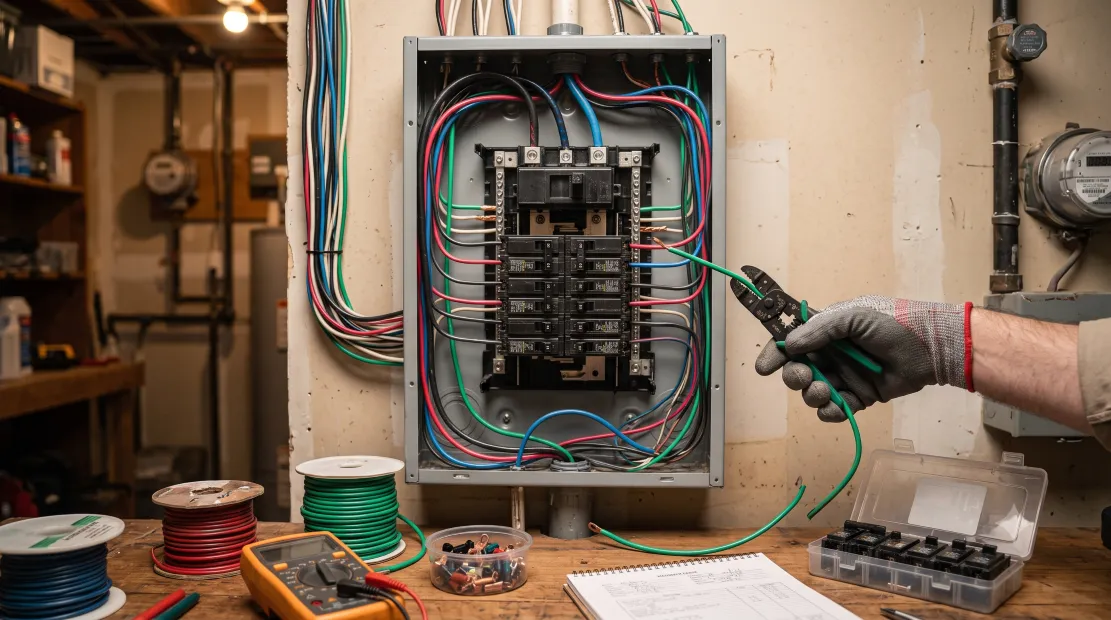
Older homes with limited panel capacity often need an upgrade before adding an EV charger circuit.
Permits, Inspections, and Why They Matter
Most municipalities require an electrical permit for installing a new 240V circuit, along with a follow-up inspection to confirm the work meets code. Permit fees are usually modest — typically $50 to $300 depending on your location — but skipping this step to save money is a real risk: unpermitted electrical work can complicate a future home sale, may not be covered by homeowner’s insurance if it causes damage, and in some cases can result in fines if discovered later. Reputable electricians handle the permit process as a standard part of the job, and it’s worth confirming this is included in any quote you receive rather than assumed.
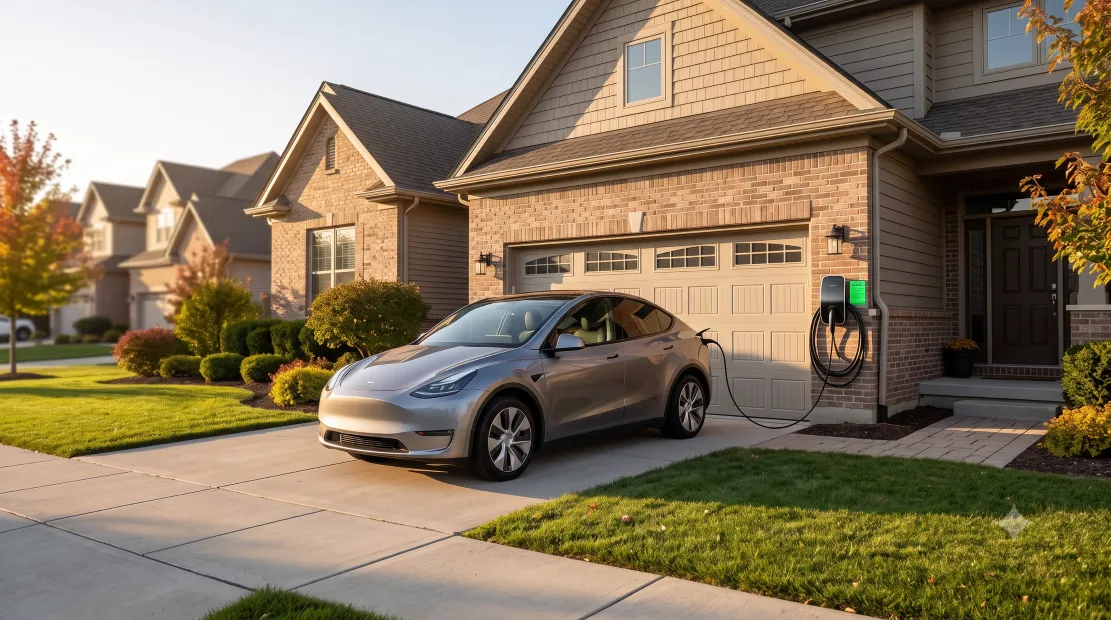
A permitted, inspected installation protects both your safety and your home’s resale value.
Regional Cost Variation
Labor rates vary significantly by region, and this often matters more than any other single factor in explaining why two homeowners with nearly identical setups receive very different quotes. Major metro areas with higher costs of living generally see higher electrician labor rates, while rural and lower-cost regions tend to see lower total installation costs for comparable jobs. Local permit fees and inspection requirements also vary by municipality, adding another layer of regional variation on top of labor cost differences.
Level 1 vs Level 2: Do You Even Need an Installation?
It’s worth pausing to confirm you actually need a Level 2 installation before budgeting for one. A standard 120V wall outlet can charge most EVs slowly overnight — typically adding just 3 to 5 miles of range per hour — which is genuinely sufficient for drivers with low daily mileage and no need to fully recharge from near-empty overnight. For anyone driving a meaningful daily commute, sharing a vehicle, or wanting the flexibility of a full overnight charge from a low battery, a Level 2 installation adding 25-40 miles of range per hour is generally worth the upfront cost. If you’re unsure, tracking your actual daily driving for a couple of weeks can clarify whether Level 1 charging would realistically keep up with your routine.
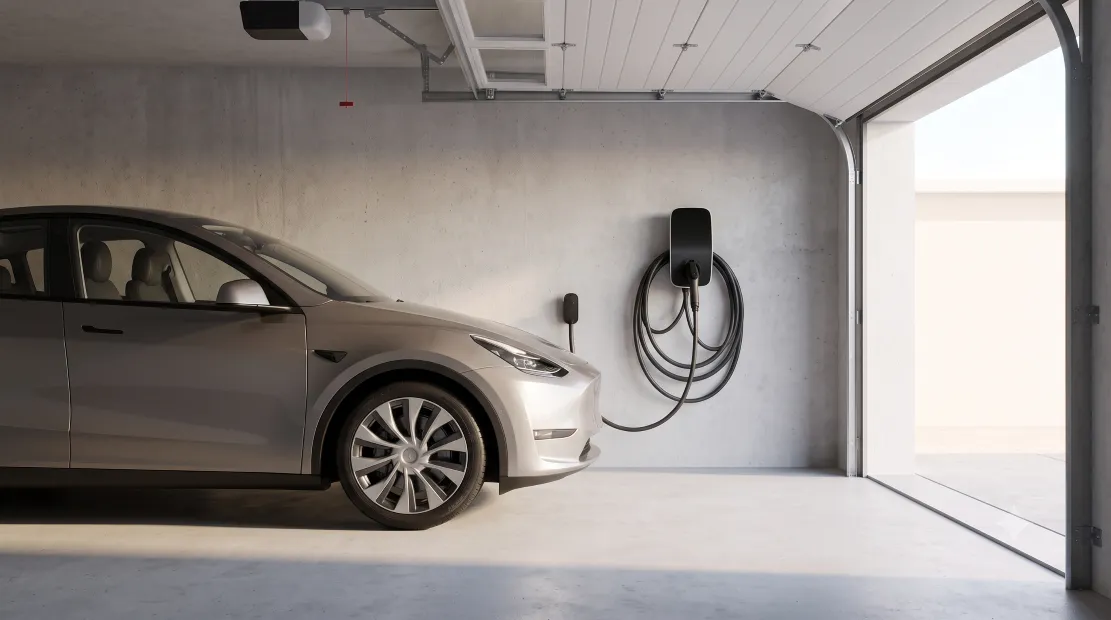
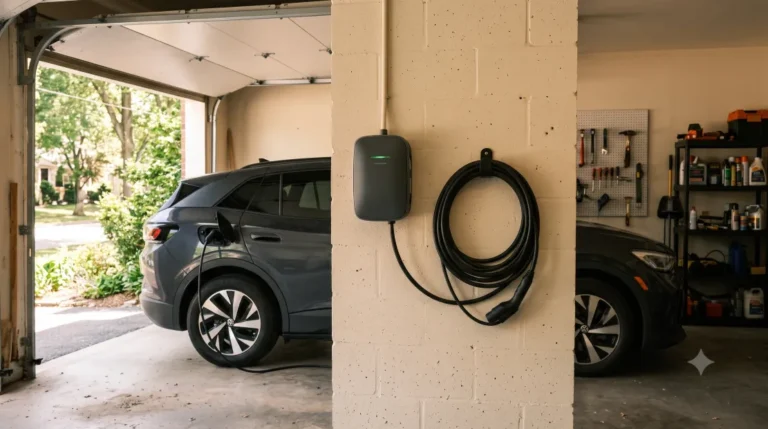
A garage-mounted Level 2 charger close to the panel keeps installation costs lower.
DIY vs Professional Installation
Running a new 240V circuit and installing a hardwired charger is not a typical DIY electrical project, and most manufacturers require professional installation to keep the charger’s warranty valid. Some homeowners with existing 240V outlets — for instance, a dryer outlet that happens to be near the desired charger location — may be able to use a plug-in charger model without new wiring, which meaningfully reduces cost since no new circuit installation is needed. Even in that scenario, it’s worth having an electrician confirm the existing outlet and circuit can safely handle the charger’s continuous draw before plugging in.
Incentives and Rebates That Reduce Cost
Before finalizing a budget, it’s worth checking what incentives are currently available in your area, since they can meaningfully change the real cost of installation. Federal tax credits have historically covered a percentage of EV charger installation costs for qualifying households, and many states, utilities, and municipalities layer additional rebates on top — sometimes covering installation costs entirely for income-qualifying households or those in specific service territories. Because these programs change over time and vary significantly by location, checking current program details directly before installation is the only reliable way to know what applies to your specific situation.
Getting Accurate Quotes
Because labor and panel work explain most of the cost variation between quotes, getting three quotes from licensed electricians — ideally with each one visiting the property in person rather than quoting from a phone description — is the single best way to understand your real cost range. Be wary of quotes that seem unusually low, since they may be omitting permit costs, assuming a shorter wire run than your home actually needs, or planning to skip a panel capacity check that later turns into a costly change order once work has already begun.
How to Reduce Installation Cost
A few practical choices can meaningfully lower your total bill. Mounting the charger as close as possible to your electrical panel minimizes wiring and labor cost, sometimes by a significant margin compared to a more “convenient” but distant location. Choosing an indoor garage installation over an outdoor driveway mount avoids the added cost of weatherproof conduit and enclosures. And if your panel is close to capacity but not quite over it, asking your electrician about a load management device rather than a full panel upgrade can sometimes solve the capacity problem for a fraction of the upgrade cost.
Which Approach Should You Choose?
For most homeowners with a reasonably modern electrical panel and a charger location close to that panel, budgeting $800 to $2,000 for a complete, permitted installation is realistic. If your panel is older, undersized, or your desired charger location is far from the panel, budgeting toward the higher end of $2,500 to $5,000 is more prudent, with the specific number depending heavily on your electrician’s in-person assessment. In either case, getting multiple quotes, confirming permits are included, and checking current incentive programs before committing are the three steps most likely to save you real money on the final bill.
Frequently Asked Questions
What is the average cost to install a home EV charger?
Most homes with adequate existing electrical capacity see total installed costs between $800 and $2,500, including hardware, labor, and permits. Homes requiring a panel upgrade often see costs rise to $2,500–$5,000 or more.
Why do EV charger installation quotes vary so much?
The biggest factors are the distance between the electrical panel and the charger location, whether a panel upgrade is needed, and regional labor rates. The charger hardware itself is a relatively small and predictable part of the total cost.
Can I install an EV charger myself to save money?
Running a new 240V circuit is not a typical DIY project, and most manufacturers require professional installation to keep the warranty valid. Some homeowners with an existing compatible 240V outlet nearby can use a plug-in charger without new wiring, which does reduce cost, but a licensed electrician should still confirm the circuit can safely handle the load.
Do I need a permit to install a home EV charger?
In most municipalities, yes — a new 240V circuit installation typically requires an electrical permit and inspection. Reputable electricians usually handle this as part of the job, and it’s worth confirming it’s included in any quote.
Are there rebates or tax credits available for EV charger installation?
Many regions offer federal, state, or utility-level incentives that can significantly offset installation cost, sometimes covering it entirely for income-qualifying households. Availability and amounts change over time, so it’s worth checking current programs for your specific location before finalizing a budget.
ADeeL A.M
ADeeL A.M is a home energy and clean solar power writer with a deep passion for the electrified home. He spends his days researching solar panels, battery backup systems, EV chargers, portable power stations, and smart energy solutions — comparing specs, efficiency ratings, and real-world performance to bring readers the newest, most reliable, and best-value options on the market.
View all articles by ADeeL A.M →