ChargePoint Home Flex vs Tesla Wall Connector: Which Home EV Charger Wins?

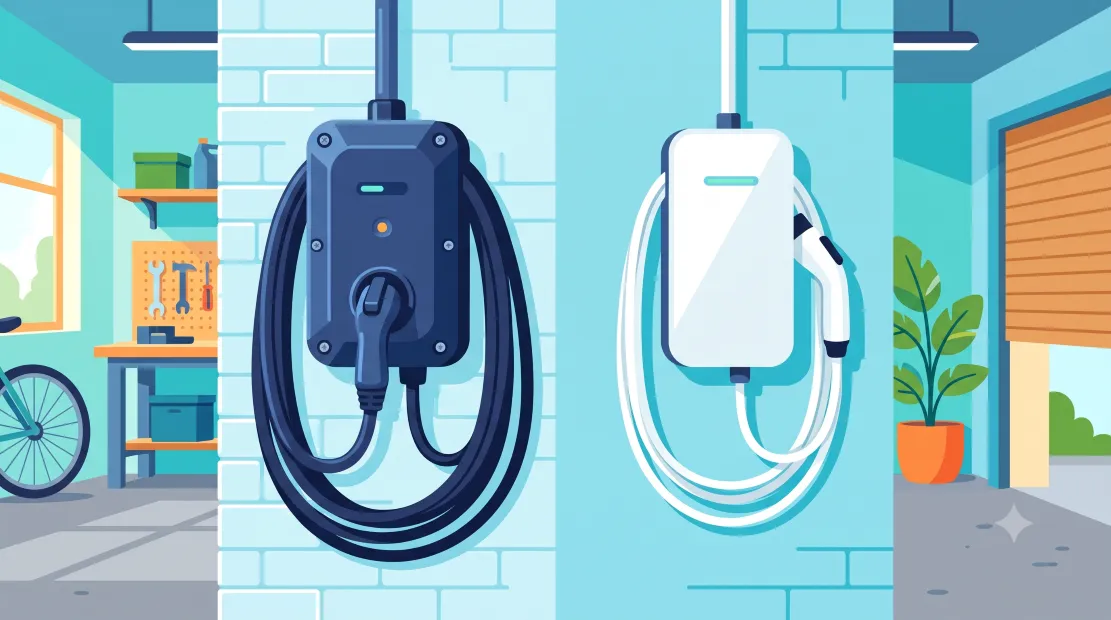
Two of the most popular home EV chargers, compared head-to-head.
If you are shopping for a Level 2 home charger, two names dominate almost every comparison list: the ChargePoint Home Flex and the Tesla Wall Connector. Both deliver fast, reliable overnight charging, both have loyal fan bases, and both are priced within a few dollars of each other — yet they are built around very different philosophies. ChargePoint leans into flexibility and broad EV compatibility, while Tesla leans into simplicity and tight integration with its own ecosystem (now extended to other automakers through the NACS connector). This guide breaks down power output, installation requirements, app experience, durability, and total cost so you can decide which charger actually fits your driveway, your electrical panel, and your vehicle.
⚡ Quick Answer
- Choose the ChargePoint Home Flex if you own a non-Tesla EV, want adjustable amperage on one unit, or might switch vehicles down the road.
- Choose the Tesla Wall Connector if you drive a Tesla (or any NACS-equipped EV), want the simplest possible setup, and prefer the cleanest, smallest charger on the wall.
- Both chargers max out around 48-60 amps, both support WiFi scheduling, and both are rated for outdoor installation.
- Installation cost is the real differentiator for most households — not the charger price itself.
Design and Build Quality
The ChargePoint Home Flex has a slightly bulkier, more utilitarian look. Its plastic housing is sturdy and weather-sealed, with a circular LED ring on the connector handle that glows different colors depending on charging status. The cable is noticeably thick — built to handle up to 50 amps — which makes it a little heavier to handle than some competitors, but it also feels reassuringly robust for years of daily plugging and unplugging.
The Tesla Wall Connector takes the opposite approach: a minimalist, rounded white or matte-black enclosure with no visible screws, a slim cable, and an integrated cable holster sold separately. It is noticeably more compact on the wall and was clearly designed to look at home in a modern garage rather than a utility room. For homeowners who care about aesthetics as much as function, Tesla’s unit tends to win this category outright.
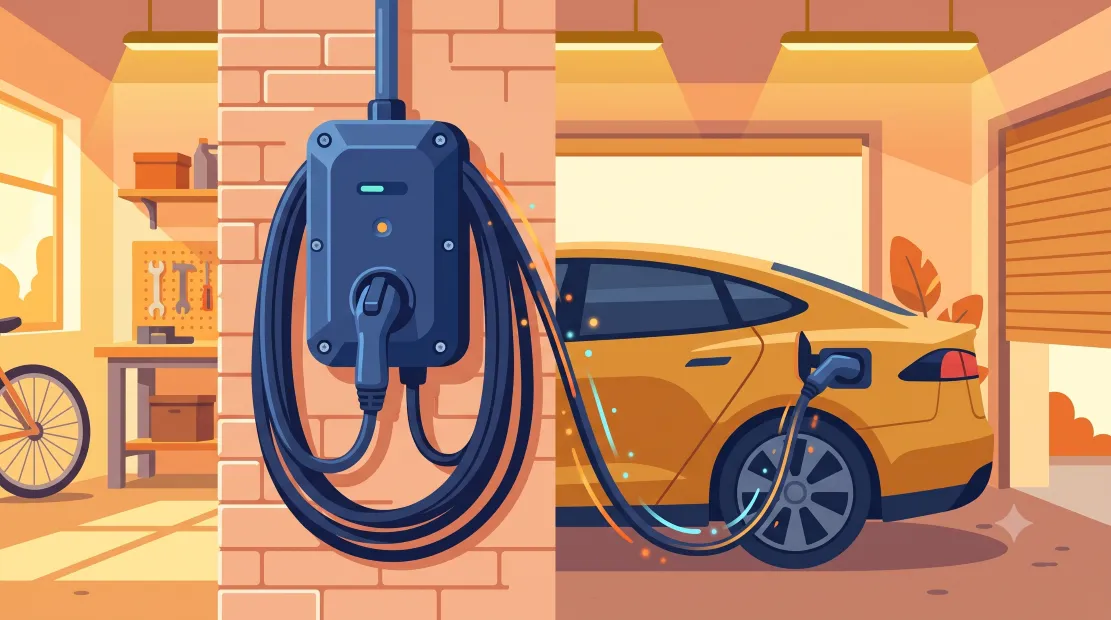
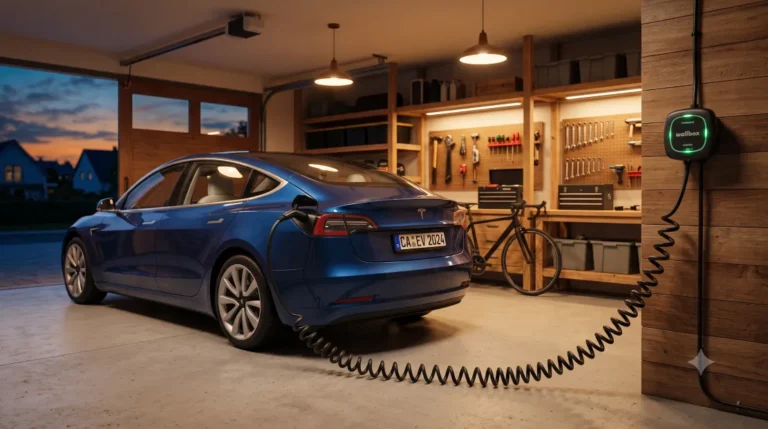
The ChargePoint Home Flex mounted and ready for daily use.
Charging Speed and Power Output
This is where the two units are closer than most buyers expect. The ChargePoint Home Flex is fully adjustable from 16 to 50 amps via the app or a simple dial, which lets you match the output to your home’s electrical capacity without buying a different model. At 50 amps on a 240V circuit, it delivers roughly 12 kW, which translates to about 30-40 miles of range added per hour for most EVs.
The Tesla Wall Connector (Gen 3) tops out at 48 amps on a standard 60-amp circuit, delivering up to 11.5 kW — essentially the same real-world charging speed. Owners of newer Tesla models with higher onboard charger capacity can sometimes push slightly higher with a properly sized circuit, but for the vast majority of households, the difference between the two chargers in actual overnight charging time is negligible: both will fully replenish a depleted battery overnight with room to spare.
Compatibility: NACS, J1772, and Multi-EV Households
Compatibility is the single biggest decision factor for most buyers. The ChargePoint Home Flex ships with a standard J1772 connector, which works with every non-Tesla EV sold in North America, and Tesla vehicles can use it with a J1772-to-Tesla adapter (often included free with the car). This makes it the safer pick for households with more than one EV, or households that might switch brands at the next lease renewal.
The Tesla Wall Connector now ships with the native NACS (North American Charging Standard) plug, which works seamlessly with all current Tesla models and an increasing number of non-Tesla EVs from automakers that have adopted NACS, often via an adapter from the vehicle manufacturer. If your household is Tesla-only, or your next vehicle is already confirmed to use NACS, this is a non-issue. If you are charging a mixed fleet — say, a Tesla and a Ford or Hyundai EV — you will want to confirm adapter availability before committing to one charger for both vehicles.
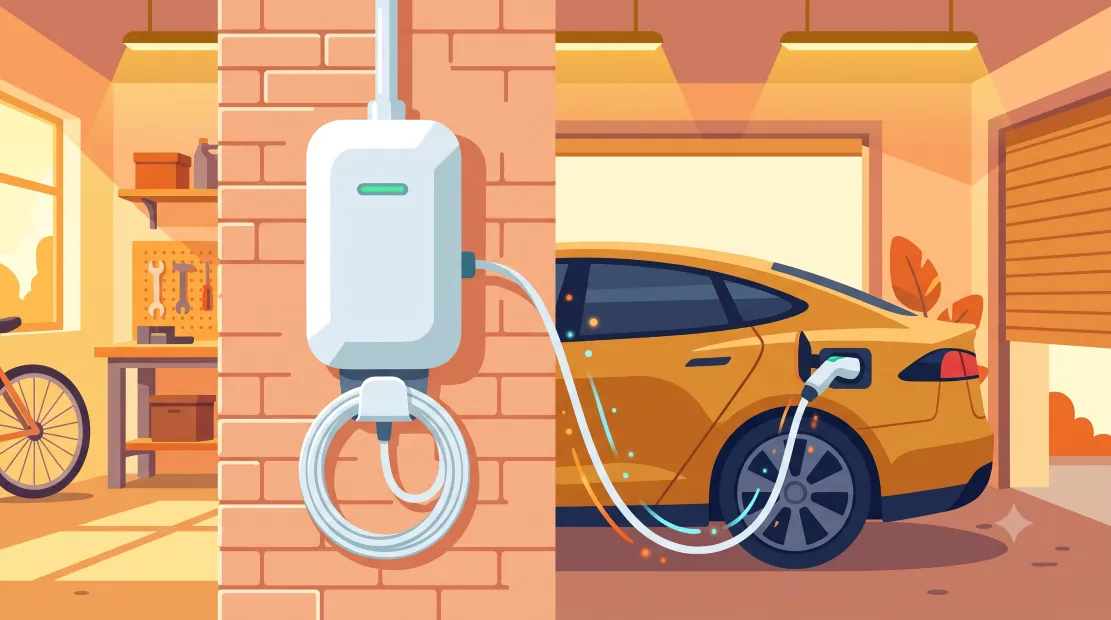
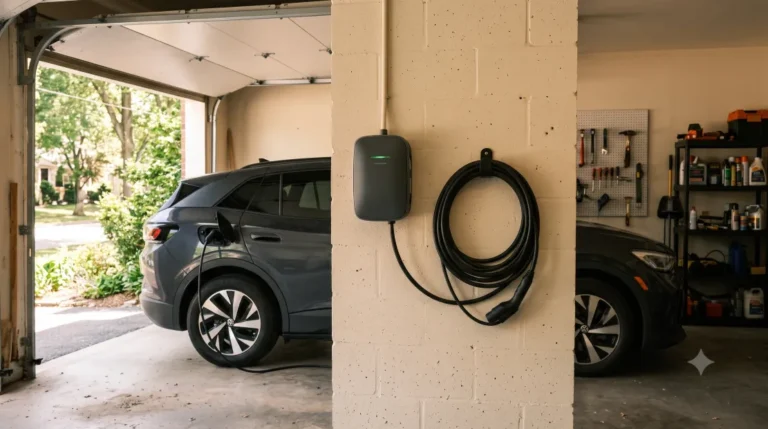
The Tesla Wall Connector’s compact, minimalist design.
Installation Requirements and Cost
Both chargers require a dedicated 240V circuit, and both can be hardwired or plugged into a NEMA 14-50 outlet — though hardwiring is generally recommended for higher amperage and outdoor durability. Installation cost depends far more on your home’s existing electrical infrastructure than on which charger you choose:
| Installation Factor | Typical Cost Range | Notes |
|---|---|---|
| Charger unit (hardware only) | $400 – $550 | Prices are similar for both chargers |
| Simple installation, panel has capacity | $300 – $700 | Existing 240V circuit nearby, minimal wiring |
| Standard installation, new circuit run | $800 – $1,500 | New breaker, conduit run to garage |
| Panel upgrade required | $1,800 – $3,500+ | Older homes with insufficient panel capacity |
| Permit and inspection fees | $50 – $300 | Varies significantly by municipality |
Neither charger has an installation advantage over the other in terms of labor — both require a licensed electrician for hardwired setups and similar wiring gauge. The Tesla Wall Connector’s slightly smaller footprint can simplify mounting in tight spaces, but this rarely changes overall labor cost.
App and Smart Features
The ChargePoint app is feature-rich and built around its public charging network as well — meaning the same app you use at home also tracks your charging history at ChargePoint stations nationwide. It supports scheduled charging for off-peak utility rates, real-time energy usage tracking, and remote start/stop. Some users find the interface slightly more cluttered than necessary for a purely home-use charger, but the depth of data is hard to beat.
The Tesla app, by contrast, is tightly integrated with the vehicle itself rather than the charger as a standalone device — scheduling, charge limits, and energy tracking are largely managed from the car’s own settings when using a Tesla Wall Connector with a Tesla vehicle. For non-Tesla EVs charging via NACS adapter, a separate Tesla app companion handles basic Wall Connector settings, though with fewer granular controls than ChargePoint offers.
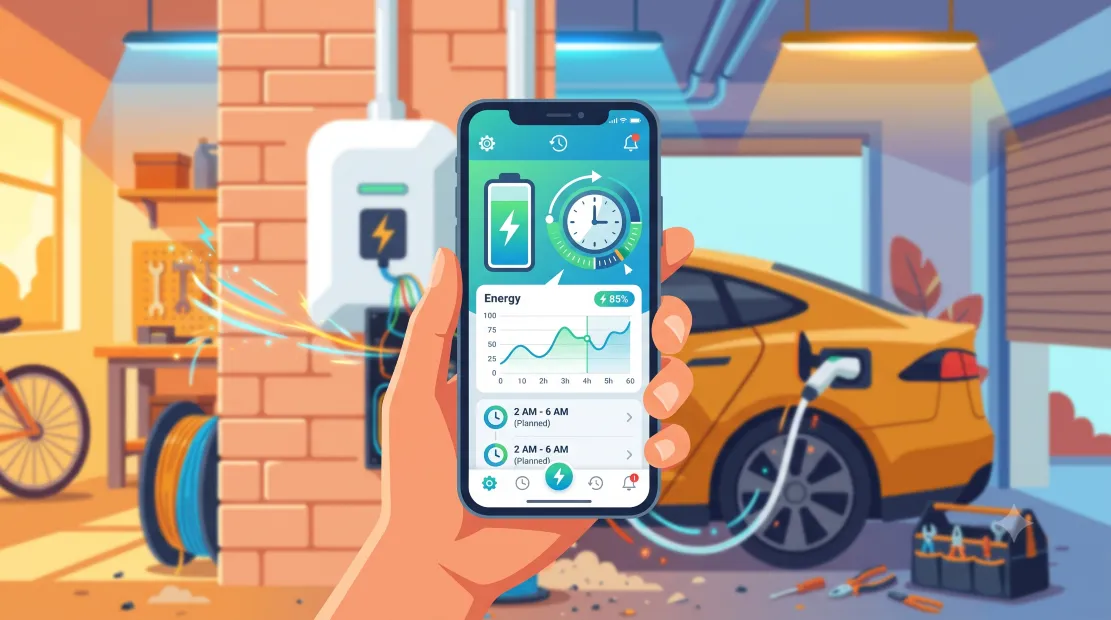
Both chargers support app-based scheduling, though the depth of controls differs.
Durability and Weather Resistance
Both units are NEMA Type 4-rated or better, meaning both are designed to handle direct outdoor exposure to rain, dust, and temperature swings without issue. Real-world owner reports over several years of use suggest both chargers hold up well in outdoor installations, with the ChargePoint’s thicker cable showing slightly better resistance to wear from repeated coiling and uncoiling in cold climates, where some thinner cables can stiffen.
Pricing and Warranty
List prices for both chargers typically land within $30-$50 of each other, and both are frequently eligible for utility rebates or federal tax credits depending on your location — so it’s worth checking local incentive programs before purchasing either model, as the effective price can shift substantially. ChargePoint backs the Home Flex with a 3-year warranty, while Tesla covers the Wall Connector for 4 years, giving Tesla a modest edge on long-term coverage.
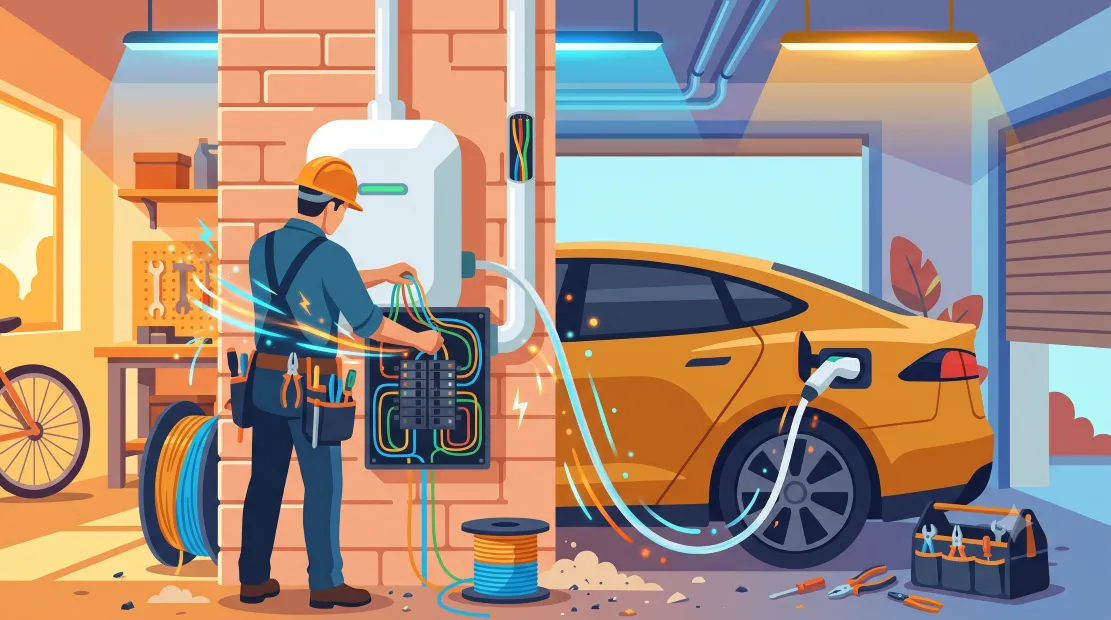
Professional installation is recommended for both chargers regardless of brand.
Cold-Weather and Long-Term Performance
Garage and driveway chargers spend most of their life outdoors or in unheated spaces, so cold-weather behavior matters more than spec sheets suggest. Owners in colder climates report that the ChargePoint Home Flex’s thicker, more rigid cable can stiffen slightly below freezing, making it a bit less pliable to coil at the end of a session — a minor annoyance rather than a functional problem. The Tesla Wall Connector’s thinner cable stays more flexible in low temperatures, which some owners find easier to manage during winter months, though it offers slightly less abrasion resistance over many years of heavy daily use.
Both units handle temperature swings within their rated operating range without any meaningful drop in charging performance, since the actual current-limiting electronics sit inside the weatherproof housing rather than the cable itself. Long-term reliability data from owner communities suggests both brands hold up well past the five-year mark with normal residential use, and neither has a documented pattern of premature failure tied specifically to weather exposure.
Multi-EV Households and Future-Proofing
Households planning to add a second EV, or households that simply don’t know what brand their next vehicle will be, should weigh compatibility more heavily than any other factor on this list. The ChargePoint Home Flex’s J1772 connector is effectively the universal language of EV charging in North America — every electric vehicle sold here can use it, either directly or through a manufacturer-supplied adapter, which makes it the lower-risk choice if your garage might one day hold a Tesla and a non-Tesla EV side by side.
The Tesla Wall Connector has become considerably more flexible since adopting the NACS standard, and the gap between the two chargers has narrowed significantly. Still, if your household charges two different EV brands on a regular basis and wants to avoid juggling adapters, the ChargePoint’s native J1772 plug remains the simpler day-to-day experience for non-Tesla vehicles, while Tesla owners lose nothing by using it with the included adapter.
Energy Cost and Off-Peak Scheduling
Both chargers support scheduled charging, which is one of the most effective ways to lower the actual cost of owning an EV if your utility offers time-of-use rates. Running a full overnight charge during off-peak hours — typically late at night through early morning — can cut the cost per charge significantly compared to charging during peak afternoon or early-evening demand windows. ChargePoint’s app makes this scheduling visible and adjustable independent of the vehicle, which is useful for households charging multiple EVs on different schedules. Tesla’s scheduling, when paired with a Tesla vehicle, lives primarily in the car’s own software, which some owners find more convenient since there’s one less app to manage, while others miss having charger-level control that isn’t tied to a specific vehicle.
Which One Should You Buy?
For a single-Tesla household that wants the cleanest possible installation and doesn’t need to think twice about compatibility, the Tesla Wall Connector is the more elegant, lower-friction choice. Its compact design, native NACS plug, and tight vehicle integration make it feel purpose-built rather than universal.
For anyone driving a non-Tesla EV, anyone with more than one EV in the household, or anyone who values granular app controls and adjustable amperage on a single unit, the ChargePoint Home Flex remains the more flexible and future-proof option. It is the charger that adapts to your situation rather than asking your situation to adapt to it.
In practice, both chargers will reliably refill your battery overnight, both are weatherproof enough for years of garage or driveway use, and both come from companies with strong long-term support. The deciding factor usually isn’t the charger itself — it’s which ecosystem your household is already living in.
Frequently Asked Questions
Can the ChargePoint Home Flex charge a Tesla?
Yes. Tesla vehicles can charge from the ChargePoint Home Flex’s J1772 connector using the Tesla-to-J1772 adapter that ships with most Tesla models, charging at the same speed as any other J1772-compatible Level 2 charger.
Can a non-Tesla EV use the Tesla Wall Connector?
Yes, as long as the vehicle supports NACS charging or uses a manufacturer-provided NACS adapter. Coverage and adapter availability vary by automaker, so it’s worth confirming compatibility with your specific vehicle before purchasing.
Do I need a permit to install a home EV charger?
In most municipalities, yes — a Level 2 charger installation typically requires an electrical permit and inspection, regardless of which brand you choose. Your installing electrician can usually handle the permit process on your behalf.
How much faster is a Level 2 charger compared to a standard outlet?
A standard 120V outlet (Level 1) typically adds 3-5 miles of range per hour, while a Level 2 charger like either of these adds roughly 25-40 miles per hour, depending on the vehicle’s onboard charger capacity.
Is it worth paying for a smart charger versus a basic hardwired unit?
For most households, yes. Scheduled charging during off-peak utility hours can meaningfully reduce electricity costs over time, and remote monitoring helps catch issues like tripped breakers or interrupted sessions before they become inconvenient.
ADeeL A.M
ADeeL A.M is a home energy and clean solar power writer with a deep passion for the electrified home. He spends his days researching solar panels, battery backup systems, EV chargers, portable power stations, and smart energy solutions — comparing specs, efficiency ratings, and real-world performance to bring readers the newest, most reliable, and best-value options on the market.
View all articles by ADeeL A.M →