EcoFlow River 3 vs Jackery Explorer 1000
Not everyone needs a massive whole-home battery — a lot of households just want something compact that can charge phones, run a laptop through a work-from-home day, or keep the essentials going during a short outage. The EcoFlow River 3 and Jackery Explorer 1000 sit in that smaller, more approachable category, but they’re built for slightly different jobs: the River 3 leans into ultra-compact portability, while the Explorer 1000 offers meaningfully more capacity and output for a bit more size and weight. This comparison breaks down capacity, output power, charging speed, portability, and real-world use cases to help you figure out which size actually fits your needs.
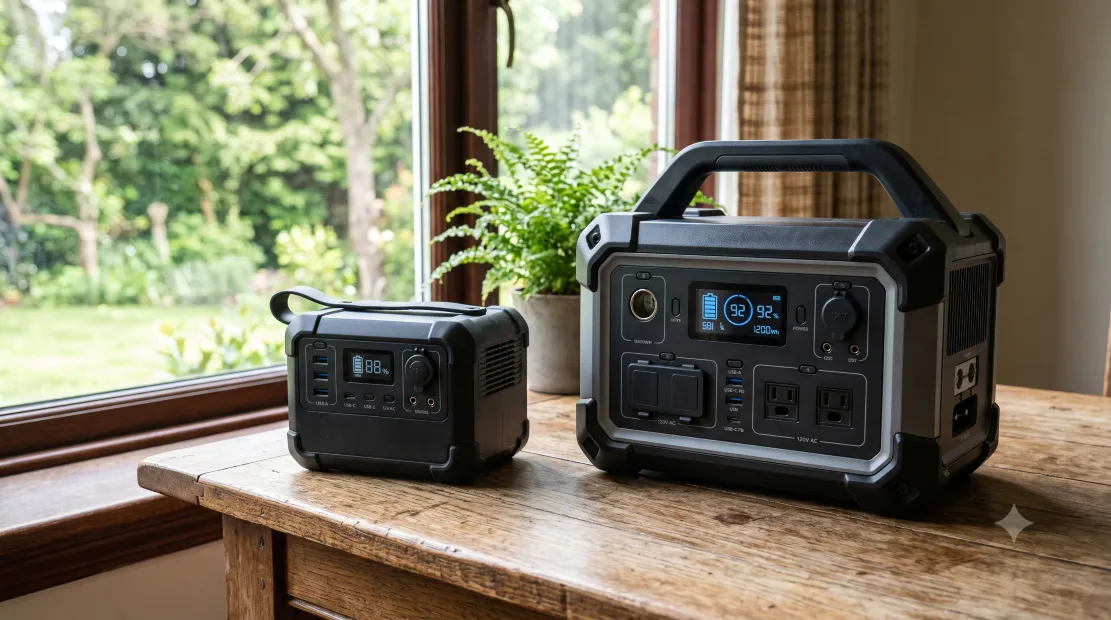
Two compact power stations aimed at everyday portable use rather than whole-home backup.
⚡ Quick Answer
- Choose the EcoFlow River 3 if ultra-compact size and light weight matter most — it’s the easier one to toss in a bag or carry one-handed.
- Choose the Jackery Explorer 1000 if you want meaningfully more capacity and output for running larger devices or covering a longer outage.
- Both use LiFePO4 battery chemistry, offering long cycle life well beyond older lithium-ion power banks.
- Neither is designed for whole-home backup — think phones, laptops, small appliances, and short-duration essentials instead.
Sizing These Two Correctly
Before comparing specs, it’s worth being clear about what category these two units actually belong to. Neither the River 3 nor the Explorer 1000 is intended to back up a refrigerator for days or run a home’s essential circuits through an extended outage — that’s a job for larger units like a DELTA Pro or Explorer 2000 Pro class system. These two are built for a different purpose: charging phones and laptops, running small fans or lights, keeping a CPAP machine going through the night, or handling a short blackout without needing to break out a generator. Understanding that category helps set realistic expectations for both units before diving into the comparison.
Capacity and Output Power
| Spec Category | EcoFlow River 3 | Jackery Explorer 1000 |
|---|---|---|
| Capacity | ~245 Wh | ~1,000 Wh |
| Continuous output | ~300W | ~1,000W |
| Battery chemistry | LiFePO4 | LiFePO4 (newer revisions) |
| Approximate weight | ~8 – 9 lbs | ~22 lbs |
| AC outlets | 1 – 2 | 2 – 3 |
| Typical price tier | Budget/entry | Mid-range |
The capacity gap here is substantial — the Explorer 1000 holds roughly four times the energy of the River 3, and its output rating is more than three times higher. That difference determines what each unit can realistically run: the River 3 comfortably handles phones, small laptops, lights, and low-draw devices, but will struggle with or simply can’t power higher-draw appliances like a full-size microwave, a hair dryer, or a portable air conditioner. The Explorer 1000’s higher output opens the door to those higher-draw devices, at least for shorter stretches, making it the more versatile choice if you might need to run something beyond basic electronics.
Portability: Where the River 3 Wins Clearly
At roughly 8-9 pounds, the EcoFlow River 3 is genuinely light enough to carry in one hand, toss in a backpack, or pack into a suitcase without a second thought — it’s built explicitly around the idea of grab-and-go portability. The Jackery Explorer 1000, at roughly 22 pounds, is still portable in the sense that it has a handle and can be moved easily around a house or loaded into a car trunk, but it’s a two-handed, deliberate carry rather than something you’d casually toss in a bag.
This weight difference matters most for specific use cases: travelers, hikers carrying gear a meaningful distance, or anyone who wants a power station that lives in a daily bag rather than a garage shelf will find the River 3’s portability a genuine, tangible advantage rather than just a spec sheet number.
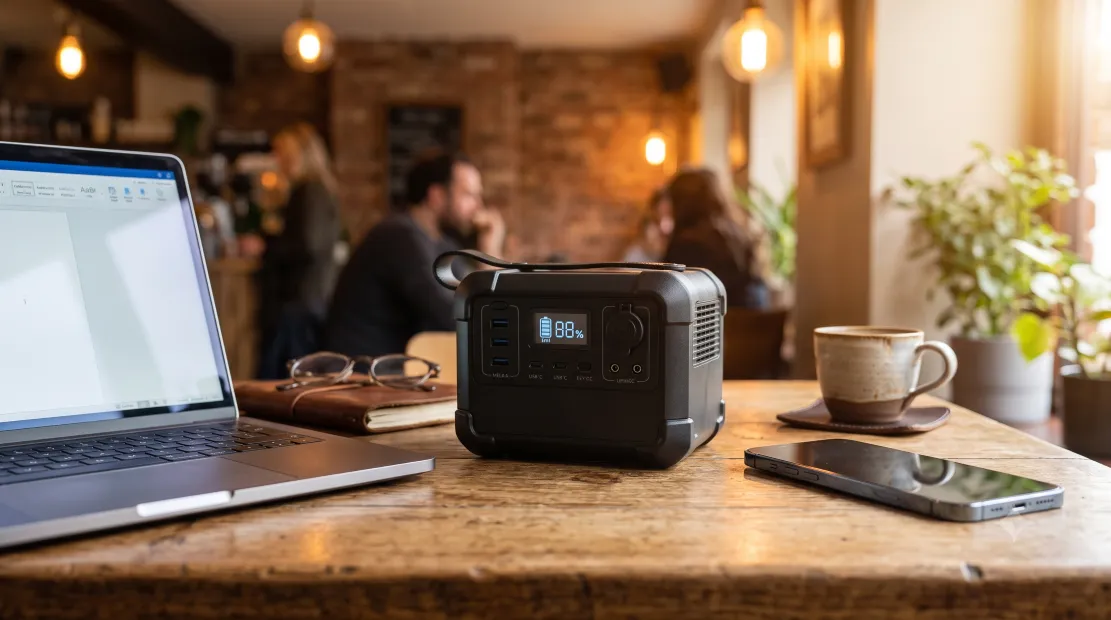
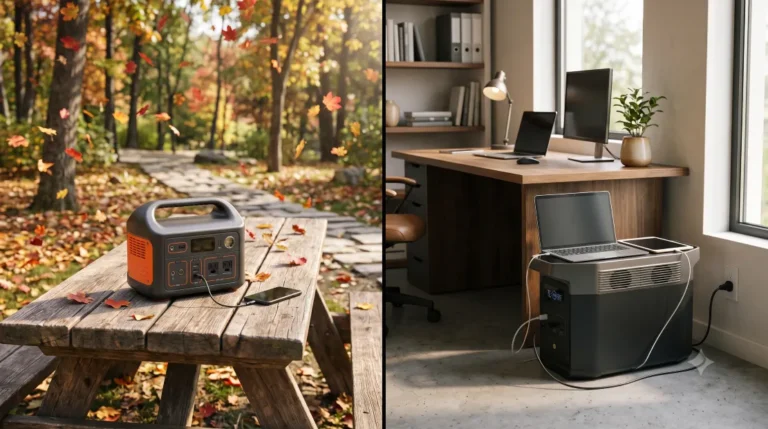
The River 3’s small size and light weight make it easy to carry daily rather than store away.
Charging Speed
Smaller capacity generally means faster recharge times in absolute terms, and the River 3 benefits from this — it can typically reach a full charge from a wall outlet in under an hour on its fastest supported charging mode, which is a genuine convenience if you need to top up quickly between uses. The Explorer 1000, with roughly four times the capacity, naturally takes longer to fully recharge from the wall, typically a few hours depending on the specific charging input used, though this is a reasonable tradeoff for the additional capacity it holds.
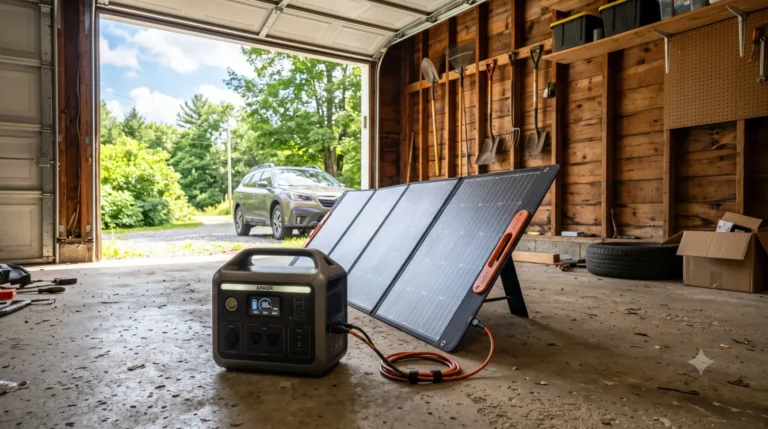
Both units support solar charging as well, with the River 3 accepting a smaller solar input appropriate to its smaller battery, and the Explorer 1000 accepting higher solar wattage that makes more sense for its larger capacity — pairing either unit with a properly sized solar panel lets you recharge without needing a wall outlet at all.
Real-World Use Cases
Thinking in terms of actual scenarios makes the size difference concrete. The River 3’s roughly 245 Wh capacity can keep a smartphone charged for many days, power a small fan for several hours, or keep a laptop running through most of a work day — genuinely useful for a desk, a short camping trip, or a go-bag, but not enough to meaningfully offset a home appliance during an outage. The Explorer 1000’s roughly 1,000 Wh capacity can run a mini-fridge for the better part of a day, keep a CPAP machine going for multiple nights, or power a string of essential devices — lights, router, phone chargers — through a multi-hour outage with room to spare.
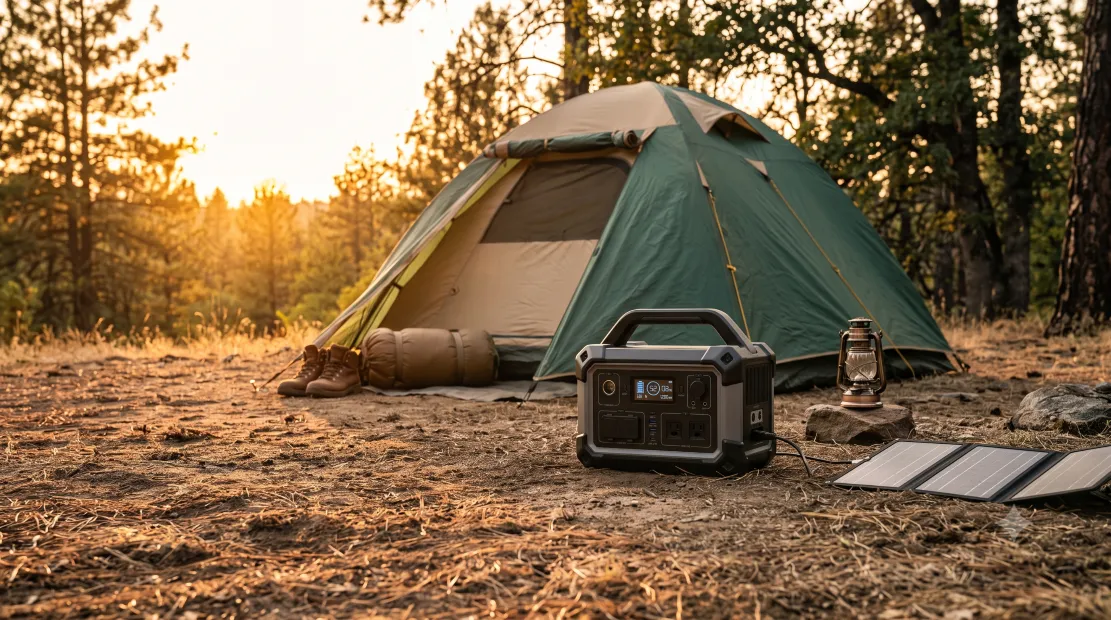
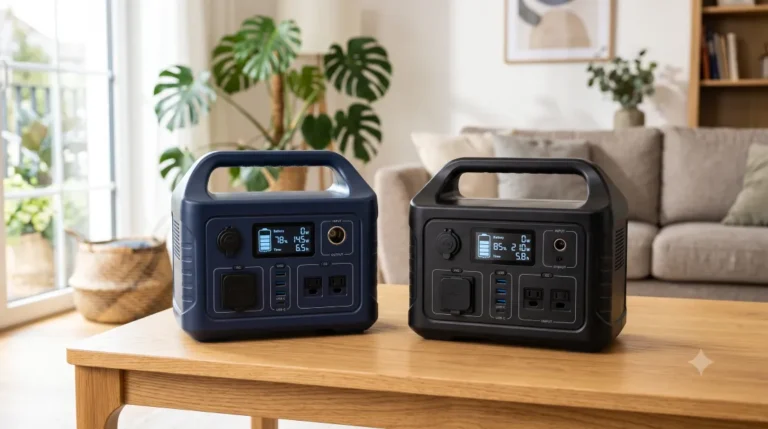
The Explorer 1000’s larger capacity handles a wider range of devices for longer stretches.
Ports and Connectivity
The River 3’s smaller frame means fewer total ports — typically one or two AC outlets alongside USB-A and USB-C ports, enough for a handful of devices at once but not a lot of simultaneous connections. The Explorer 1000 offers a somewhat more generous port selection given its larger size, including additional AC outlets, which matters if you plan to keep several devices running from the unit simultaneously rather than swapping cables in and out.
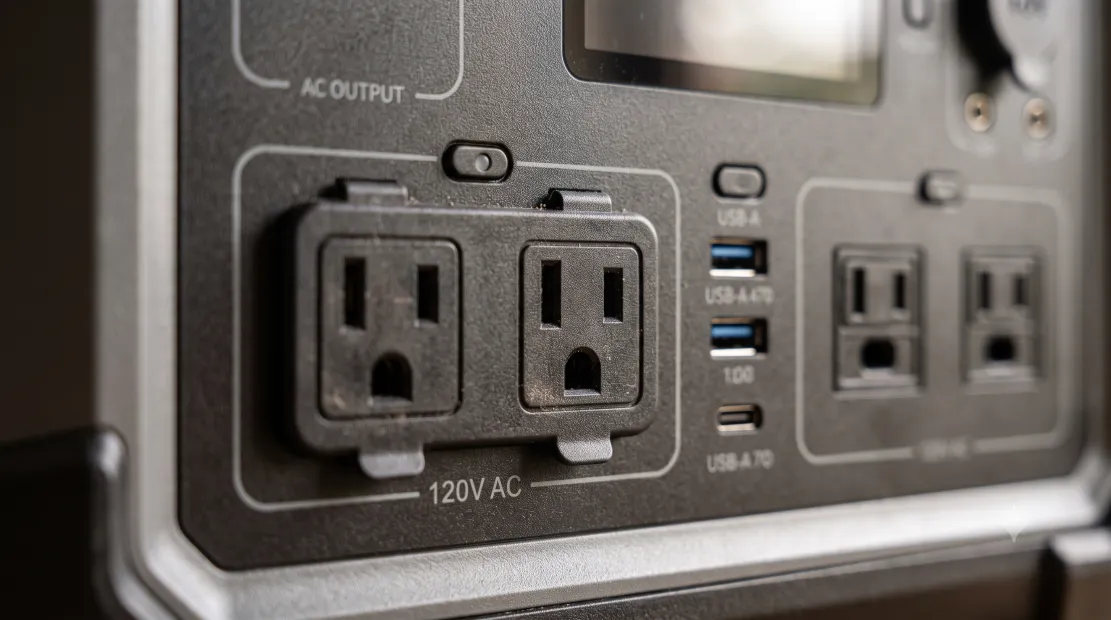
Port selection becomes more important as you try to run multiple devices simultaneously.
Battery Chemistry and Longevity
Both units are built around LiFePO4 battery chemistry in their current generations, which is the same long-life chemistry used across both brands’ larger flagship systems. LiFePO4 cells typically deliver 3,000 or more charge cycles before dropping to 80% of original capacity, translating to many years of regular use for either unit — a meaningful upgrade over the shorter-lived lithium-ion chemistry found in some older or cheaper power banks. Because both brands share this chemistry across their current lineups, longevity isn’t really a differentiator between these two specific units; the decision comes down to capacity and portability instead.
App and Smart Features
Both brands offer companion apps that let you monitor charge level and, on models with Bluetooth or WiFi connectivity, control output remotely. At this smaller size tier, app features tend to be more basic than what’s available on either brand’s flagship home-backup-oriented units — think simple charge monitoring rather than granular per-port scheduling — which is a reasonable tradeoff given the more modest scope of what these units are designed to do.
Price and Value
The River 3 sits at a genuinely accessible entry-level price point, making it an easy first purchase for someone who just wants basic portable power without a big investment. The Explorer 1000 costs meaningfully more, reflecting its roughly fourfold capacity and output advantage — but on a price-per-watt-hour basis, the two are often fairly comparable, meaning the extra cost is buying real additional capability rather than just a bigger number on a spec sheet.
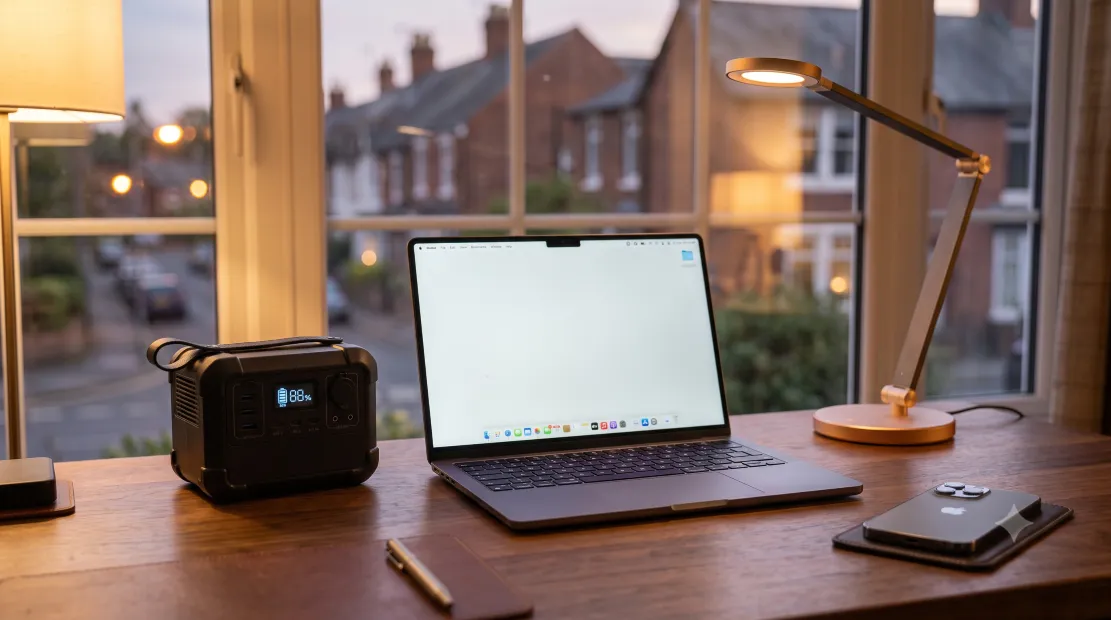
For desk-based backup and daily device charging, a compact unit is often all you need.
Noise and Cooling Behavior
At these smaller capacity tiers, cooling fan noise is generally a non-issue compared to larger flagship units — both the River 3 and Explorer 1000 run quietly under normal loads, with cooling fans that only become noticeably audible under sustained heavy output or fast charging. This makes either unit reasonably comfortable to keep on a desk or nightstand overnight without disruptive noise, an important consideration if you’re planning to use one to power a CPAP machine or other device you’ll be sleeping near.
Durability for Travel and Outdoor Use
Both units are built with reasonably rugged plastic housings suited to being tossed in a car trunk, carried on a hike, or used at a campsite, though neither is explicitly weatherproof in the way that some outdoor-rated home backup units are — both should be kept out of direct rain and away from significant dust exposure for long-term reliability. The River 3’s smaller size and lighter weight make it marginally easier to protect during transport, simply because there’s less bulk to bump or drop, while the Explorer 1000’s larger footprint benefits from its more substantial handle and slightly more robust overall build for the additional capacity it carries.
Which One Should You Buy?
If your needs are genuinely modest — charging phones and a laptop, powering a small fan, having something compact for travel or a go-bag — the EcoFlow River 3’s combination of low weight, fast recharge, and lower price makes it the more sensible purchase, and buying more capacity than you’ll use is its own kind of waste. If you want a unit that can meaningfully help during a home power outage, run a mini-fridge or CPAP machine reliably, or handle occasional higher-draw devices, the Jackery Explorer 1000’s larger capacity and output are worth the added size, weight, and cost.
Neither unit is trying to be a whole-home backup solution, and comparing either one to a DELTA Pro or Powerwall-class system would be comparing the wrong category. Within their actual category — compact, everyday portable power — the choice comes down to how much capacity you genuinely need versus how much you value carrying as little weight as possible.
Frequently Asked Questions
Can the EcoFlow River 3 run a refrigerator?
Not reliably for an extended period. Its roughly 245 Wh capacity and lower output ceiling make it better suited to phones, laptops, and small low-draw devices rather than appliances with a compressor, which draw more power than the unit is really designed to sustain for long.
Is the Jackery Explorer 1000 big enough for a home outage?
It can meaningfully help during a short-to-medium outage — running lights, a router, phone chargers, and even a mini-fridge for part of a day — but it isn’t a whole-home backup solution and won’t cover high-draw appliances like central air conditioning or an electric oven.
Which one charges faster from a wall outlet?
The River 3, thanks to its smaller capacity, generally reaches a full charge faster in absolute time — often under an hour on its fastest supported mode. The Explorer 1000 takes longer to fully charge given its roughly fourfold larger capacity, though this is a reasonable tradeoff for the extra energy stored.
Do both use the same battery chemistry?
Yes, both current-generation units use LiFePO4 chemistry, which offers significantly more charge cycles and better thermal stability than older lithium-ion power banks, translating to many years of reliable use for either unit.
Is it worth paying more for the Explorer 1000 instead of buying two River 3 units?
Generally, a single larger unit is more practical than combining two smaller ones, since the Explorer 1000’s higher continuous output lets it run devices that two lower-output River 3 units couldn’t power even combined. Capacity and output don’t simply add together in a way that makes multiple small units equivalent to one larger one for every use case.
ADeeL A.M
ADeeL A.M is a home energy and clean solar power writer with a deep passion for the electrified home. He spends his days researching solar panels, battery backup systems, EV chargers, portable power stations, and smart energy solutions — comparing specs, efficiency ratings, and real-world performance to bring readers the newest, most reliable, and best-value options on the market.
View all articles by ADeeL A.M →