Jackery vs Anker SOLIX: Power Station Comparison
Jackery and Anker SOLIX are two of the most established names in portable power stations, and both have expanded well beyond simple camping batteries into serious home backup territory with expandable, high-capacity systems. Choosing between them comes down to a handful of practical questions: how much capacity and output power do you actually need, how fast do you need to recharge, and are you buying primarily for outdoor use, emergency home backup, or both? This comparison breaks down battery chemistry, output power, charging speed, portability, app features, and overall value to help you pick the right one.
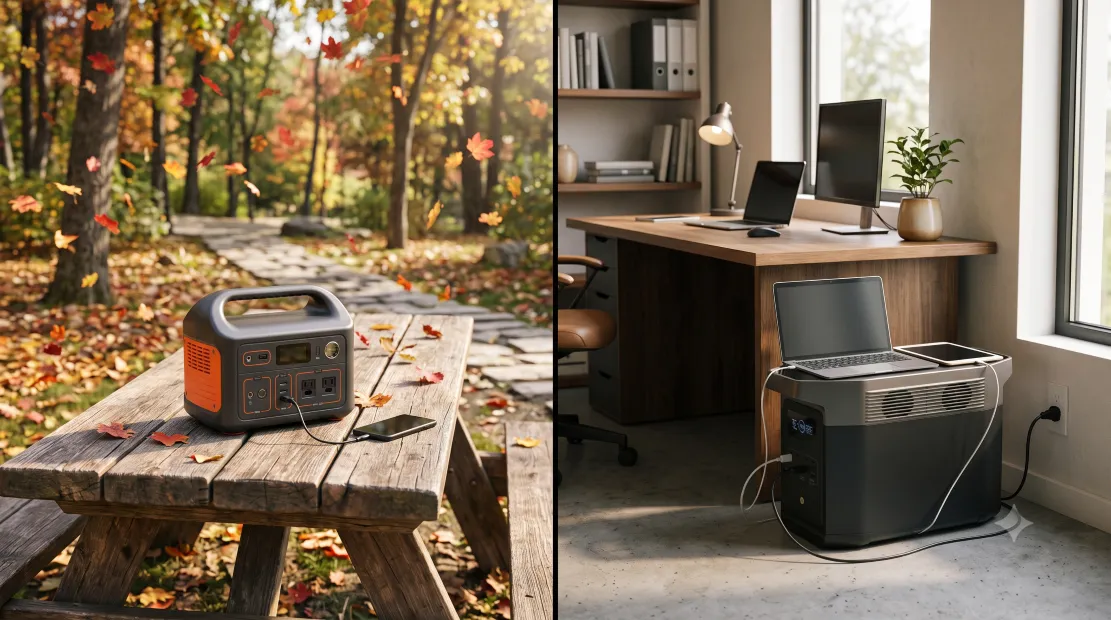
Two leading portable power station brands, compared for capacity, speed, and everyday use.
⚡ Quick Answer
- Choose Jackery if you want a lighter, more portable unit optimized for camping, road trips, and simple outdoor use with a well-established solar panel ecosystem.
- Choose Anker SOLIX if you want higher raw output power, faster recharge speeds, and a system that scales more seriously into whole-home backup territory.
- Both brands use LiFePO4 battery chemistry in their current lineups, offering long cycle life and strong safety margins compared to older lithium-ion power stations.
- Anker SOLIX generally leads on charging speed and expandability; Jackery generally leads on portability and outdoor-focused simplicity.
Battery Chemistry and Longevity
Both brands have shifted their current-generation lineups to LiFePO4 (lithium iron phosphate) battery chemistry, a meaningful upgrade over the older lithium-ion cells found in early portable power stations. LiFePO4 batteries typically deliver 3,000 or more charge cycles before dropping to 80% of original capacity, compared to roughly 500-1,000 cycles for older lithium-ion units — translating to a usable lifespan of a decade or more under normal use for either brand’s current models. LiFePO4 chemistry is also inherently more thermally stable, reducing fire risk compared to older lithium-ion formulations.
Within this shared chemistry, cycle life claims and warranty terms vary somewhat model to model within each brand’s lineup, so it’s worth checking the specific warranty period and cycle rating for the exact model you’re considering rather than assuming all units from either brand perform identically. Most current flagship models from both companies carry warranties in the 3-5 year range, with some premium models extending further, and it’s generally worth prioritizing warranty length alongside cycle rating when comparing otherwise similar units.
Output Power and Capacity
| Spec Category | Jackery (typical flagship) | Anker SOLIX (typical flagship) |
|---|---|---|
| Capacity range | 1 kWh – 5 kWh (expandable on some models) | 1 kWh – 6 kWh+ (expandable on most models) |
| Continuous output power | Up to ~2,000W | Up to ~2,400-6,000W depending on model |
| Battery chemistry | LiFePO4 | LiFePO4 |
| Expandable battery packs | Available on select models | Widely available across the lineup |
| Typical weight (mid-capacity unit) | Generally lighter for comparable capacity | Slightly heavier, prioritizing power density |
Anker SOLIX generally pushes higher continuous output power on its flagship and home-backup-oriented models, which matters if you plan to run higher-draw appliances like power tools, space heaters, or portions of a home’s circuits during an outage. Jackery’s lineup tends to prioritize a lighter, more grab-and-go form factor at each capacity tier, which shows up clearly in weight and physical footprint rather than raw power ceiling.
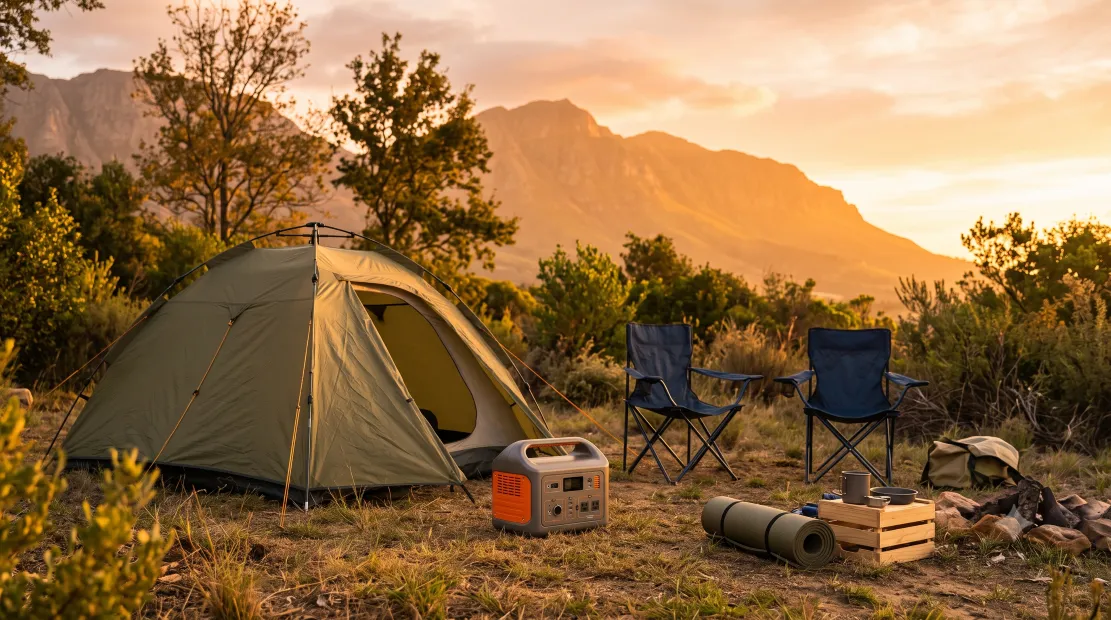
Portable power stations have become a staple for camping, van life, and outdoor work sites.
Charging Speed: AC, Solar, and Car
Recharge speed is one of the more meaningful practical differences between the two brands at comparable capacity points. Anker SOLIX’s flagship models generally support faster AC wall-charging speeds, often able to reach a substantial charge in well under an hour on higher-wattage models — a significant advantage for anyone who needs to top up quickly between uses or during an extended power outage. Jackery’s charging speeds have improved significantly across recent generations as well, though flagship-to-flagship comparisons at the same capacity tier often still favor Anker SOLIX on pure recharge time.
Both brands support solar charging through their own branded solar panels, with charging speed dependent on panel wattage, sunlight conditions, and how many panels are connected simultaneously. Car charging via a 12V outlet is supported by both brands as a slower backup charging method, useful for road trips but not a primary charging strategy for either system.
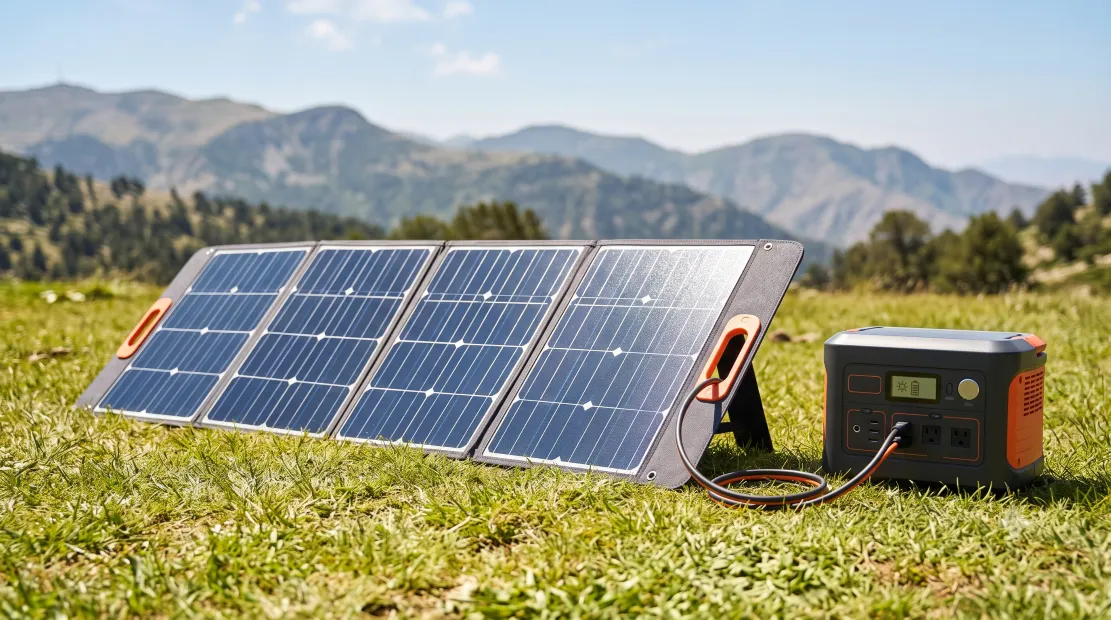
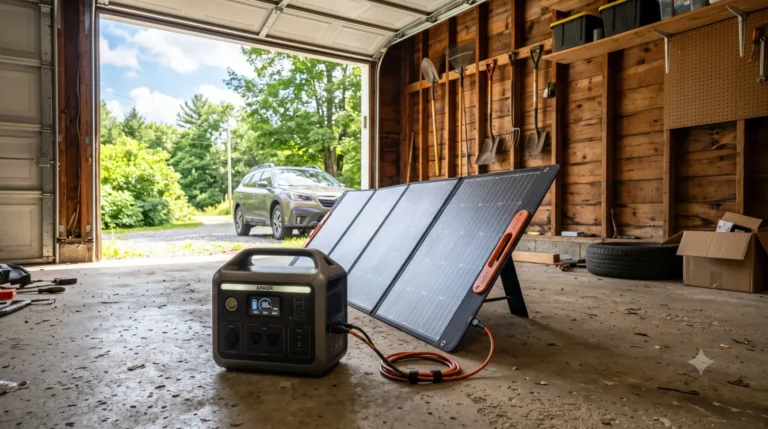
Both brands offer dedicated solar panels for off-grid charging.
Portability and Physical Design
Jackery has built much of its brand identity around portability — its units tend to have a more compact, lighter build at each capacity tier, often with a simple top-mounted carry handle and a design clearly intended to be picked up and moved frequently between the car, campsite, and garage. This makes it a strong fit for anyone who prioritizes ease of carrying over maximum output power. For frequent travelers and outdoor enthusiasts, this weight difference can be the deciding factor over a long weekend of repeated loading and unloading.
Anker SOLIX units, particularly at higher capacity and output tiers, tend to be somewhat bulkier and heavier, reflecting their focus on higher power ceilings and expandability rather than pure portability. Some higher-capacity SOLIX models are more realistically thought of as semi-permanent home backup units that occasionally get moved, rather than a unit you’d casually toss in a car trunk for a weekend trip.
App Experience and Smart Features
Both brands offer companion apps for remote monitoring, allowing you to check battery percentage, control output ports, and monitor charging status from a smartphone rather than needing to walk over and check the unit’s built-in display. Anker’s app ecosystem, benefiting from the company’s much broader consumer electronics portfolio, tends to feel slightly more polished and integrates with a wider range of the company’s other power and charging products. Jackery’s app covers the essentials well and has improved steadily, though some users find it slightly less feature-dense than Anker’s offering. Firmware updates for both brands are typically delivered over the air through the app, which has helped both companies steadily improve charging algorithms and add features to existing hardware after purchase.
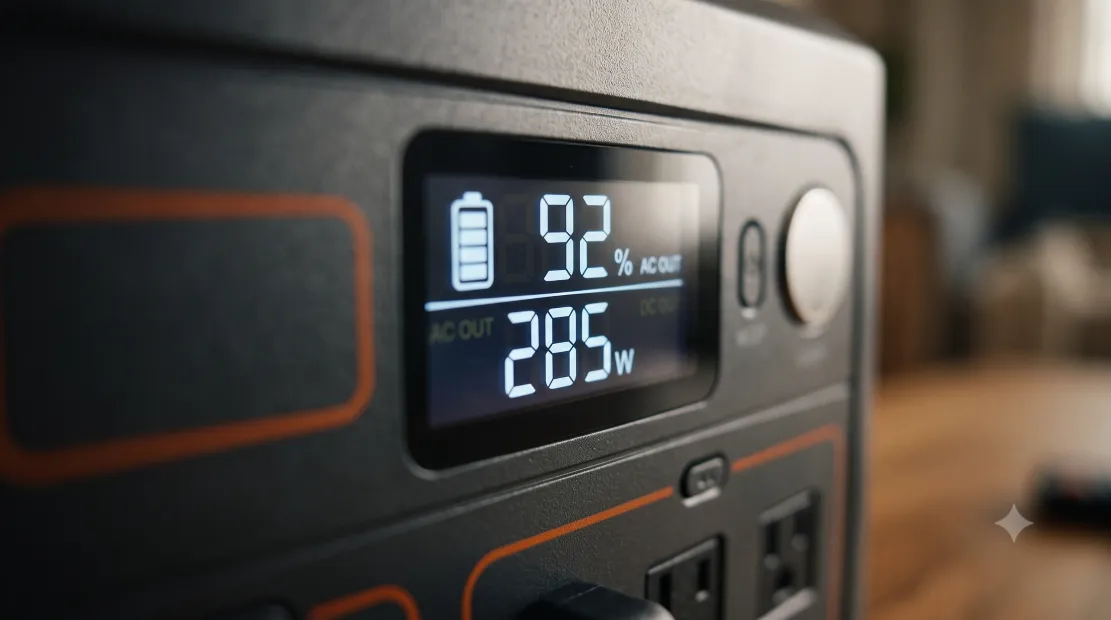
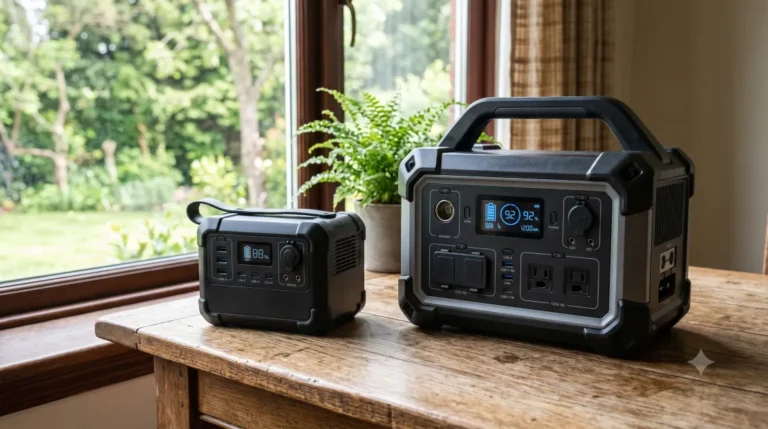
Both brands provide clear on-unit displays alongside their smartphone apps.
Home Backup Use Case
For homeowners specifically interested in emergency backup power rather than outdoor recreation, Anker SOLIX’s higher output power ceiling and broader expansion battery options generally make it the stronger fit for running multiple appliances or a partial home circuit setup during an outage. Some SOLIX models are explicitly marketed and configured for home backup integration, including options that can tie into a home’s electrical system with additional hardware, positioning them closer to a scaled-down whole-home battery system than a purely portable unit.
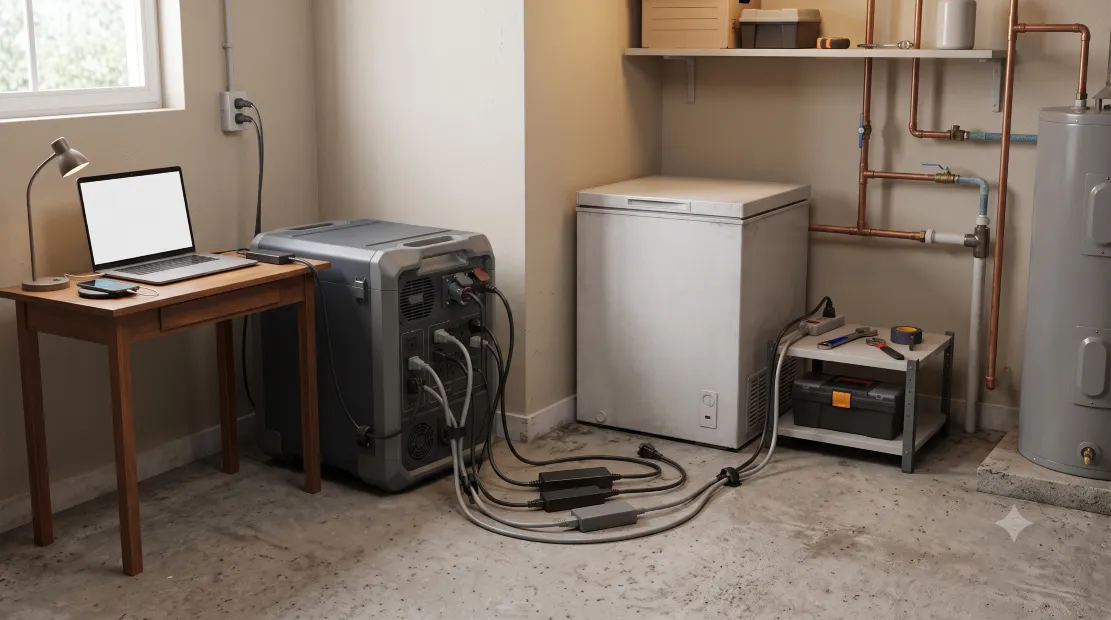
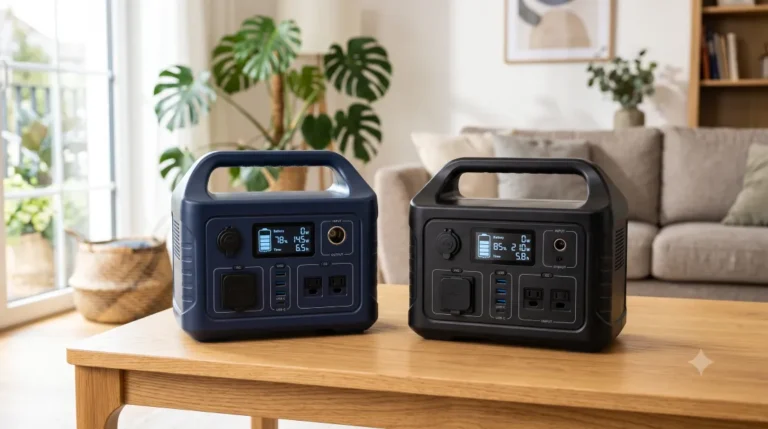
Higher-capacity power stations increasingly double as indoor home backup systems.
Jackery can still serve as capable emergency backup for essential devices, small appliances, medical equipment, and lighting, but its lower output ceiling on most models makes it better suited as a supplementary backup source rather than a primary whole-home solution during extended outages.
When evaluating either brand specifically for home backup, it’s worth thinking beyond a single blackout scenario and considering how the unit fits into a broader emergency plan — for example, whether it can be recharged via solar during a multi-day outage, how it interacts with any existing generator or home battery system, and whether its output ports match the specific devices and appliances you’d actually need to keep running.
Real-World Runtime Examples
Specification sheets can be hard to translate into everyday expectations, so it helps to think in terms of actual devices. A roughly 1 kWh unit from either brand can typically keep a laptop charged for dozens of sessions, run a small fan continuously for many hours, or keep a CPAP machine running through a full night with capacity to spare. Moving up to the 2-3 kWh range, both brands’ units can handle a mini-fridge for the better part of a day, power a full-size fan and multiple device chargers simultaneously, or run a portable induction cooktop for a limited but usable number of cooking sessions.
At the higher end of either lineup — 5 kWh and above, often achieved through expansion batteries — runtime expectations start to approach genuine partial-home backup territory, capable of keeping a refrigerator, some lighting circuits, and a WiFi router running for an extended multi-day outage, particularly when supplemented by solar charging during daylight hours.
Pricing and Value
At comparable capacity and output tiers, pricing between the two brands is generally close, with Anker SOLIX sometimes commanding a modest premium on its higher-output, faster-charging flagship models, reflecting the added power electronics required. Jackery frequently offers strong value at the entry and mid-capacity tiers for buyers who don’t need maximum output power or the fastest possible recharge times. Both brands run frequent promotional discounts, so list price alone shouldn’t be the deciding factor — it’s worth comparing actual street prices for the specific models under consideration.
Which One Should You Buy?
If your primary use case is camping, van life, tailgating, or general outdoor and portable power needs where lighter weight and simplicity matter most, Jackery remains an excellent, well-proven choice with a mature ecosystem of matching solar panels and accessories. If you’re leaning toward serious home backup capability, need higher continuous output power, or want faster recharge times to minimize downtime between uses, Anker SOLIX generally has the edge, particularly at the higher-capacity end of its lineup.
Neither brand is a wrong choice at comparable price and capacity points — both use modern, safe LiFePO4 chemistry and back their products with solid warranties. The right pick comes down to whether portability or power ceiling matters more for how you actually plan to use it. Some households, particularly those who camp regularly and also want backup coverage at home, end up owning a smaller Jackery unit for portability alongside a larger SOLIX system dedicated to home backup — a combination that plays to each brand’s relative strengths rather than forcing a single unit to do both jobs equally well.
Frequently Asked Questions
Is LiFePO4 better than regular lithium-ion for a power station?
Yes, generally. LiFePO4 batteries offer significantly more charge cycles before capacity degrades, better thermal stability, and a longer overall usable lifespan compared to older lithium-ion power station batteries, which is why both Jackery and Anker SOLIX have shifted their current lineups to this chemistry.
Can a portable power station run a refrigerator during an outage?
Many mid-to-high-capacity units from both brands can run a standard refrigerator for a meaningful stretch of time, though actual runtime depends heavily on the specific unit’s capacity, the refrigerator’s power draw, and how frequently the compressor cycles on.
How long do these batteries typically last before needing replacement?
Current LiFePO4 models from both brands are typically rated for 3,000 or more charge cycles before dropping to 80% of original capacity, which translates to roughly a decade or more of useful life under normal, regular-use conditions.
Do I need to buy the brand’s own solar panels, or can I use any panel?
Both brands’ units are generally optimized for their own branded solar panels in terms of connector compatibility and charge controller integration, though some models support generic panels with the right adapters and voltage specifications. Check the specific model’s solar input specifications before purchasing third-party panels.
Can I expand capacity later if I start with a smaller unit?
It depends on the specific model — many current-generation units from both brands, particularly Anker SOLIX’s lineup, support add-on expansion batteries that connect to the main unit to increase total capacity without replacing the original purchase.
ADeeL A.M
ADeeL A.M is a home energy and clean solar power writer with a deep passion for the electrified home. He spends his days researching solar panels, battery backup systems, EV chargers, portable power stations, and smart energy solutions — comparing specs, efficiency ratings, and real-world performance to bring readers the newest, most reliable, and best-value options on the market.
View all articles by ADeeL A.M →