Best Robot Vacuums (Tested & Ranked)

The robot vacuum category has matured to the point where almost every model from a major brand will reliably clean your floors — the real differences show up in mapping precision, mopping capability, self-empty dock convenience, and how well a unit handles pet hair and furniture. We evaluated the current lineups from the leading brands across these categories to rank the best options for different priorities: overall performance, value, pet households, navigation, and tight budgets. Whichever category matters most to you, this ranking should point you toward the right pick rather than the most heavily advertised one, and the category breakdowns below make it easy to skip straight to the priority that matches your household.
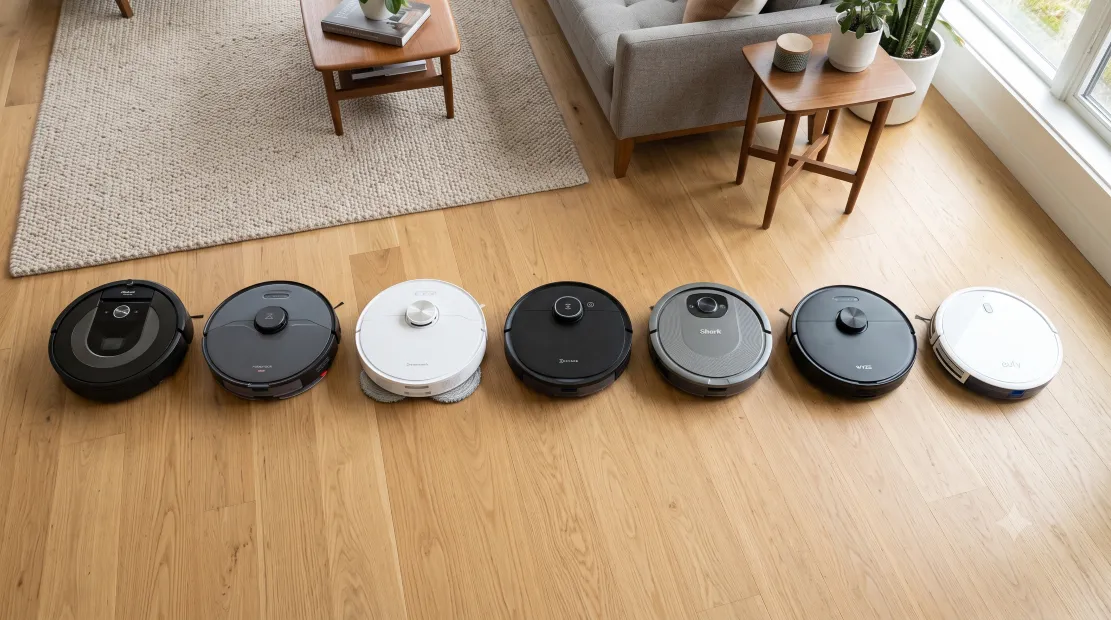
Robot vacuum performance now comes down to specific strengths rather than one clear universal winner.
⚡ Quick Answer
- Best overall: Roborock flagship models — strongest combination of suction, mapping, and mopping in one machine.
- Best value: Roborock or Ecovacs mid-range models — LiDAR navigation and solid suction without flagship pricing.
- Best for pet hair: Shark or iRobot models with tangle-resistant brushes and larger dustbins.
- Best budget pick: Eufy entry-level models — capable cleaning without smart mapping’s added cost.
How We Ranked These
Rankings are based on four core categories that matter most in daily use: cleaning performance (suction power and real-world pickup on carpets and hard floors), navigation and mapping accuracy, mopping capability where applicable, and overall value relative to price. We also weighed app quality, self-empty dock convenience, and obstacle avoidance, since these features increasingly separate a genuinely hands-off experience from one that still needs regular manual intervention. No single model wins every category outright, which is exactly why this ranking is organized by use case rather than a single overall number.
1. Best Overall: Roborock Flagship Models
Roborock’s top-tier lineup consistently leads on raw suction power, often exceeding 10,000 Pa, which translates to noticeably better pickup on carpets and rugs than most competitors at a similar price. Combined with fast, precise LiDAR mapping and mopping systems that wash and dry their own pads at the dock, Roborock’s flagship models deliver the most complete, hands-off cleaning experience currently available. The app is feature-dense with granular per-room controls, which power users appreciate even if it takes a bit longer to learn than simpler competing apps.
Best for: households wanting the most capable all-around performer and willing to pay a premium for it.
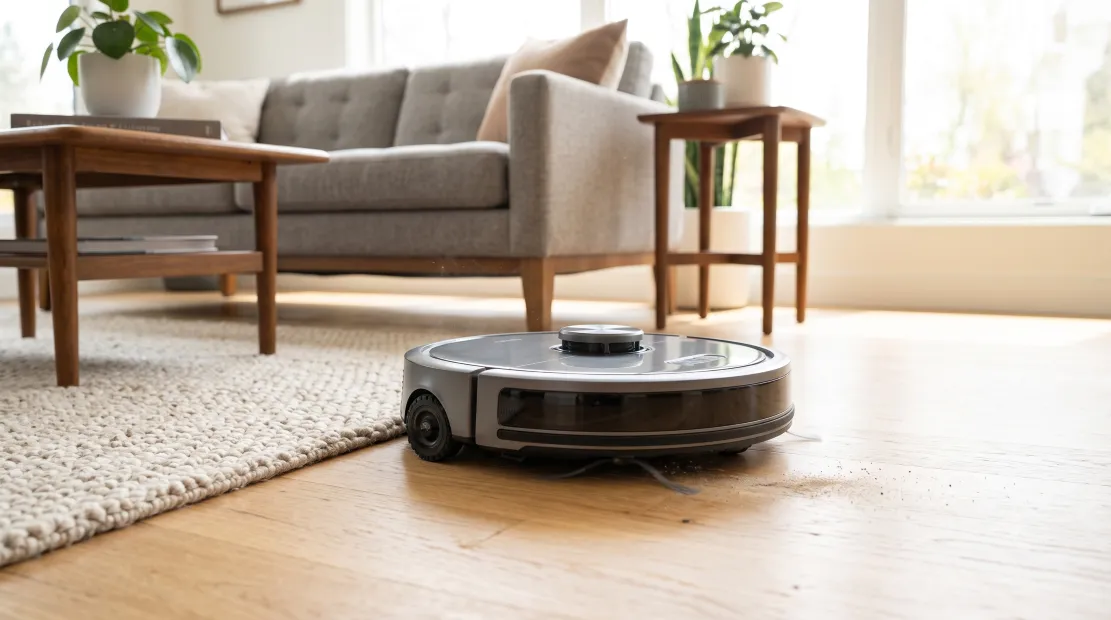
LiDAR mapping accuracy is one of the clearest differentiators between flagship and budget models.
2. Best Value: Roborock and Ecovacs Mid-Range Models
Stepping down from flagship pricing, mid-range models from Roborock and Ecovacs deliver LiDAR navigation, solid suction, and basic mopping at a meaningfully lower price than top-tier units. These models sacrifice some of the most advanced obstacle-avoidance camera systems and the deepest app customization, but for most households, the core cleaning performance difference between a mid-range and flagship unit is smaller than the price gap suggests. This tier represents the sweet spot for buyers who want smart navigation without paying for every advanced feature.
Best for: buyers who want genuine LiDAR mapping and mopping without flagship-tier pricing.
3. Best for Pet Hair: Shark and iRobot Models
For households with pets, tangle-resistant brush design and dustbin capacity matter more than almost any other spec. Shark’s pet-focused models use self-cleaning brush rollers specifically designed to prevent hair wrap, reducing the maintenance hassle that heavy shedding pets create for standard brush designs. iRobot’s higher-end Roomba models pair strong, methodical coverage with reliable self-empty docks that handle large volumes of pet hair without needing frequent manual emptying, which matters more in multi-pet households than raw suction numbers alone.
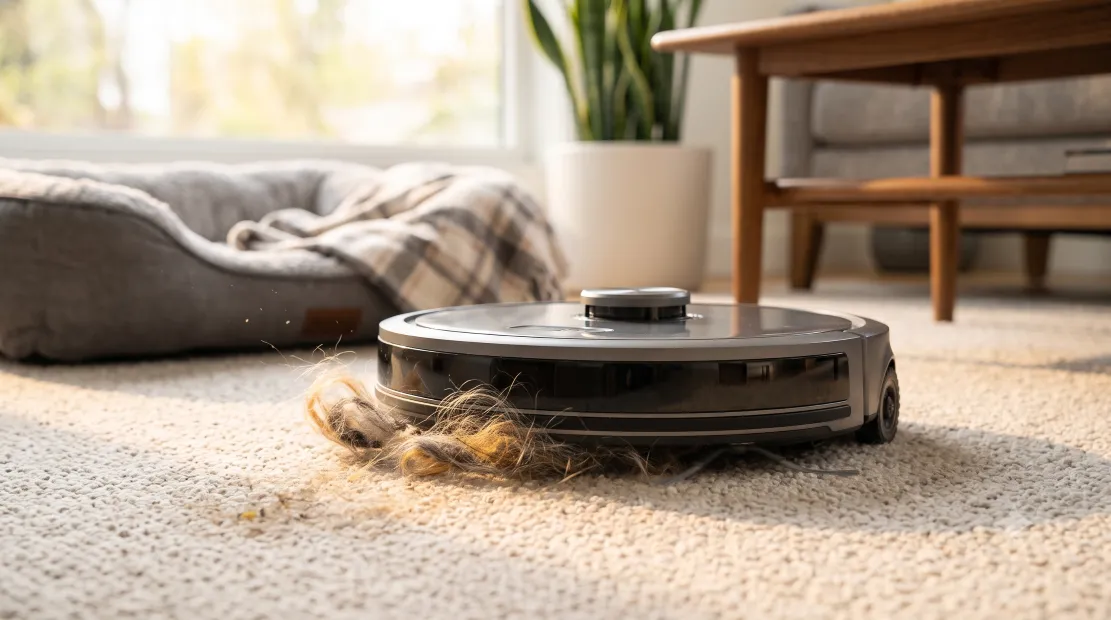
Tangle-resistant brush design matters more than raw suction power for pet-heavy households.
4. Best Navigation and Mapping: Roborock and Ecovacs Flagships
For multi-floor homes, complex layouts, or households that want precise no-go zones and room-specific scheduling, navigation accuracy matters more than any other single spec. Roborock and Ecovacs flagship models both use fast, accurate LiDAR mapping that builds detailed room maps quickly and holds up well around furniture legs and tight corners. Both support saving multiple floor maps, so carrying the robot between levels automatically loads the correct saved layout rather than re-mapping from scratch.
Best for: multi-floor homes, complex layouts, and households that rely heavily on customized cleaning zones.
5. Best Mopping: Roborock Flagship with Auto-Wash Dock
For households that want vacuuming and mopping handled in a single hands-off system, Roborock’s top mopping implementation stands out with rotating or vibrating mop pads, automatic pad lifting when crossing onto carpet, and a dock that washes and hot-air-dries the pads between cycles using hot water. This is currently the most capable hands-off mopping system on the market, meaningfully ahead of simpler vibrating-pad mopping found on entry-level combo units from other brands.
Best for: households wanting one robot to handle both vacuuming and mopping with minimal manual pad-washing.
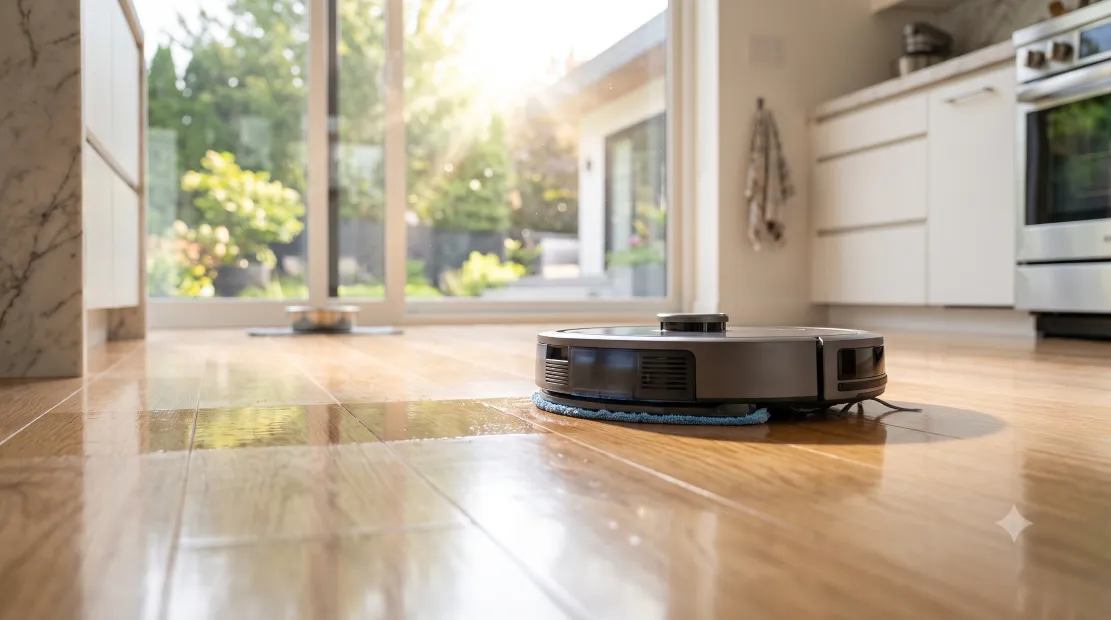
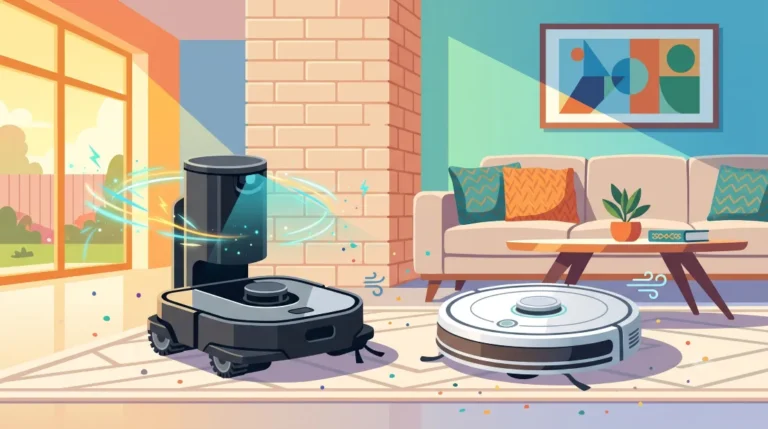
Auto-wash mopping docks represent the current high-water mark for hands-off floor care.
6. Best Budget Pick: Eufy Entry-Level Models
For buyers who want reliable everyday cleaning without paying for smart mapping features they may not need, Eufy’s entry-level lineup delivers solid suction and dependable coverage using simpler camera or bump-sensor navigation rather than LiDAR. This is a real tradeoff — no-go zones and precise room mapping aren’t available at this tier — but for smaller apartments or homes with simple, open layouts, the navigation gap matters less than it would in a large, complex home, making this a sensible entry point into robot vacuums without a large upfront investment.
Best for: smaller homes, simple layouts, and buyers testing whether a robot vacuum fits their routine before investing in a flagship model.
| Category | Top Pick | Why |
|---|---|---|
| Best Overall | Roborock flagship | Strongest combined suction, mapping, and mopping |
| Best Value | Roborock / Ecovacs mid-range | LiDAR and mopping at a lower price |
| Best for Pet Hair | Shark / iRobot | Tangle-resistant brushes, large dust capacity |
| Best Navigation | Roborock / Ecovacs flagship | Fast, precise multi-floor LiDAR mapping |
| Best Mopping | Roborock auto-wash dock | Self-washing mop pads, auto lift on carpet |
| Best Budget | Eufy entry-level | Solid cleaning without smart-mapping cost |
Self-Empty Docks: Worth the Extra Cost?
Self-empty docks have moved from a luxury feature to something close to standard on mid-range and flagship models across every brand in this ranking. They automatically empty the robot’s dustbin into a larger bag or bin, typically needing attention only every several weeks rather than after every cleaning cycle. For households with pets, allergies, or larger square footage, a self-empty dock meaningfully reduces hands-on maintenance and is generally worth the added cost over a standard charging dock — for smaller homes with light cleaning needs, it’s a nice convenience rather than a necessity.
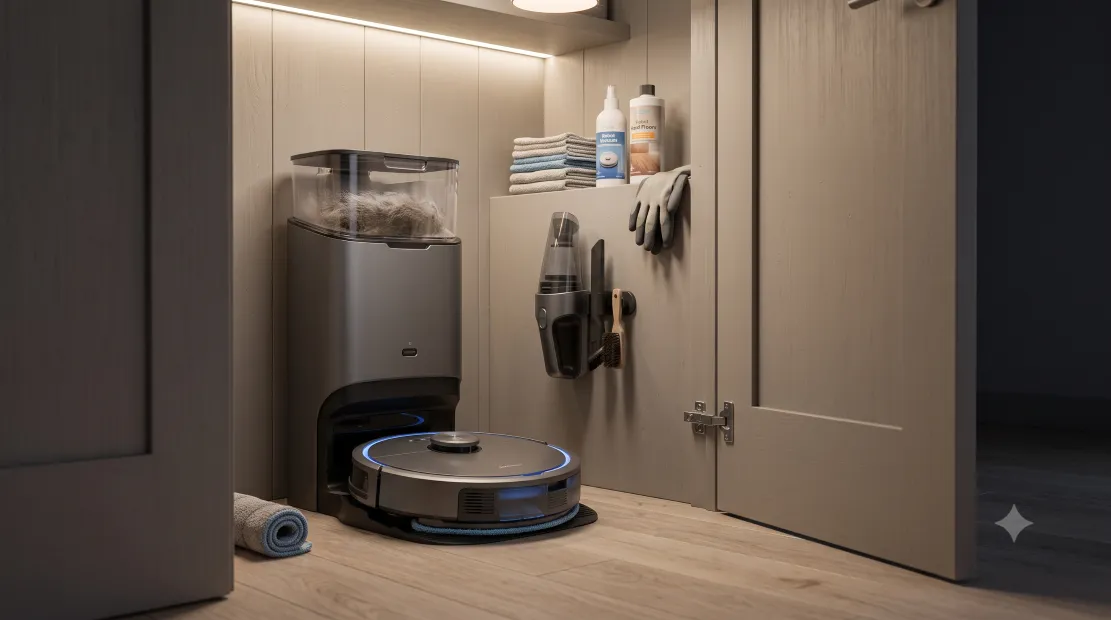
Self-empty docks reduce hands-on maintenance to roughly once every few weeks.
Obstacle Avoidance: How Far the Technology Has Come
Flagship models across every major brand now use structured light, stereo cameras, or similar sensor systems specifically designed to detect and avoid common household obstacles — cables, shoes, and pet waste among them. Real-world performance has improved dramatically over recent product generations, and obstacle avoidance is no longer the reliable differentiator it once was between top brands. Budget models without these camera systems still rely on simpler bump-and-turn navigation, which handles large furniture fine but struggles more with thin cords and small objects.
App Experience Differences
Roborock’s app remains the most feature-dense across this ranking, offering per-room suction and water-flow settings, detailed cleaning history with visual maps, and highly customizable zones — genuinely powerful for users who want granular control, occasionally overwhelming for those who don’t. iRobot’s app takes a simpler, more streamlined approach that suits households wanting to set a schedule and largely forget about it. Ecovacs and Shark sit somewhere in between, offering solid core functionality without the deepest customization of Roborock’s ecosystem.
Battery Life and Coverage Per Charge
Across this ranking, flagship and mid-range models typically run 3 to 4 hours on a single charge in standard suction mode, covering most homes up to 2,500-3,000 square feet without needing a mid-cycle recharge. Nearly every model in this ranking supports auto-resume charging, meaning if the battery runs low partway through a large cleaning job, the robot returns to its dock, tops up, and resumes exactly where it left off. Budget models in the Eufy tier generally offer comparable runtime for their smaller, simpler navigation footprint, though maximum-suction settings still drain any model’s battery noticeably faster across every brand.
Long-Term Costs to Factor In
Beyond the upfront purchase price, ongoing costs matter across every tier in this ranking: replacement mop pads, side brushes, filters, and self-empty dock bags all need periodic replacement every few months depending on usage and household size. Roborock and Ecovacs consumables tend to be competitively priced and widely available through third-party sellers, which can lower long-term costs compared to relying solely on official replacement parts. iRobot’s consumables benefit from a longer track record of consistent availability given the brand’s history in the category, sometimes at a modest premium over third-party alternatives across all brands.
Multi-Floor and Multi-Pet Households
For homes spanning multiple levels, saved multi-floor mapping is a genuine convenience across the LiDAR-equipped models in this ranking — simply carry the robot to a different floor and it automatically loads the corresponding saved map rather than re-mapping from scratch each visit. Households with multiple pets or heavy shedding benefit most from pairing a large-dustbin self-empty dock with a tangle-resistant brush design, since the combination of factors reduces intervention frequency far more than any single spec improvement alone.
How to Choose the Right One for You
Start with your home’s layout: multi-floor homes or complex layouts benefit most from strong LiDAR navigation, while smaller, simpler homes can get by comfortably with budget camera-based models. Next, consider pets: if shedding is a regular issue, prioritize brush design and dustbin capacity over raw suction numbers. Finally, decide how hands-off you want maintenance to be — a self-empty, self-washing-mop flagship system requires the least ongoing attention but costs the most, while a budget model without these conveniences costs less but asks more of you week to week.
Frequently Asked Questions
What is the best robot vacuum overall?
Roborock’s flagship models currently offer the strongest combination of suction power, LiDAR mapping accuracy, and self-washing mopping capability, making them the top overall pick for most households willing to pay a premium.
What’s the best robot vacuum for pet hair?
Shark and iRobot models with tangle-resistant brush rollers and large-capacity self-empty docks tend to handle pet hair with the least manual maintenance, since brush design matters more for pet households than raw suction alone.
Is a self-empty dock worth the extra cost?
For households with pets, allergies, or larger homes, yes — it significantly reduces hands-on maintenance to roughly once every few weeks instead of after every cleaning cycle. For smaller homes with light cleaning needs, it’s a convenience rather than a necessity.
Do budget robot vacuums without LiDAR actually work well?
Yes, for smaller homes and simpler layouts, camera or bump-sensor navigation handles basic coverage adequately. The main tradeoff is the lack of precise no-go zones and room-specific mapping, which matters more in larger, more complex homes.
Can a robot vacuum replace mopping entirely?
Flagship combo models with auto-washing mop docks handle everyday spills and light dust well and can meaningfully reduce manual mopping frequency, but they generally can’t match a deep manual mop on heavily soiled floors, so occasional manual mopping is still worthwhile for stubborn grime.
ADeeL A.M
ADeeL A.M is a home energy and clean solar power writer with a deep passion for the electrified home. He spends his days researching solar panels, battery backup systems, EV chargers, portable power stations, and smart energy solutions — comparing specs, efficiency ratings, and real-world performance to bring readers the newest, most reliable, and best-value options on the market.
View all articles by ADeeL A.M →