Roborock vs iRobot Roomba: Which Robot Vacuum Wins?

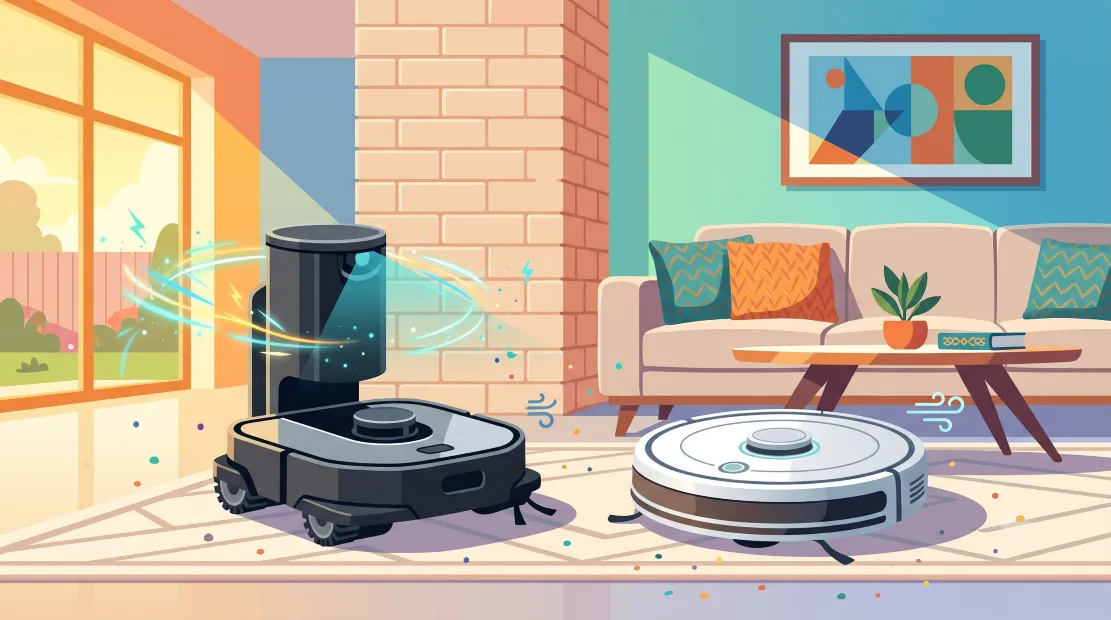
Two of the biggest names in robot vacuums, compared feature by feature.
For more than a decade, iRobot Roomba was practically synonymous with robot vacuums — it invented the category and built the brand recognition to match. But Roborock has spent the last several years aggressively closing the gap, often beating Roomba on suction power, mapping precision, and self-cleaning dock features while undercutting it on price. Today, choosing between the two isn’t the easy decision it used to be. This guide compares navigation technology, cleaning performance, mopping capability, self-empty docks, app experience, and long-term cost of ownership so you can decide which robot actually belongs on your floors.
⚡ Quick Answer
- Choose Roborock if you want the most advanced mapping, the strongest suction-to-price ratio, and a dock that washes its own mop pads.
- Choose iRobot Roomba if you want the simplest, most hands-off experience with a brand that has been refining the same core formula for over a decade.
- Both brands now offer LiDAR-based mapping, obstacle avoidance, and self-empty docks at comparable price points.
- Roborock generally wins on raw suction power and mopping features; Roomba generally wins on app simplicity and furniture-navigation reliability.
Design and Build Quality
Roborock models tend to have a sleeker, more premium look with a glossy or matte finish, slim profile, and — on higher-end models — a mop pad assembly that lifts automatically when the robot crosses from hard flooring onto carpet. The build feels more “gadget-forward,” with visible sensor arrays and a turret-style LiDAR tower on top.
iRobot Roomba has leaned into a more understated, appliance-like design across its lineup, with a rounded body and a focus on durability over flash. Roomba units tend to feel slightly more solidly built at the chassis level, a reflection of iRobot’s longer manufacturing history, though Roborock’s recent flagship models have closed much of that gap in perceived build quality.
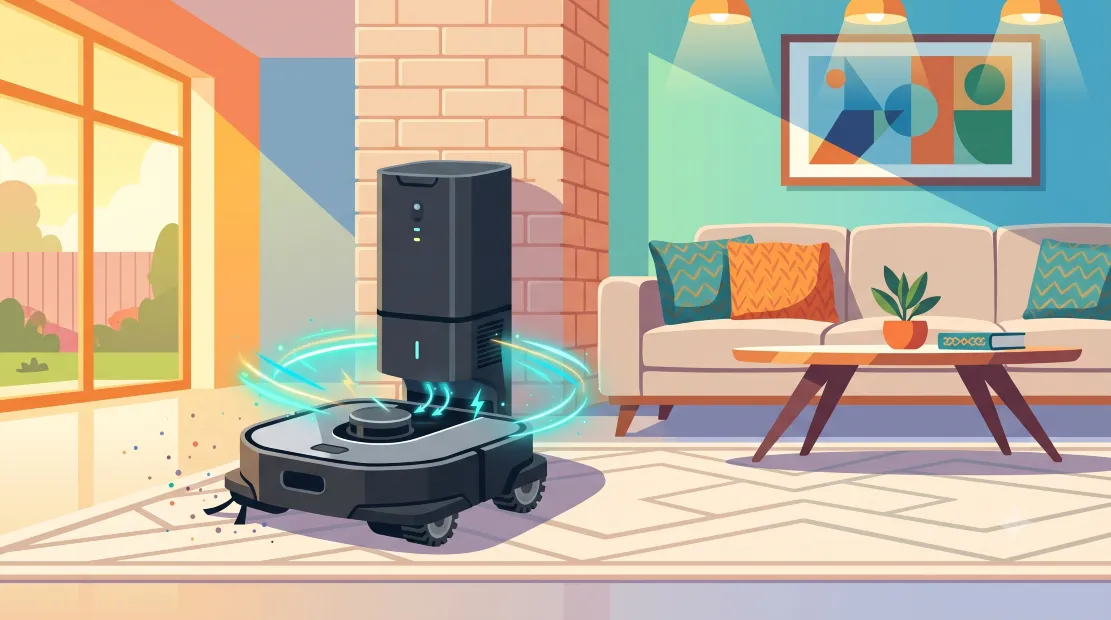
A Roborock unit returning to its self-empty dock after a cleaning cycle.
Suction Power and Cleaning Performance
This is one of the clearest differentiators between the two brands. Roborock’s flagship models routinely advertise suction ratings well above 10,000 Pa, and independent testing generally confirms a meaningful real-world advantage on carpets and rugs compared to most Roomba models at a similar price. For households with pets, area rugs, or higher-pile carpet, this suction advantage often translates into visibly cleaner floors after a single pass.
iRobot Roomba’s higher-end models still perform well on hard flooring and low-pile carpet, and the company has steadily increased suction across newer generations, but it generally trails Roborock’s top suction figures at comparable price tiers. For households with mostly hardwood, tile, or low-pile carpet, the difference is far less noticeable in daily use.
Navigation and Mapping
Both brands have largely standardized on LiDAR-based navigation for their mid-range and flagship models, which creates accurate room-by-room maps and allows for precise no-go zones, room-specific cleaning schedules, and multi-floor map storage. In side-by-side testing, Roborock’s mapping tends to be slightly faster to build and marginally more precise around furniture legs and tight corners, while Roomba’s navigation has historically prioritized cautious, methodical coverage over speed — resulting in slightly longer cleaning times but very consistent full-room coverage.
Lower-end models in both lineups still rely on camera-based or bump-sensor navigation rather than LiDAR, which is noticeably less precise and worth avoiding if mapping accuracy and no-go zones matter to your household.
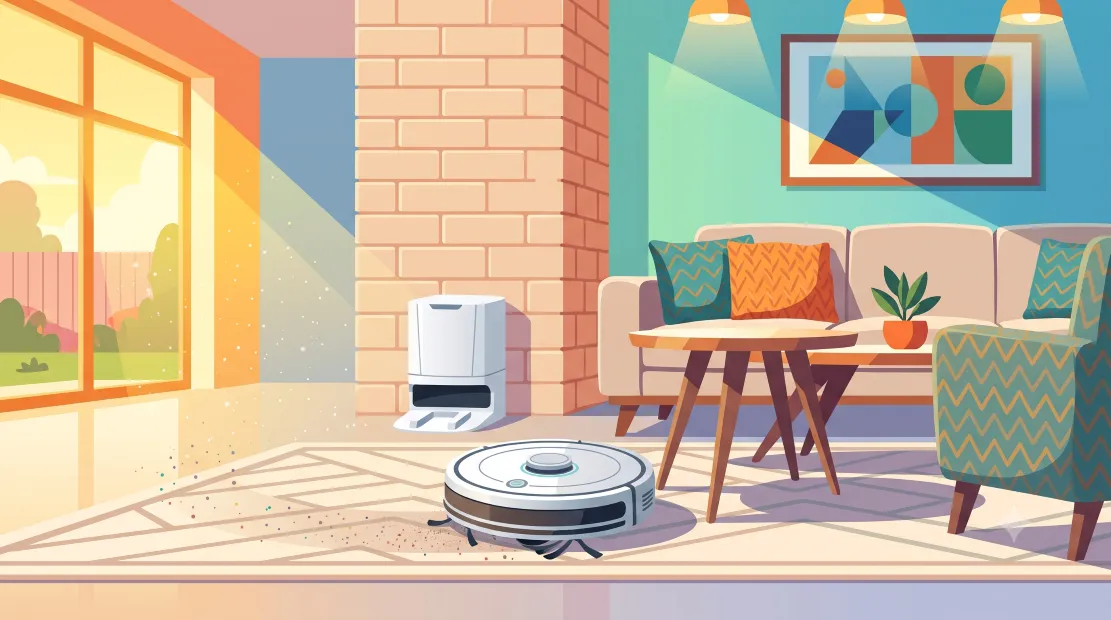
An iRobot Roomba navigating around furniture during a cleaning cycle.
Mopping Capability
Roborock has invested heavily in mopping technology, and its flagship models now feature vibrating or rotating mop pads, automatic pad lifting on carpet, and docks that wash and dry the mop pads between cycles using hot water. For households that want one robot to handle both vacuuming and mopping with minimal manual intervention, Roborock’s mopping system is generally considered the more capable and hands-off option on the market right now.
iRobot Roomba’s mopping models — typically branded as Combo units — use a simpler vibrating mop pad that delivers solid results on light, everyday spills and dust but generally can’t match Roborock’s deeper scrubbing action on stuck-on grime. Roomba’s mopping is best thought of as a convenient bonus feature rather than a true replacement for a dedicated mop on heavily soiled floors.
Self-Empty Docks and Maintenance
Both companies now offer self-empty docks as standard on their higher-end models, automatically emptying the dustbin into a larger bag that typically needs replacing every 4-8 weeks depending on household size and pet hair volume. Roborock’s docks generally add the extra step of washing and hot-air-drying mop pads, plus refilling the onboard mopping water tank, which reduces hands-on maintenance even further but does require periodically refilling the clean-water reservoir and emptying the dirty-water tank.
iRobot’s self-empty docks (Clean Base) are simpler and well-proven after years of refinement, focused purely on dustbin emptying for non-mopping models, or combined dust/mop maintenance on Combo models. Maintenance frequency between the two ecosystems is broadly similar — what differs is how much washing-related upkeep the dock takes off your plate.
| Feature | Roborock | iRobot Roomba |
|---|---|---|
| Typical max suction | 10,000+ Pa (flagship) | Up to ~8,000 Pa (flagship) |
| Navigation | LiDAR, fast precise mapping | LiDAR (high-end), thorough but slower |
| Mopping system | Rotating/vibrating pads, auto-lift, dock washing | Vibrating pad, dock washing on Combo models |
| App experience | Highly customizable, more settings | Simpler, more beginner-friendly |
| Price range (flagship) | $800 – $1,400 | $900 – $1,400 |
| Warranty (typical) | 1 year standard | 1 year standard |
App Experience and Smart Home Integration
The Roborock app offers deep customization: per-room suction and water-flow settings, detailed cleaning history with visual maps, customizable no-go and no-mop zones, and granular scheduling. Power users tend to appreciate the level of control, though new users sometimes find the sheer number of settings a little overwhelming at first.
The Roomba app (iRobot Home) takes a more streamlined approach, with cleaner menus and fewer settings to dig through, which tends to suit households that just want to set a schedule and forget about it. Both apps support voice control through major smart home platforms, and both allow targeted room cleaning from your phone without needing to start a full-house cycle.
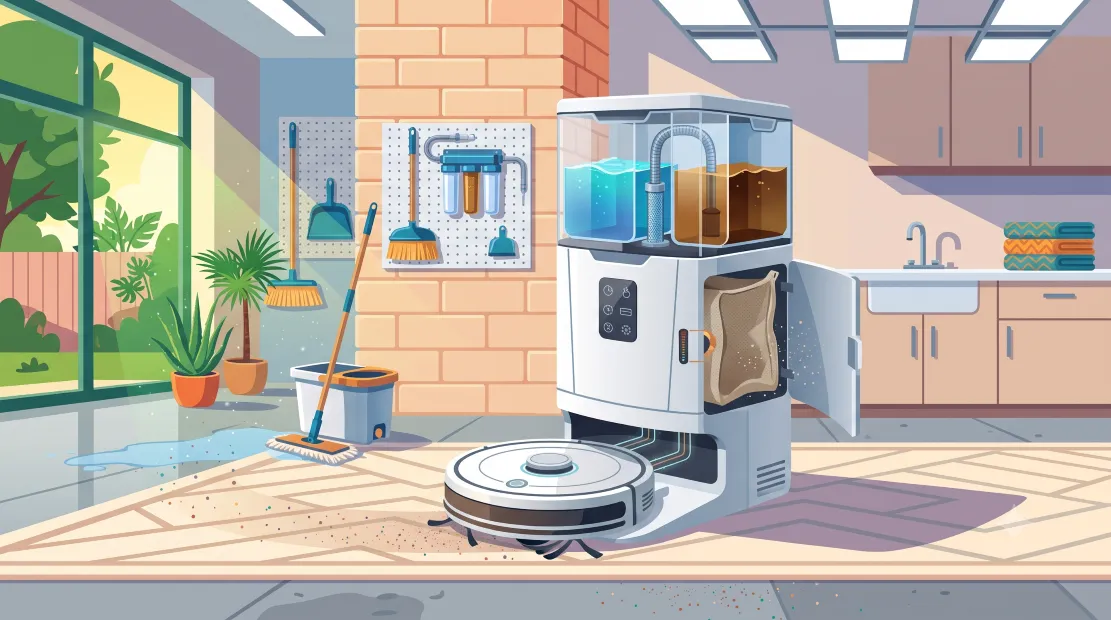
Self-empty docks have become standard on flagship models from both brands.
Obstacle Avoidance
Roborock’s flagship models use a combination of structured light or stereo cameras to detect and avoid common household obstacles like cables, shoes, and pet waste, with generally strong real-world results in recent generations. iRobot’s PrecisionVision system on higher-end Roomba models performs a similar role and has been refined over several product cycles specifically to reduce the embarrassing scenario of a robot dragging something across the floor. Both companies have made significant strides here, and obstacle avoidance is no longer a clear differentiator the way it was a few years ago — though lower-end, budget models from both brands still rely on simpler bump-and-turn behavior and should be expected to struggle more with thin cords and small objects.
Multi-Floor and Multi-Pet Households
Both ecosystems support saving multiple floor maps, which is essential for multi-level homes — you simply carry the robot to a different floor and it automatically loads the corresponding saved map rather than re-mapping from scratch each time. For households with multiple pets or heavy shedding, Roborock’s stronger suction and larger dustbin/dust-bag capacity on flagship models tend to reduce how often you need to intervene, while Roomba’s more cautious, thorough coverage pattern can mean fewer missed spots around furniture edges over a full cleaning cycle.
Pricing and Value
At the budget and mid-range tiers, Roborock generally offers more features per dollar — stronger suction, LiDAR navigation, and basic mopping at price points where comparable Roomba models often still rely on camera-based navigation without mopping. At the flagship tier, pricing between the two brands converges closely, and the decision comes down more to ecosystem preference, app philosophy, and specific feature priorities like mopping depth versus navigation caution than to raw value for money.
Battery Life and Coverage Per Charge
Flagship models from both brands typically run for 3 to 4 hours on a single charge in standard suction mode, enough to cover most homes up to 2,500-3,000 square feet without needing to recharge mid-cycle. Both Roborock and Roomba support auto-resume charging, meaning if the battery does run low partway through a large cleaning job, the robot automatically returns to its dock, tops up, and resumes exactly where it left off rather than starting over. Runtime drops noticeably on maximum suction settings for both brands, which is worth keeping in mind for very large open-plan homes that are cleaned almost exclusively on the highest power mode.
Durability and Long-Term Cost of Ownership
Beyond the upfront purchase price, ongoing costs matter for both ecosystems: replacement mop pads, side brushes, filters, and self-empty dock bags all need periodic replacement, typically every few months depending on usage and household size. Roborock’s consumables tend to be priced competitively and are widely available through third-party sellers in addition to the brand’s own store, which can lower long-term costs. iRobot’s consumables are also widely available, with a longer track record of supply consistency given the brand’s longer history in the category, though official replacement parts can run slightly higher than third-party alternatives for either brand.
In terms of raw mechanical durability, both companies have matured significantly over recent product generations, and catastrophic failures within the first two to three years are relatively uncommon for either brand’s mid-range and flagship models when used as intended. Budget models from both brands, predictably, show more variation in long-term reliability.
Which One Should You Buy?
If your top priorities are maximum suction power, advanced mopping with a self-washing dock, and a highly customizable app experience, Roborock is generally the stronger pick, especially in the mid-range where it tends to outpace Roomba on features per dollar. If you value a simpler, more streamlined app experience and a brand with the longest track record specifically in robot vacuums, iRobot Roomba remains a dependable, well-refined choice that prioritizes consistent coverage over raw specs.
Neither brand is a wrong choice at the flagship tier — both will reliably handle daily vacuuming and most everyday mopping with minimal hands-on involvement. The right pick ultimately comes down to whether you want maximum control and cleaning power (Roborock) or maximum simplicity and proven consistency (Roomba).
Frequently Asked Questions
Is Roborock actually better than Roomba, or just cheaper?
It’s not simply a price difference — Roborock’s flagship models generally offer higher suction power and more advanced mopping features than comparably priced Roomba models, while Roomba tends to offer a simpler app experience and slightly more cautious, thorough navigation.
Do I need a self-empty dock?
A self-empty dock isn’t strictly necessary, but it significantly reduces hands-on maintenance, especially in households with pets or larger square footage, since it can go weeks between manual dustbin emptying instead of requiring attention after every cycle.
Can either robot vacuum and mop in a single pass?
Yes, combo models from both brands vacuum and mop in the same cleaning cycle, automatically lifting the mop pad when crossing onto carpet to avoid wetting it.
How loud are these robot vacuums?
Both brands offer adjustable suction modes with corresponding noise levels, typically ranging from a quiet whisper on low power modes to a noticeably louder hum on maximum suction — most households run scheduled cleanings during the day or while away to avoid the higher noise levels of max-power mode.
Will a robot vacuum work well with thick carpet or high pile rugs?
Higher-suction models from both brands handle medium-pile carpet well, though very high-pile or shag rugs remain challenging for any robot vacuum and may require occasional manual vacuuming to fully refresh.
ADeeL A.M
ADeeL A.M is a home energy and clean solar power writer with a deep passion for the electrified home. He spends his days researching solar panels, battery backup systems, EV chargers, portable power stations, and smart energy solutions — comparing specs, efficiency ratings, and real-world performance to bring readers the newest, most reliable, and best-value options on the market.
View all articles by ADeeL A.M →