How Long Does It Take to Charge an EV at Home?
The honest answer to “how long does home EV charging take” is: it depends on three things — your charger’s power output, your vehicle’s battery size, and your vehicle’s onboard charger limit — and any one of them can be the bottleneck. This guide breaks down real charging times across Level 1 and Level 2 setups, explains why two people with the “same” charger can see very different results, and gives concrete overnight-charging expectations so you can plan around your actual daily driving rather than a vague marketing estimate.
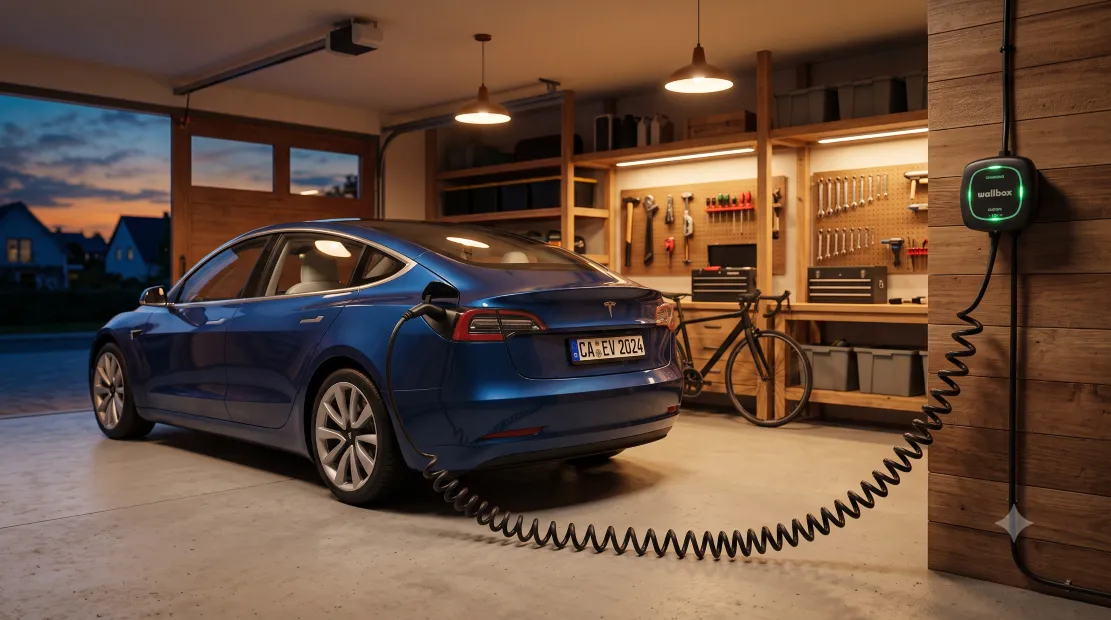
Home charging time depends on your charger, your battery size, and your vehicle’s onboard limits.
⚡ Quick Answer
- Level 1 (120V outlet): roughly 3-5 miles of range per hour — a full charge from empty can take 40+ hours.
- Level 2 (240V home charger): roughly 25-40 miles of range per hour — most EVs fully recharge overnight in 4-10 hours.
- Biggest bottleneck for most drivers: not the charger’s max output, but the vehicle’s onboard charger limit, which caps how fast it can accept power regardless of charger capability.
- For most daily drivers: overnight Level 2 charging comfortably replenishes a typical day’s driving, even without ever reaching a full charge.
The Three Variables That Determine Charging Time
Charging time is a function of three separate factors working together, and understanding each one explains why charging times vary so much between different EV owners even with similar equipment. First, your charger’s power output, measured in kilowatts, determines the maximum rate at which electricity can flow. Second, your vehicle’s battery capacity, measured in kilowatt-hours, determines the total amount of energy needed for a full charge. Third — and often overlooked — your vehicle’s onboard charger has its own maximum acceptance rate, meaning even a powerful home charger can’t force electricity into the battery faster than the car itself is built to accept it.
Level 1 Charging: Slow but Simple
Level 1 charging uses a standard 120V household outlet, the same kind used for lamps and small appliances, requiring no special installation or equipment beyond the charging cable that typically ships with the vehicle. Charging speed is modest — typically adding 3 to 5 miles of range per hour — which means a full charge from a significantly depleted battery can take well over 40 hours. This makes Level 1 genuinely impractical as a primary charging method for most drivers, but it remains a reasonable option for plug-in hybrids with smaller batteries, or for EV drivers with very low daily mileage who simply need to top up a modest amount each night.
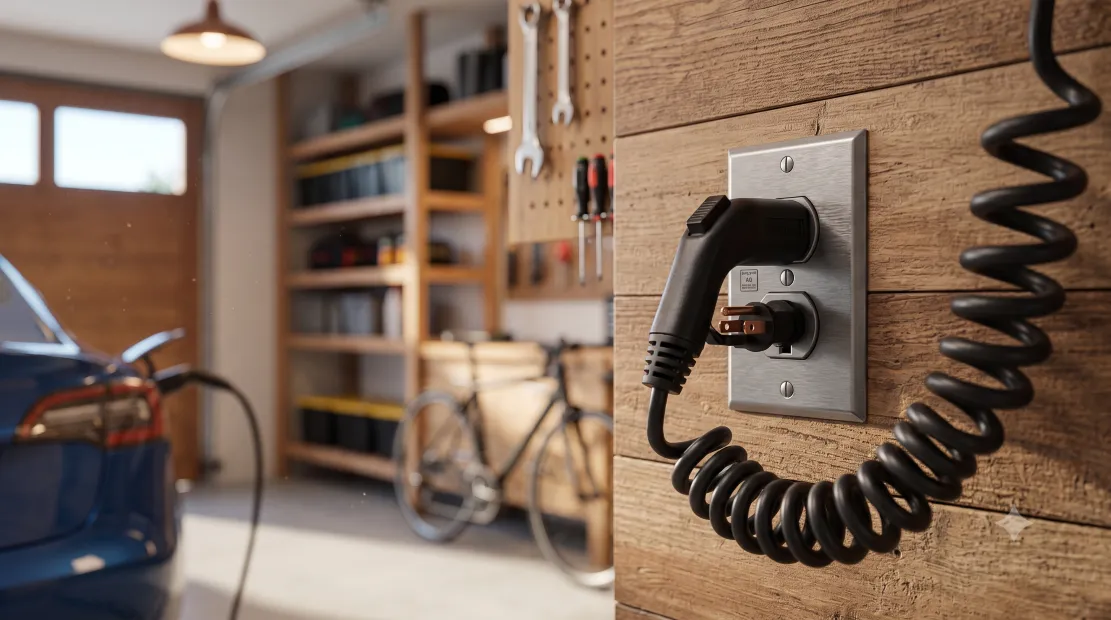
Level 1 charging uses a standard outlet but delivers only a few miles of range per hour.
Level 2 Charging: The Realistic Home Standard
Level 2 charging uses a 240V circuit, the same voltage as a dryer or oven outlet, requiring a dedicated home charger installed by a licensed electrician. This is the charging method most EV owners rely on for daily home use, typically delivering 25 to 40 miles of range per hour depending on the charger’s output and the vehicle’s onboard charger limit. At this rate, a full overnight charge — 6 to 10 hours — comfortably replenishes even a significantly depleted battery for the vast majority of EVs currently on the market.
| Charging Method | Power Output | Range Added Per Hour | Time for Full Charge (typical EV) |
|---|---|---|---|
| Level 1 (120V outlet) | ~1.4 kW | 3 – 5 miles | 40+ hours |
| Level 2 (32A charger) | ~7.7 kW | 20 – 25 miles | 8 – 10 hours |
| Level 2 (48A charger) | ~11.5 kW | 30 – 40 miles | 5 – 7 hours |
Why Your Vehicle’s Onboard Charger Matters More Than Your Home Charger
This is the single most misunderstood factor in home EV charging speed. Every EV has a maximum onboard AC charging rate — a hardware limit built into the vehicle itself, independent of how powerful your home charger is. If your vehicle’s onboard charger caps out at 7.2 kW, installing an 11.5 kW home charger won’t charge that vehicle any faster; the car simply won’t accept more than its built-in limit regardless of what the charger can technically deliver. This is why two EV owners with identical home chargers can see meaningfully different charging speeds if their vehicles have different onboard charger capacities.
Battery Size and Its Effect on Total Charging Time
Larger batteries hold more total energy and therefore take longer to fully charge at any given charging rate, all else being equal. A smaller-battery EV with a 40 kWh pack charges meaningfully faster from empty to full than a larger-battery EV with a 100 kWh pack on the same charger, simply because there’s less total energy to deliver. In practice, most drivers rarely charge from truly empty to completely full, which softens this difference in daily use, but it’s worth understanding when comparing manufacturer-quoted charging times across different vehicle models with significantly different battery sizes.
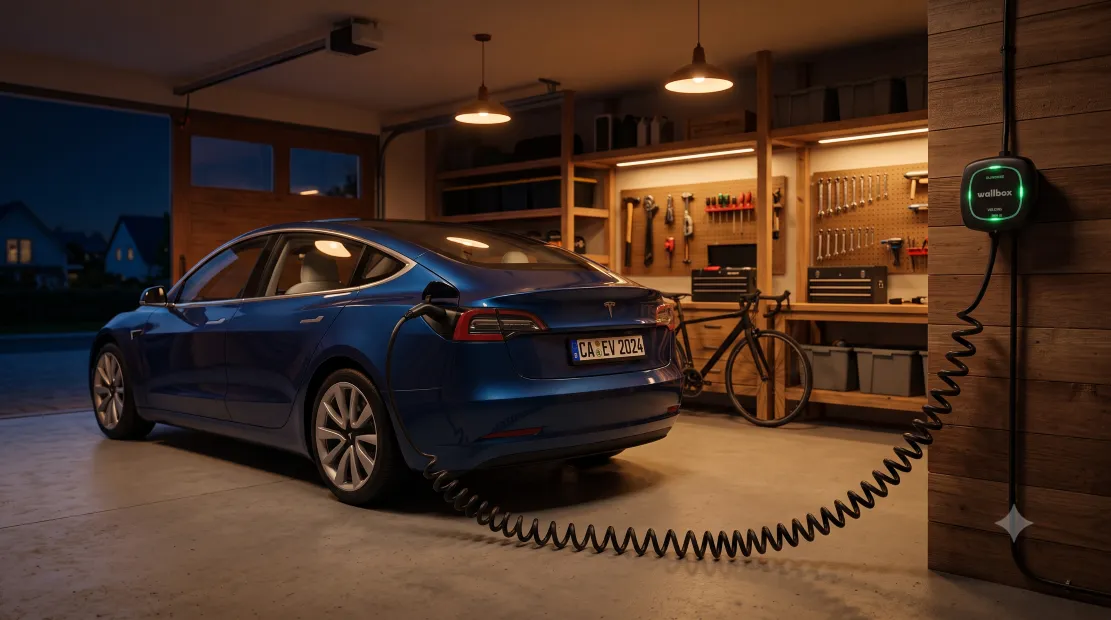
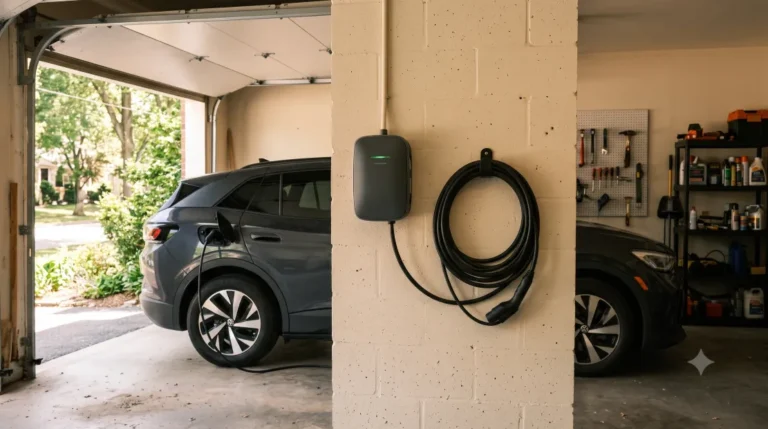
Overnight Level 2 charging comfortably covers most daily driving needs by morning.
The Charging Curve: Why the Last 20% Takes Longer
Charging speed isn’t perfectly linear throughout a charging session — most EVs charge fastest when the battery is at a lower state of charge and gradually slow down as the battery approaches full, a pattern known as the charging curve, designed to protect long-term battery health. This effect is more pronounced on DC fast charging than on Level 2 home charging, but it still applies at home to some degree, meaning the jump from 80% to 100% typically takes proportionally longer than the jump from 20% to 80%. For most daily home charging, this matters less than it sounds, since most drivers aren’t charging to 100% every night anyway.
Real-World Examples by Battery Size
Translating specs into concrete overnight scenarios helps set realistic expectations. A compact EV with a roughly 60 kWh battery, charging from 20% to 80% on a Level 2 charger delivering 30 miles of range per hour, typically takes 4 to 5 hours — well within a single overnight session. A larger SUV-style EV with a roughly 100 kWh battery, charging the same 20% to 80% range on the same charger, typically takes 6 to 8 hours — still comfortably achievable overnight, though closer to the edges of a typical sleep schedule. Charging all the way from empty to 100% on either vehicle takes meaningfully longer than these partial-charge examples, reinforcing why most EV owners rarely let their battery run down to near-zero before charging.
Do You Need to Charge to 100% Every Night?
For most daily drivers, no. Most EV manufacturers actually recommend routinely charging to around 80-90% rather than 100% for daily use, reserving a full 100% charge for occasional longer trips, since consistently charging to 100% and letting the battery sit at that level can contribute to slightly faster long-term battery degradation compared to a more moderate daily charging habit. Combined with the charging curve slowing down near full, this means most EV owners’ realistic overnight charging routine doesn’t need to chase a full charge every single night, which also somewhat reduces the practical charging time concern that a “full charge” figure alone might suggest.
Tips to Speed Up Effective Charging
While you can’t exceed your vehicle’s onboard charger limit, a few practical habits improve your effective charging experience. Charging during off-peak utility hours, if your rate plan offers them, doesn’t speed up the actual charging rate but does reduce cost for the same charging session. Keeping your battery from routinely running very low before charging takes advantage of the faster portion of the charging curve rather than needing a long session to climb from a very low starting point. And confirming your home charger’s amperage is actually configured to match both your vehicle’s onboard limit and your electrical panel’s capacity — rather than left at a conservative default setting — ensures you’re not leaving charging speed on the table unnecessarily.
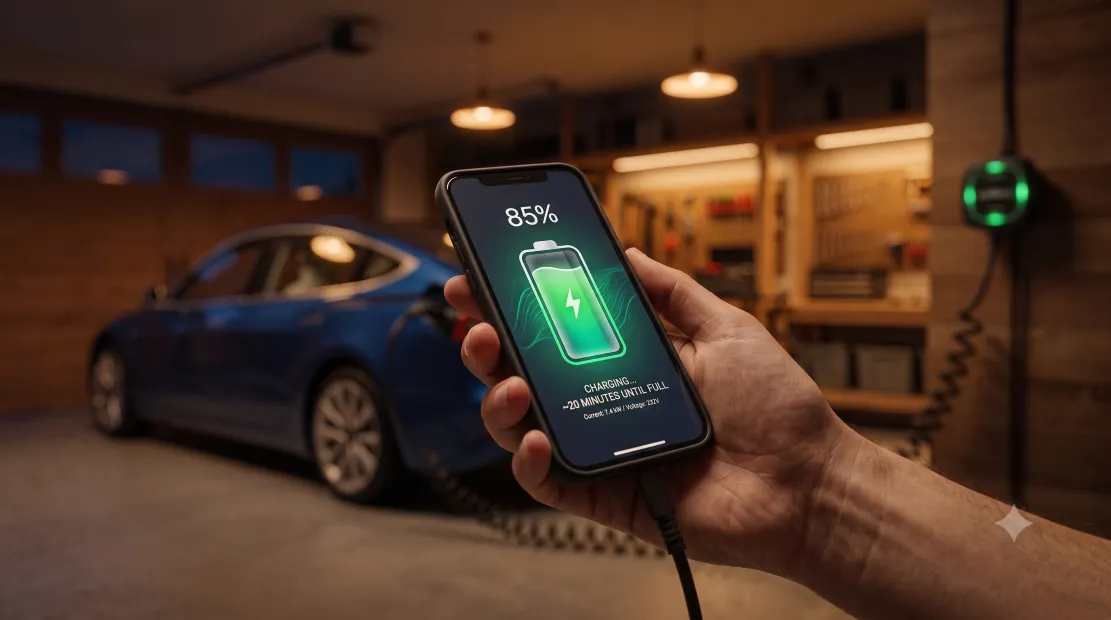
Most charging apps provide a real-time estimate of remaining charging time based on current conditions.
Cold Weather’s Effect on Charging Speed
Battery chemistry is temperature-sensitive, and charging speed can be noticeably slower in very cold weather compared to mild conditions, since batteries generally accept charge less efficiently when cold. Many EVs include a battery preconditioning feature that warms the battery ahead of a planned charging session, which can meaningfully improve cold-weather charging speed if enabled in advance — worth checking whether your specific vehicle supports this feature and how to activate it before a cold-weather charging session.
How to Estimate Your Own Charging Time
To estimate your own realistic charging time: check your vehicle’s onboard AC charging rate (from the owner’s manual), confirm your home charger’s actual configured output (which may be lower than its maximum rated capacity depending on installation), and use the lower of the two numbers as your effective charging rate. Divide the kWh you need to add (based on your typical daily mileage and your vehicle’s efficiency rating) by that effective rate to estimate hours needed — a calculation most manufacturer apps and many charger apps will also perform automatically once your specific vehicle and charger are set up in the app.
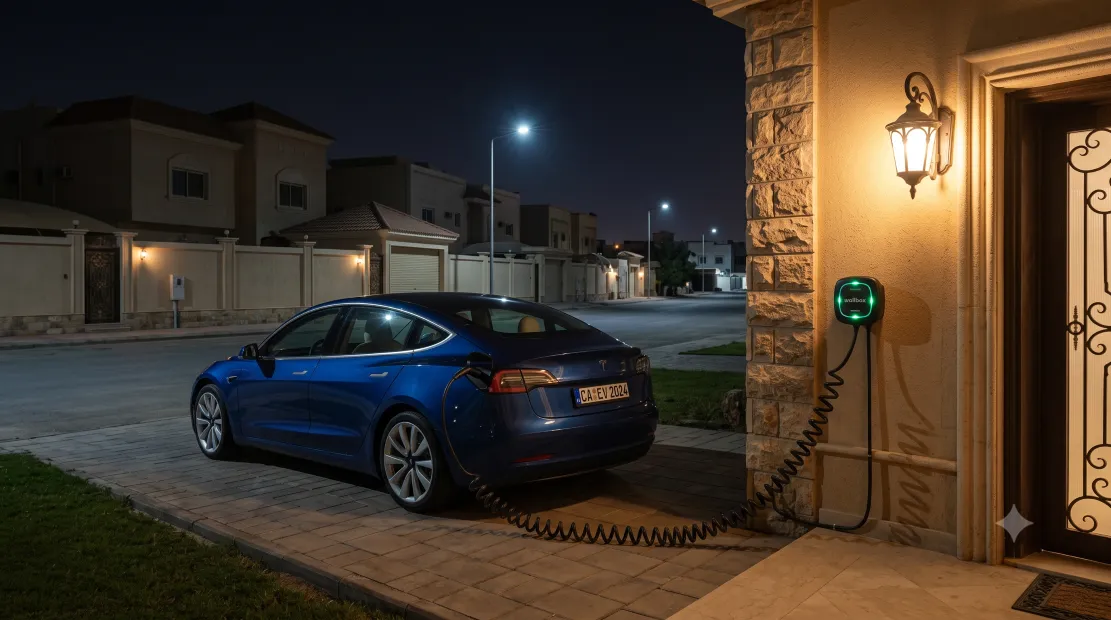
A properly sized Level 2 setup makes overnight charging a routine, low-effort part of EV ownership.
The Bottom Line
For the vast majority of EV owners with a home Level 2 charger, charging time is simply not a practical daily concern — plugging in overnight comfortably replenishes a typical day’s driving regardless of the specific numbers involved, and the vehicle is always ready by morning. Understanding the underlying factors — charger output, vehicle onboard limits, and battery size — matters most when choosing a home charger in the first place or troubleshooting unexpectedly slow charging, rather than as something to actively manage on a daily basis once a properly sized Level 2 system is installed.
Frequently Asked Questions
How long does it take to fully charge an EV at home?
On a Level 2 home charger, most EVs fully charge in 5 to 10 hours depending on battery size and the vehicle’s onboard charger limit, comfortably achievable in a single overnight session. Level 1 charging on a standard outlet can take 40 or more hours for a full charge.
Does a more powerful home charger always charge my car faster?
Not necessarily. Every EV has a maximum onboard AC charging rate that caps how fast it can accept power regardless of the home charger’s output. If your vehicle’s limit is below your charger’s maximum, a more powerful charger won’t charge that specific vehicle any faster.
Should I charge my EV to 100% every night?
Most manufacturers recommend routinely charging to around 80-90% for daily use rather than 100%, reserving a full charge for longer trips, since consistently charging to 100% can contribute to slightly faster long-term battery degradation for many battery chemistries.
Why does charging slow down near a full battery?
Most EVs follow a charging curve that reduces charging speed as the battery approaches full capacity, a deliberate design choice to protect long-term battery health. This means the last 20% of a charge typically takes proportionally longer than earlier portions of the same session.
Does cold weather affect home charging speed?
Yes, charging speed can be noticeably slower in very cold weather since batteries generally accept charge less efficiently when cold. Some EVs include a battery preconditioning feature that can improve cold-weather charging speed if activated ahead of a planned charging session.
ADeeL A.M
ADeeL A.M is a home energy and clean solar power writer with a deep passion for the electrified home. He spends his days researching solar panels, battery backup systems, EV chargers, portable power stations, and smart energy solutions — comparing specs, efficiency ratings, and real-world performance to bring readers the newest, most reliable, and best-value options on the market.
View all articles by ADeeL A.M →