Anker SOLIX C1000 Review: Best All-Rounder?
The Anker SOLIX C1000 sits in an interesting sweet spot in Anker’s power station lineup: bigger and more capable than entry-level compact units, but more portable and affordable than the brand’s full home-backup-oriented flagships. That middle-ground position is exactly why it’s earned a reputation as an all-rounder — the question this review answers is whether it actually delivers enough versatility to justify skipping both the smaller and larger options in Anker’s catalog. We cover capacity, output power, charging speed, portability, app experience, and where it genuinely shines versus where a different unit might serve you better.
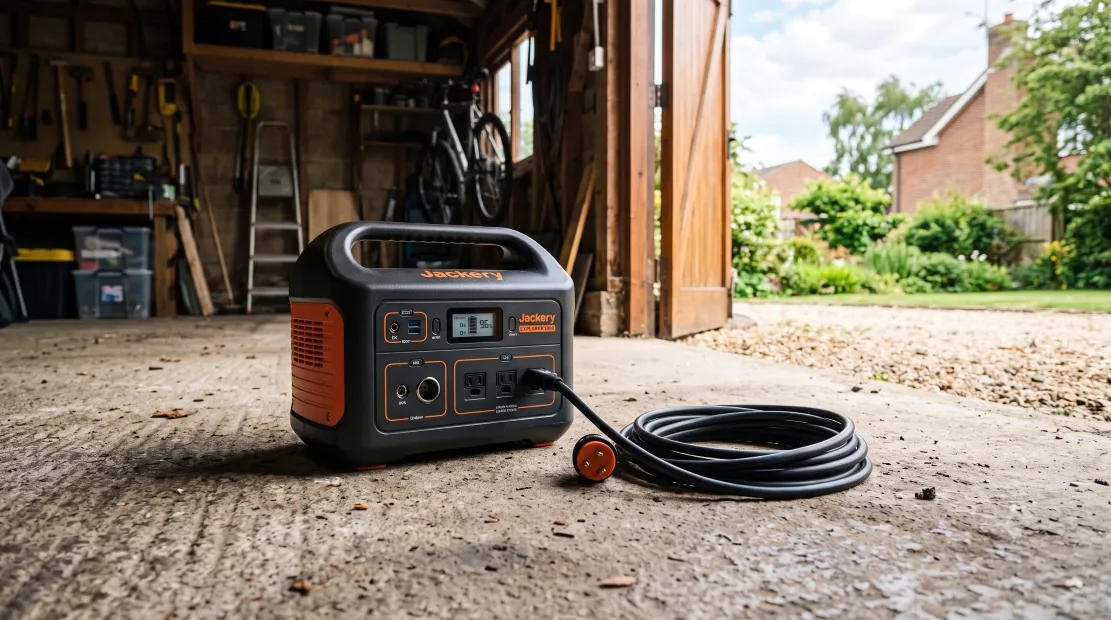
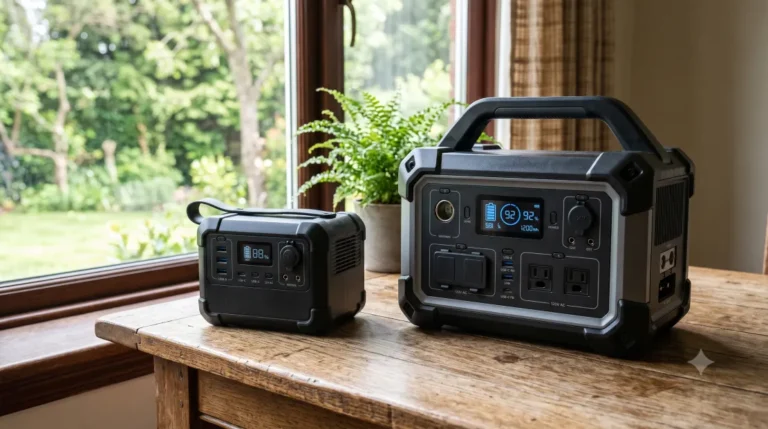
The Anker SOLIX C1000 positions itself as a do-everything middle-ground power station.
⚡ Quick Answer
- Capacity: around 1,056 Wh, expandable with an add-on battery for roughly double that capacity.
- Output: up to 1,800W continuous, enough for most household appliances short of central air conditioning.
- Standout feature: fast recharge speed — reaching a substantial charge from a wall outlet in under an hour on its fastest setting.
- Best for: households wanting one power station that handles camping, home office backup, and short outages without needing multiple units.
Where the C1000 Fits in Anker’s Lineup
Anker’s SOLIX power station catalog spans from small, ultra-portable units under 300 Wh up through massive expandable home-backup systems in the multi-kilowatt-hour range. The C1000 sits roughly in the middle: substantial enough to genuinely matter during a home outage or power higher-draw devices, but still light and compact enough to load into a car trunk for a camping trip without a struggle. This middle-ground positioning is the C1000’s whole identity, and understanding that context is key to judging whether it’s the right fit rather than comparing it unfairly against units built for a completely different job. Buyers coming from a much smaller unit will notice the jump in real capability immediately; buyers coming from a full home-backup system will notice the C1000 asks more of them in terms of manual setup and monitoring.
Capacity and Output: The Core Numbers
| Spec | Anker SOLIX C1000 |
|---|---|
| Capacity | ~1,056 Wh (expandable to ~2,000+ Wh with add-on battery) |
| Continuous output | Up to 1,800W |
| Surge output | Higher momentary peak for motor start-up loads |
| Battery chemistry | LiFePO4 |
| Approximate weight | ~28 – 30 lbs |
| AC outlets | Multiple, plus USB-A and USB-C ports |
At roughly 1,056 Wh with 1,800W of continuous output, the C1000 comfortably handles the vast majority of household devices short of the heaviest draws like central air conditioning or an electric oven — think microwaves, coffee makers, power tools, mini-fridges, and multiple simultaneous device chargers. The expansion battery option effectively doubles capacity for households anticipating longer outages or heavier device use, without needing to buy an entirely separate, larger unit. Surge output, the momentary peak the unit can handle when a motor-driven appliance first starts up, is rated meaningfully higher than the continuous figure, which matters for devices like refrigerator compressors that draw a brief spike well above their steady-state running wattage.
Charging Speed: A Genuine Standout
This is where the C1000 distinguishes itself most clearly from the competition. Anker’s fast-charging technology can bring the unit to a substantial charge from a standard wall outlet in well under an hour, a meaningful advantage if you need to top up quickly before a storm arrives or simply don’t want to wait hours between uses. This charging speed advantage holds up well against similarly-sized competitors, most of which take noticeably longer to reach a comparable charge level from the wall.
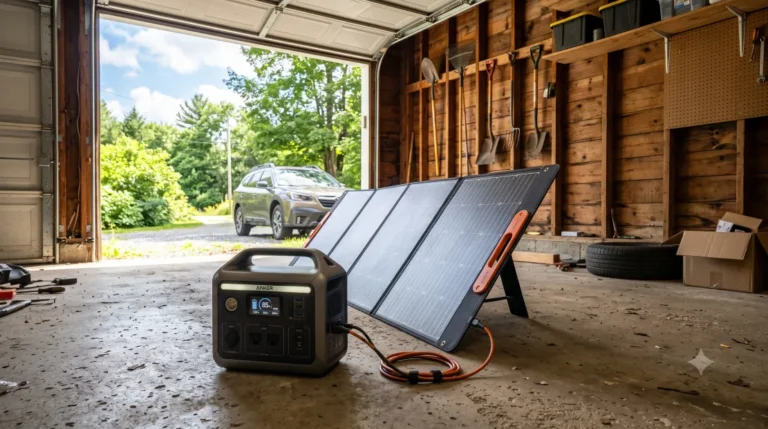
Solar charging is supported as well, accepting a reasonable solar input that makes sense for the unit’s capacity tier — not as fast as wall charging, but a genuinely useful option for extended off-grid use or multi-day outages where wall power isn’t available.
Real-World Use Cases
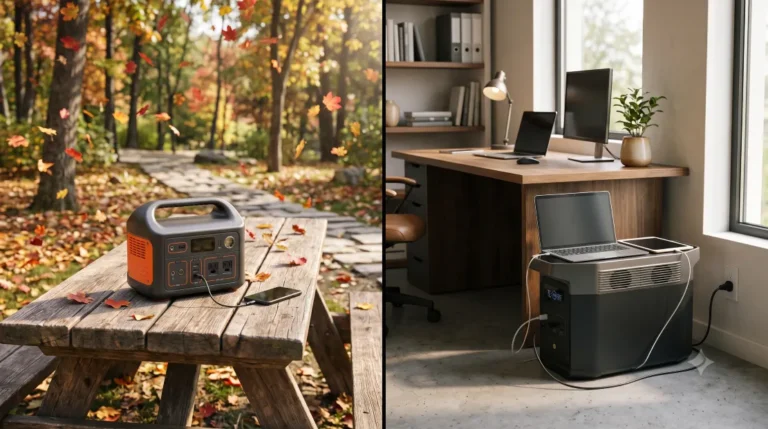
In practice, the C1000’s roughly 1,056 Wh capacity and 1,800W output cover a wide range of scenarios comfortably. For home office use, it can keep a laptop, monitor, router, and desk lamp running for a full work day and then some, making it a solid choice for anyone who occasionally works through a power outage rather than losing a day of productivity. For camping or van life, it handles a portable fridge, lights, device charging, and even occasional use of a small appliance like a portable induction burner for a limited number of cooking sessions. For home backup during a blackout, it can keep essential circuits — lighting, WiFi, phone chargers, a mini-fridge — running comfortably for the better part of a day, longer with the optional expansion battery.
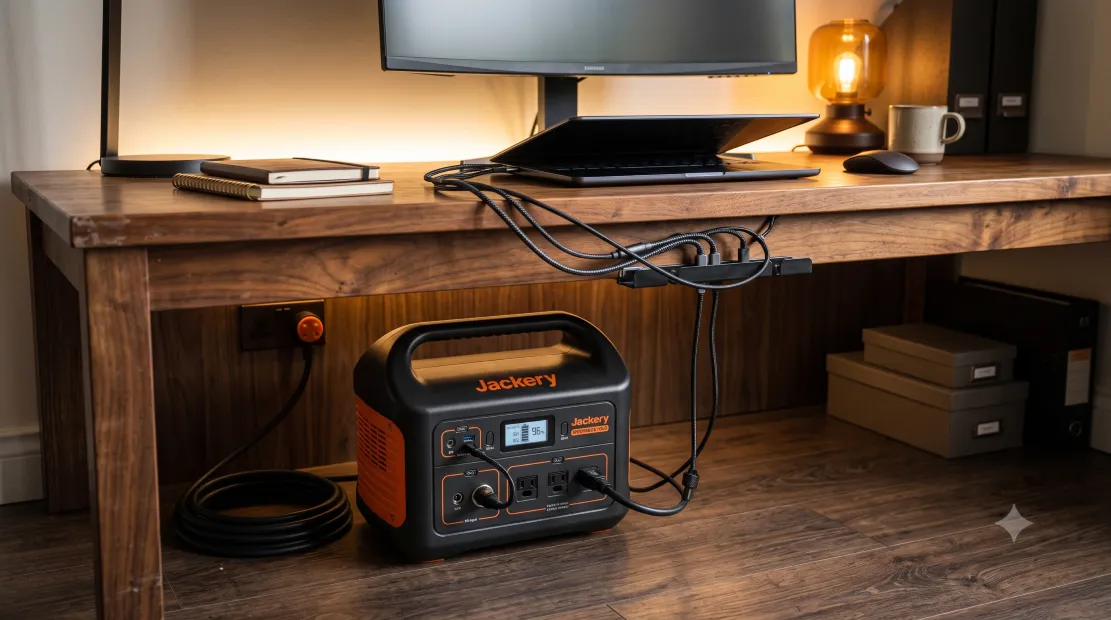
The C1000’s output comfortably handles a full home office setup during an outage.
Portability: A Reasonable Middle Ground
At roughly 28-30 pounds, the C1000 is heavier than compact units built purely for grab-and-go portability, but it’s still manageable for a single person to carry short distances using its built-in handle, and easy enough to load into a car trunk for a trip. It’s not the unit you’d casually toss in a backpack, but it’s far from the two-person lift required for some larger home-backup-focused systems. This weight sits right where you’d expect for its capacity tier — the tradeoff of substantial capacity for a bit more heft is a reasonable one for most buyers in this category.

Portable enough for camping trips, substantial enough to matter during a home outage.
App Experience
The Anker app for the C1000 covers the essentials competently: real-time charge monitoring, remote output control, and charging schedule management for those wanting to charge during off-peak utility hours. Anker’s broader consumer electronics portfolio shows in the app’s overall polish — it feels considerably more refined than some competitors’ more basic monitoring apps, with a clean interface that makes checking status or adjusting settings quick rather than a chore.
The companion app provides clear, real-time monitoring of charge level and output.
Expansion Battery: Worth Adding?
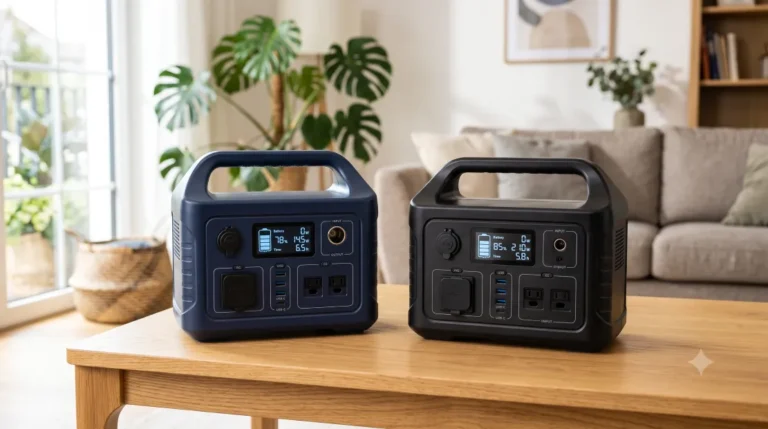
For buyers anticipating longer outages, heavier device use, or simply wanting more headroom without stepping up to a larger, less portable unit, the optional expansion battery roughly doubles total capacity while keeping the same 1,800W output ceiling. This is a genuinely useful upgrade path rather than a gimmick — it lets you start with the base unit’s capacity and portability, then add capacity later if your needs grow, without the sunk cost of having bought a bigger unit upfront that you didn’t initially need.
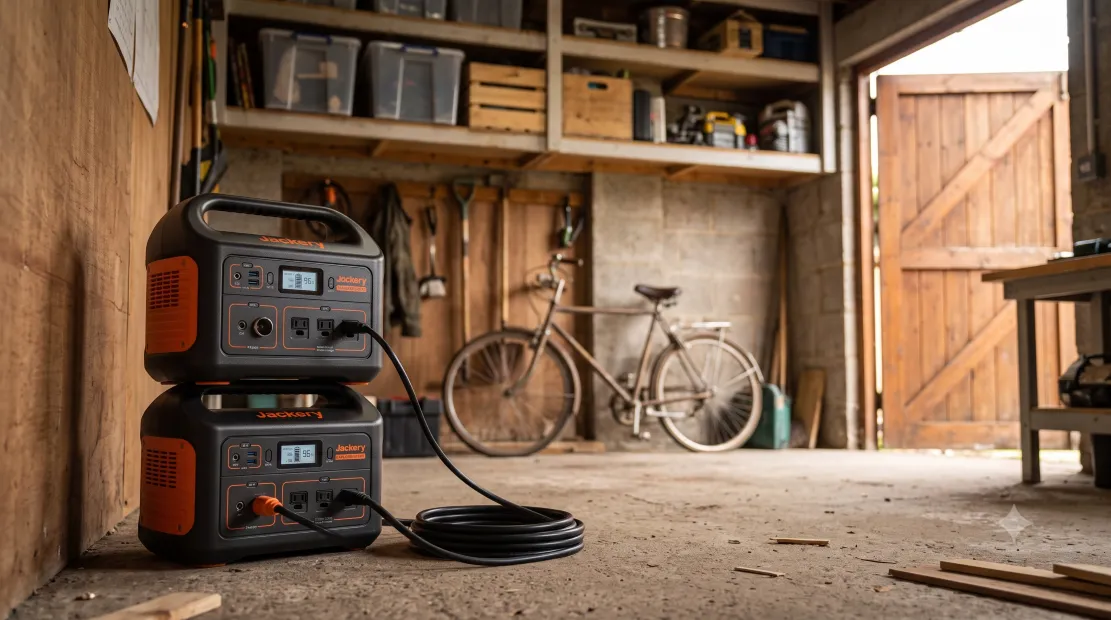
The expansion battery option roughly doubles capacity without sacrificing the base unit’s portability.
Noise, Cooling, and Build Quality
Under normal loads, the C1000’s cooling fans stay reasonably quiet, becoming more noticeable primarily during fast wall charging or when running near its maximum continuous output — a fair tradeoff given how much faster it recharges compared to quieter but slower competitors. The overall build feels solid for its price tier, with a housing that handles the bumps and knocks of regular transport well without feeling flimsy, and physical buttons and ports that have a reassuringly tactile, durable feel rather than the cheaper plastic click of some budget competitors.
Warranty and Long-Term Reliability
Anker backs the C1000 with a multi-year warranty typical of its SOLIX lineup, reflecting reasonable confidence in the underlying LiFePO4 battery chemistry, which is rated for thousands of charge cycles before meaningful capacity degradation. Anker’s much longer overall track record as a consumer electronics company, compared to some smaller, newer power station brands, also means a more established support infrastructure and a larger body of real-world owner experience to draw on when researching long-term reliability.
Price and Value
The C1000 sits at a mid-range price point that reflects its position between compact entry-level units and full home-backup flagships. It isn’t the cheapest option in its capacity class, but its charging speed advantage and app polish generally justify the premium over slower, more basic competitors offering similar capacity. For buyers who specifically value minimizing time spent waiting for a recharge — whether due to frequent use or genuine concern about being ready ahead of severe weather — the price difference is easy to justify. For buyers less concerned with charging speed and more focused on pure price-per-watt-hour, a slower competitor at this same capacity tier might offer better raw value.
How It Compares to Similar-Capacity Competitors
Against similarly-sized units from competing brands, the C1000’s clearest advantages are its charging speed and app polish — both areas where Anker’s broader engineering resources show. Competing units in this capacity range sometimes offer marginally lower prices, but usually at the cost of slower recharge times. For buyers who value minimizing downtime between uses, whether for frequent camping trips or genuine concern about being ready for the next outage, the C1000’s charging speed advantage is worth the price difference in most cases.
Running Multiple Devices Simultaneously
One practical advantage of the C1000’s 1,800W output ceiling and generous port selection is running several devices at once without needing to prioritize or unplug one thing to power another. A realistic household scenario — a laptop charging, a mini-fridge cycling on and off, a couple of phones topping up, and a lamp running — sits comfortably within the unit’s output budget with meaningful headroom to spare. This matters more in daily use than the peak wattage number alone suggests, since real households rarely run just one device at a time during an outage or camping trip; they run several simultaneously, and headroom for that combined load is what actually determines whether a unit feels adequate or constantly maxed out.
Who Should Buy the Anker SOLIX C1000?
The C1000 makes the most sense for households that want one power station to genuinely cover multiple use cases — camping trips, home office backup, and short-to-medium home outages — without needing to own separate units for each scenario. Its fast charging speed is a real, tangible benefit for anyone who values quick turnaround between uses, and the expansion battery option provides a sensible upgrade path if your needs grow over time. If your needs are purely small-device charging on the go, a smaller, lighter unit will serve you better and cost less; if you need genuine whole-home backup capability, a larger, permanently installed system is the more appropriate category entirely. Within its actual middle-ground category, though, the C1000 earns its “all-rounder” reputation.
Frequently Asked Questions
How long does the Anker SOLIX C1000 take to fully charge?
Using its fastest supported wall-charging mode, the C1000 can reach a substantial charge in well under an hour, with a full charge taking a bit longer. This is notably faster than many similarly-sized competitors.
Can the C1000 run a refrigerator during an outage?
Yes, its 1,800W continuous output comfortably handles a standard refrigerator or mini-fridge, and its roughly 1,056 Wh capacity (more with the expansion battery) can keep one running for a meaningful stretch of an outage.
Is the expansion battery necessary, or is the base unit enough?
For most everyday use — camping, home office backup, short outages — the base unit’s capacity is sufficient. The expansion battery is worth considering if you anticipate longer outages, heavier device use, or simply want more headroom without buying a larger unit.
How heavy is the Anker SOLIX C1000?
It weighs roughly 28-30 pounds, manageable for a single person to carry short distances using its built-in handle, though heavier than compact units built purely for grab-and-go portability.
Can I use solar panels to charge the C1000?
Yes, the C1000 supports solar charging at an input level appropriate for its capacity tier, making it a genuinely useful option for extended off-grid use or multi-day outages when wall power isn’t available.
ADeeL A.M
ADeeL A.M is a home energy and clean solar power writer with a deep passion for the electrified home. He spends his days researching solar panels, battery backup systems, EV chargers, portable power stations, and smart energy solutions — comparing specs, efficiency ratings, and real-world performance to bring readers the newest, most reliable, and best-value options on the market.
View all articles by ADeeL A.M →