Best Solar Generators for Home Backup
“Solar generator” is the popular name for a portable power station paired with solar panels — a battery bank that stores solar energy and delivers it as usable AC power, without any of the fuel, fumes, or noise of a traditional gas generator. For home backup specifically, the right solar generator setup depends on capacity, output power, and how efficiently it accepts solar input, not just brand recognition. We ranked the leading options by the priorities that matter most for keeping a home powered through an outage, so you can match the right setup to your actual backup needs.
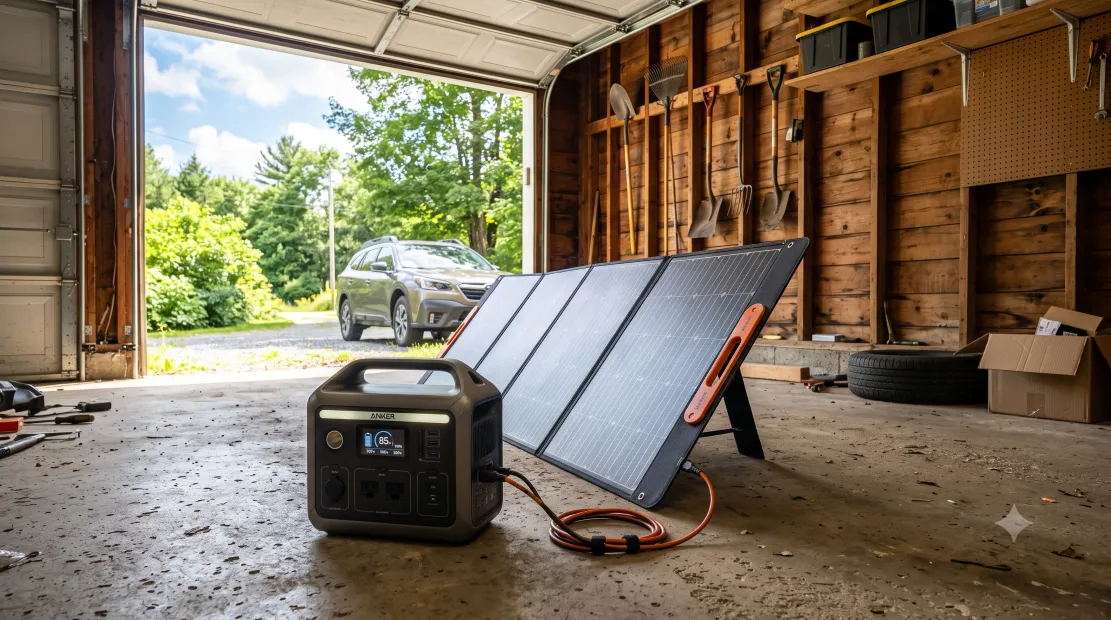
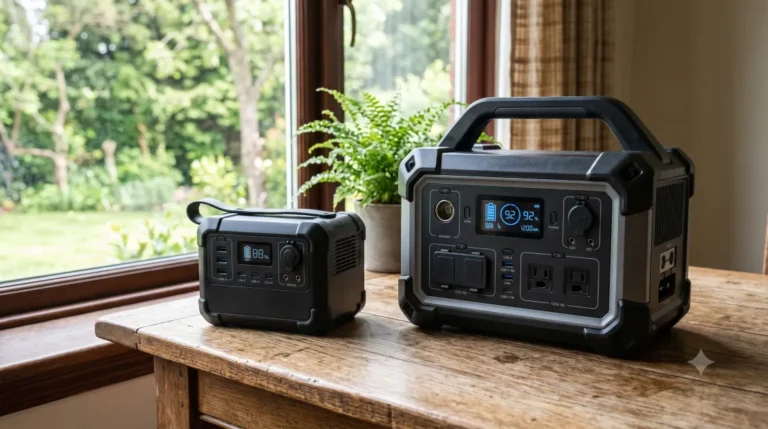
A solar generator combines a battery power station with solar panels for fuel-free backup power.
⚡ Quick Answer
- Best overall: EcoFlow DELTA Pro series — the most capable, expandable solar generator system built specifically with home backup in mind.
- Best value: Jackery Explorer with matching solar panels — solid capacity and reliable solar charging at a competitive price.
- Best solar charging efficiency: Bluetti — highest solar input acceptance in the category, ideal for maximizing off-grid recharge speed.
- Best for whole-home expansion: Anker SOLIX or EcoFlow with expansion batteries and transfer switch options.
What “Solar Generator” Actually Means
Unlike a traditional gas generator, a solar generator has no engine, no fuel tank, and no combustion — it’s simply a battery power station charged by solar panels (or, when solar isn’t available, a wall outlet or car charger as backup charging methods). The term is a marketing convenience more than a technical one, but it accurately captures the appeal: silent, fume-free backup power that recharges itself from sunlight rather than requiring a fuel supply that can run out during an extended outage.
How We Ranked These
Rankings are based on the factors that matter most for home backup specifically: battery capacity and continuous output power, solar input acceptance (how efficiently and how fast the unit charges from panels), expandability for scaling toward whole-home coverage, portability, and overall value. We also weighed app quality and real-world reliability reports, since a solar generator sitting unused for months between outages needs to actually work when called upon.
1. Best Overall: EcoFlow DELTA Pro Series
EcoFlow’s DELTA Pro series earns the top overall spot by combining substantial base capacity, strong continuous output, fast charging from both wall and solar sources, and the most mature expansion ecosystem in the category. For home backup specifically, DELTA Pro’s compatibility with a smart transfer switch lets the system feed selected home circuits automatically during an outage rather than requiring manual extension cords to individual devices — a meaningful step up in convenience compared to standalone portable units. Multiple units and expansion batteries can combine for genuinely substantial capacity, letting the system grow with your backup needs over time.
Best for: households wanting the most capable, expandable solar generator system built specifically around home backup use.
2. Best Value: Jackery Explorer with Solar Panels
Jackery’s Explorer lineup, paired with the company’s well-established SolarSaga panel line, delivers reliable capacity and solid solar charging performance at a price that consistently undercuts equivalent-capacity competitors. While Jackery’s charging speeds and maximum output generally trail EcoFlow and Anker SOLIX’s flagship units, the combination remains a genuinely capable, dependable choice for households whose backup needs don’t require the largest possible system, and the mature solar panel ecosystem adds real value for anyone building out a solar generator setup from scratch.
Best for: budget-conscious buyers who want a proven, reliable solar generator setup without paying for flagship-tier capacity they may not need.
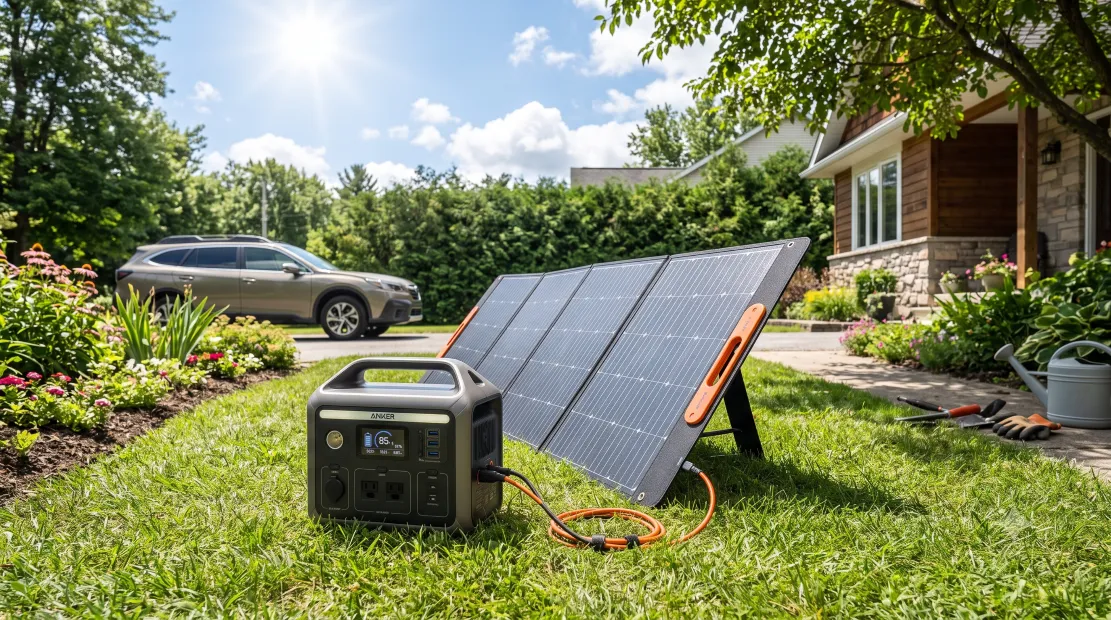
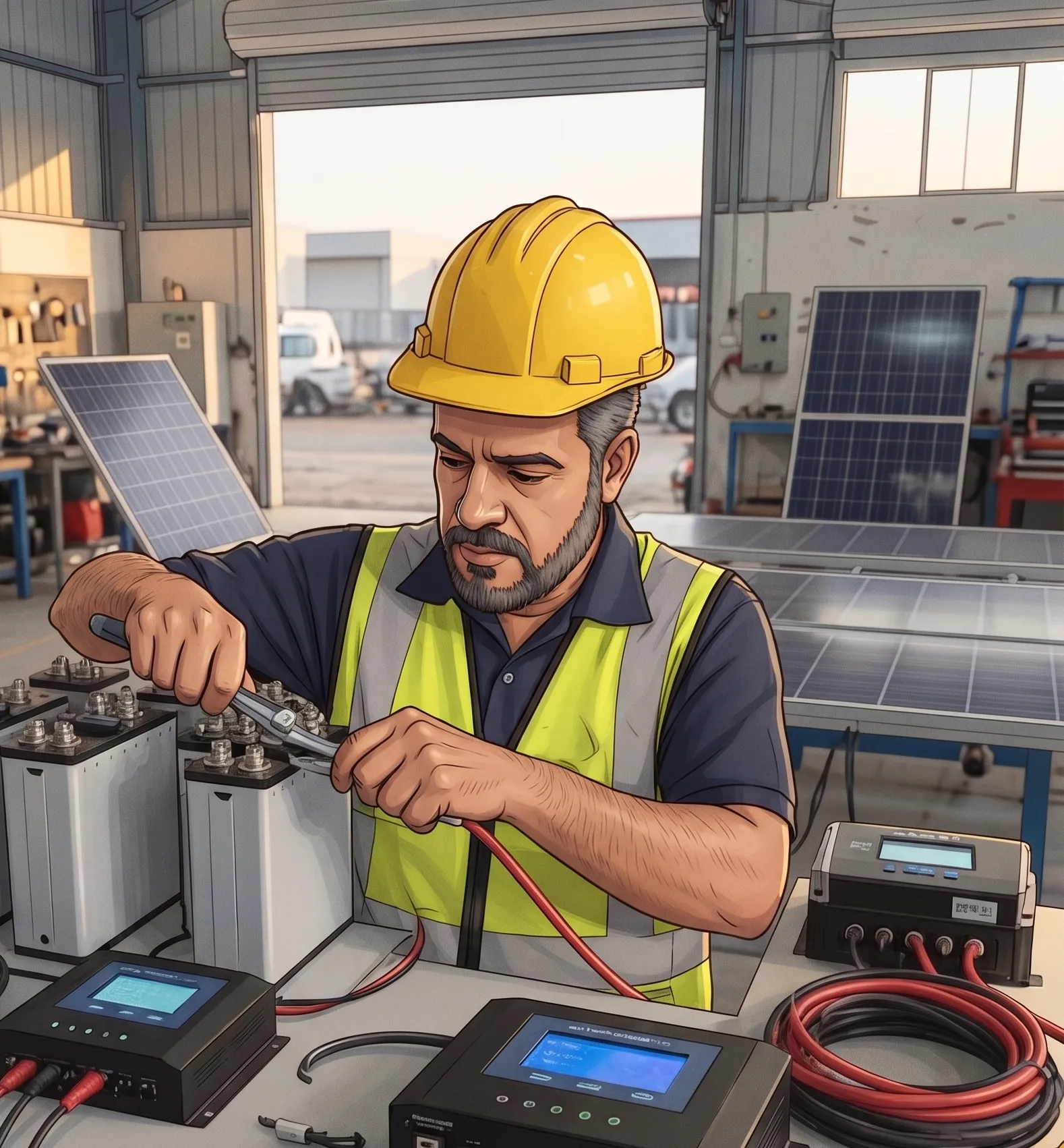
Solar panels recharge the battery unit continuously during daylight hours, extending backup runtime.
3. Best Solar Charging Efficiency: Bluetti
Bluetti has built a strong reputation specifically around high solar input acceptance, meaning its units can draw in more solar wattage simultaneously than many competitors at a comparable capacity tier — translating to faster recharge times when relying purely on sunlight rather than a wall outlet. This matters most during extended multi-day outages where wall charging isn’t an option and the system depends entirely on solar to maintain its charge, making Bluetti’s efficiency advantage a genuinely practical benefit rather than just a spec sheet number.
Best for: households prioritizing the fastest possible solar-only recharge during extended outages without grid power available.
| Category | Top Pick | Why |
|---|---|---|
| Best Overall | EcoFlow DELTA Pro | Capacity, output, and transfer-switch-ready ecosystem |
| Best Value | Jackery Explorer + SolarSaga | Reliable performance at a competitive price |
| Best Solar Efficiency | Bluetti | Highest solar input acceptance for fast off-grid charging |
| Best for Whole-Home Expansion | Anker SOLIX / EcoFlow | Expansion batteries plus transfer switch options |
| Best Portability | Jackery compact units | Lightest, easiest to move between uses |
4. Best for Whole-Home Expansion: Anker SOLIX and EcoFlow
For households wanting a solar generator setup that can genuinely scale toward covering a meaningful share of a home’s electrical load, Anker SOLIX and EcoFlow both offer mature expansion battery ecosystems and transfer switch compatibility, letting the system grow from a single unit into a multi-unit setup covering more circuits over time. This scalability matters most for buyers uncertain about their long-term backup needs, since it removes the pressure to correctly guess capacity requirements at the time of initial purchase.
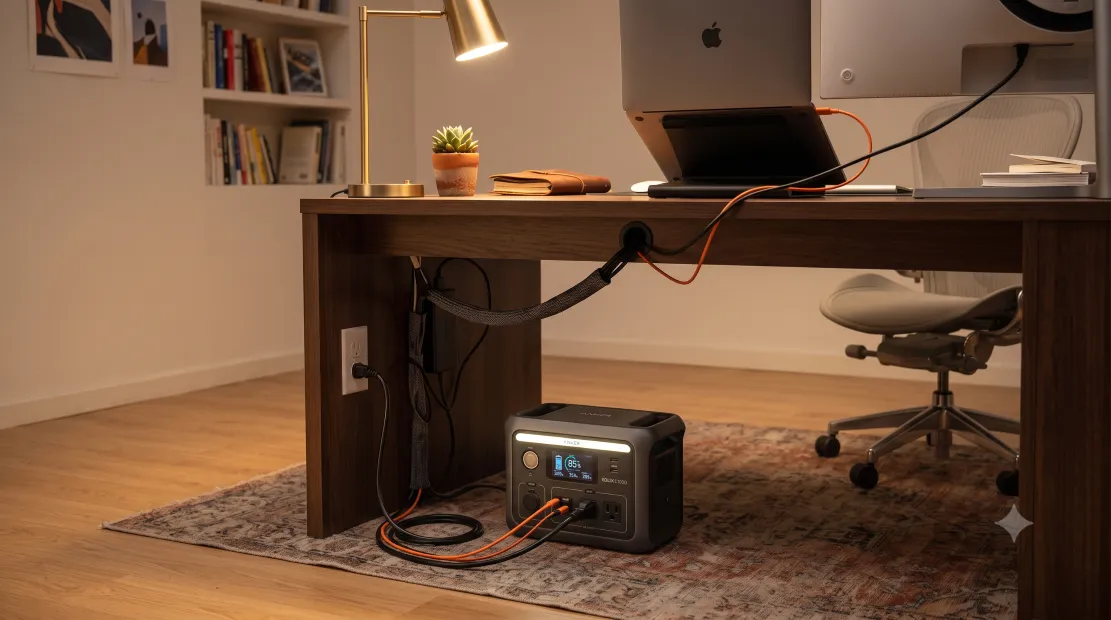
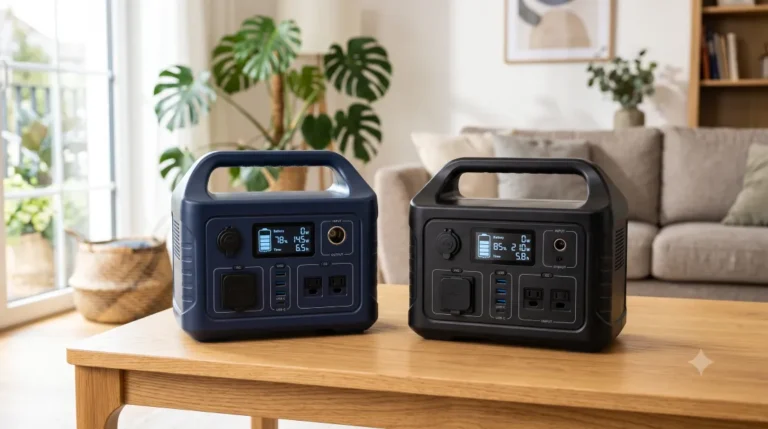
Expandable systems let a solar generator scale from essential backup toward broader home coverage.
5. Best Portability: Jackery Compact Units
For buyers who want their solar generator to double as a portable power source for camping or travel rather than staying permanently positioned for home backup, Jackery’s compact units remain some of the lightest and easiest to carry in the category. This portability comes with a capacity tradeoff compared to home-backup-focused flagship systems, a reasonable compromise for households prioritizing flexibility over maximum backup runtime.
Best for: buyers who want a solar generator that moves easily between home backup duty and outdoor or travel use.
Sizing Your Solar Panel Array to Your Battery
A common mistake is buying a battery capacity that outpaces the solar panels feeding it, meaning the battery rarely reaches a full charge from solar alone and ends up relying more heavily on wall charging than intended. Matching your solar panel wattage to your battery’s charging capacity — a calculation your specific brand’s app or documentation can help with — ensures you’re actually able to recharge the system fully within a reasonable number of daylight hours, rather than discovering the mismatch only after an extended outage when solar is your only charging option.
Real-World Runtime for Home Backup
Translating capacity numbers into real expectations helps set realistic backup planning. A roughly 1 kWh solar generator can keep essential electronics, lighting, and a WiFi router running for a full day, longer with solar recharging during daylight hours. Mid-capacity systems in the 2-3 kWh range can additionally handle a mini-fridge or CPAP machine reliably. Larger expandable systems reaching 5 kWh and beyond, especially when paired with a properly sized solar array, start approaching genuine multi-day partial-home backup, keeping a refrigerator, lighting circuits, and essential electronics running indefinitely as long as reasonable daily sunlight continues recharging the system.
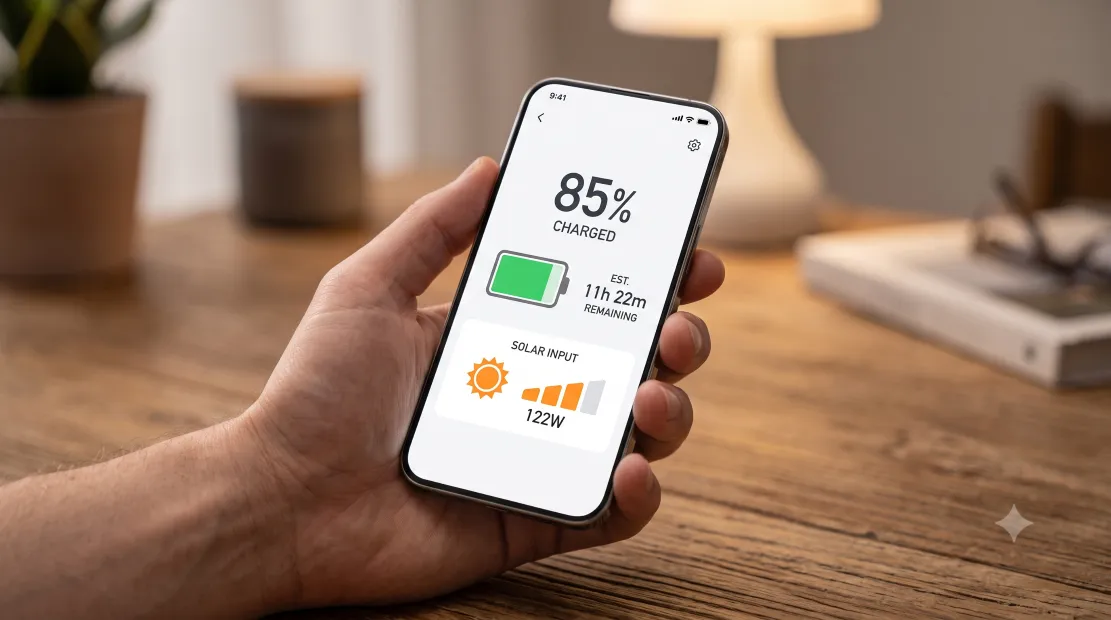
App monitoring lets you track battery level and solar input in real time during an outage.
Battery Chemistry: A Shared Foundation
Every brand in this ranking has standardized its current flagship and mid-range lineups on LiFePO4 (lithium iron phosphate) battery chemistry, offering 3,000 or more charge cycles before dropping to 80% of original capacity — a meaningful upgrade over older lithium-ion chemistry still found in some budget units. Because this chemistry is now shared across the leading brands, longevity isn’t a major differentiator in this ranking; capacity, solar efficiency, expandability, and price matter far more when comparing options at this point in the category’s maturity.
App Experience and Remote Monitoring
For a solar generator specifically intended for home backup, app-based monitoring matters more than it might for a purely recreational unit, since you’ll want to check charge level and solar input remotely without physically walking over to the unit during an outage. EcoFlow and Anker SOLIX’s apps offer the most polished, detailed monitoring in the category, while Jackery and Bluetti provide solid, functional coverage of the essentials without quite matching the top two brands’ feature depth.
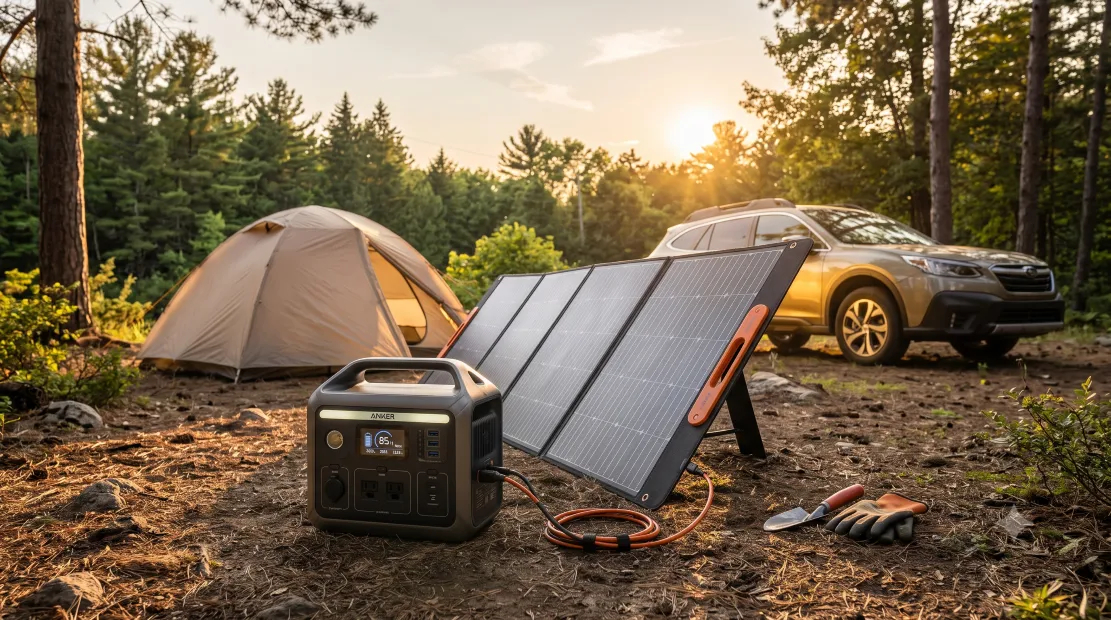
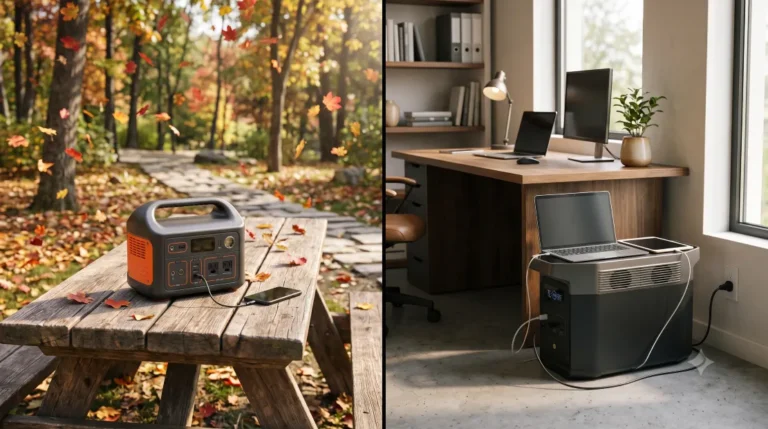
Many solar generators do double duty for camping and outdoor use between home outages.
Wiring In: Standalone Use vs Transfer Switch Integration
Solar generators can be used in two distinct ways for home backup. The simplest approach is standalone: plugging individual devices and extension cords directly into the unit’s output ports, which requires no electrical work but limits you to whatever you can physically reach with a cord. The more integrated approach uses a transfer switch, professionally installed, that lets the solar generator feed selected home circuits directly through your existing wiring, powering hardwired lighting and plugged-in appliances throughout a room or several rooms without needing extension cords stretched across the house. EcoFlow and Anker SOLIX offer the most mature transfer switch options among the brands in this ranking, worth considering seriously if convenience during an actual outage matters more to you than minimizing upfront installation cost.
Maintenance and Long-Term Reliability
Solar generators require minimal ongoing maintenance across every brand in this ranking — no fuel to store, no oil changes, and monitoring that happens automatically through each brand’s app. Because these systems often sit unused for long stretches between actual outages, it’s worth periodically checking charge level and running a brief test discharge every few months to confirm the system is functioning properly, rather than discovering a problem only when an actual outage arrives and backup power is genuinely needed.
How to Choose the Right One for You
Start by estimating your realistic backup needs: a short outage covering essential electronics calls for a smaller, more portable unit, while genuine multi-day partial-home backup calls for an expandable flagship system with a properly sized solar array. From there, weigh solar charging efficiency heavily if you expect to rely on solar-only recharging during extended outages without wall power available, and consider expandability if you’re uncertain about your long-term needs and want room to grow the system later without replacing the base unit entirely.
Frequently Asked Questions
What is the best solar generator for home backup overall?
EcoFlow’s DELTA Pro series currently offers the strongest overall combination of capacity, output power, and expandability specifically built around home backup use, including transfer switch compatibility for feeding selected home circuits automatically.
How is a solar generator different from a traditional gas generator?
A solar generator is a battery power station charged by solar panels rather than fuel, meaning no engine, no fumes, and no ongoing fuel cost, but it’s limited by its stored battery capacity and solar recharge rate rather than a generator’s continuous fuel supply.
How many solar panels do I need to fully recharge my solar generator?
As a rough guideline, aim for enough total solar panel wattage to recharge your battery’s capacity within about 5-6 hours of good sunlight. Undersized solar arrays relative to battery capacity are a common setup mistake that leaves the system relying more heavily on wall charging than intended.
Can a solar generator power a refrigerator during an outage?
Mid-to-high-capacity units can run a standard refrigerator or mini-fridge for a meaningful stretch of time, and with adequate solar recharging during daylight hours, some systems can sustain this indefinitely through an extended multi-day outage.
Is it worth buying an expandable system if I only need basic backup now?
If you’re uncertain about your long-term backup needs, an expandable system lets you start with a smaller base unit and add capacity later without replacing the entire system, which can be worth the modest premium over a fixed-capacity unit for buyers who anticipate their needs might grow.
ADeeL A.M
ADeeL A.M is a home energy and clean solar power writer with a deep passion for the electrified home. He spends his days researching solar panels, battery backup systems, EV chargers, portable power stations, and smart energy solutions — comparing specs, efficiency ratings, and real-world performance to bring readers the newest, most reliable, and best-value options on the market.
View all articles by ADeeL A.M →